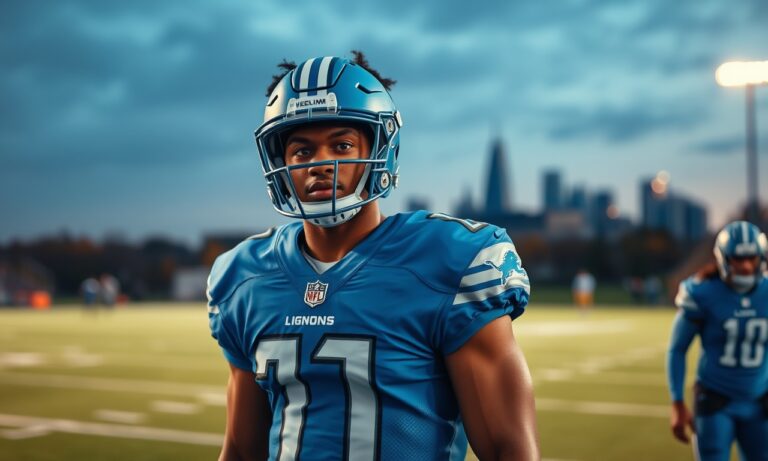
DETROIT — While Detroit Lions fans have watched the usual headline names along the defensive front, one of the team’s quieter pass-rush options is starting to look more like a reliable piece than a temporary depth spot. Through organized team activities and early regular-season evaluations, the Lions’ EDGE2—a role that often lives behind the league’s most publicized edge rushers—has shown flashes of consistent pressure, offering new flexibility for the NFL EDGE pass rush rotation at a position where small margins can decide sacks, run stops, and third downs.
For a franchise that prides itself on building its roster for physical, four-quarter football, the emergence of an under-the-radar edge option matters beyond highlight reels. It can shape play-calling, shorten opponent drop-backs, and protect starters from wearing down in the late season—an issue Detroit has dealt with across cycles of coaching staffs and schemes.
“The biggest thing you look for at edge is how they affect the quarterback without needing everything to go perfectly,” a defensive performance coach who works with NFL-style pass-rush technique (speaking in general terms about evaluation processes) said this offseason. “Consistency in leverage and timing is what turns a depth player into a real plan.”
What “EDGE2” Means for Detroit Lions Pass Rush Plans
In most defensive rooms, EDGE2 isn’t shorthand for a lesser player—it’s shorthand for a specific job: a rotational edge who can spell the top option, handle situational matchups, and keep the pressure pipeline moving. For Detroit, that matters because the Lions defensive line is often asked to do more than rush the passer. The edge can set the edge against the run, influence outside lanes, and force quarterbacks into hurried decisions.
According to data analysis from Pro Football Focus, quarterback pressure and pressure rates can predict sack production in the short term, even when sack totals fluctuate. That’s why evaluators often track “how often pressure is arriving,” not just whether it ends in a sack. In the Lions’ case, an EDGE2 who generates pressure with sound positioning gives coordinator flexibility: more stunt looks, more delayed pressure, and more trust to keep certain coverage calls in place when the pocket needs disrupting.
It’s also why an under-the-radar development can change the feel of an entire game. When an edge player can win early reps, opponents have to chip more often, keep running backs in pass protection, or adjust their protections in ways that can open lanes for the rest of the front.
Why This Under-the-Radar Lions EDGE2 Matters in the NFL
Detroit’s pass rush identity has often hinged on converting speed and technique into disruptive snaps. Even when the headline edge rushers draw attention, opposing offensive coordinators still plan around threats at multiple layers. A functional EDGE2 effectively increases the number of “must-account-for” players.
In practical terms, that can show up on the field as:
- More predictable third-down pressure: rotational edges who keep gap integrity help sustain pass-rush efficiency late in games.
- Better run defense leverage: an edge who sets the outside and controls depth keeps linebackers from chasing plays across the formation.
- More play-calling variety: consistent pressure can support coverage calls that require time for routes to develop.
“If you can keep pressure coming without an obvious drop-off, it changes how offenses treat the middle and the edges of the formation,” the same coach said. “It’s not only about getting sacks—it’s about controlling the timing.”
Detroit Impact: Rotation Depth and Late-Season Football
In Detroit, the impact of defensive depth isn’t just measured in Sunday outcomes—it’s felt in how the team sustains its identity over an 18-week season. As the weather turns and injuries accumulate, the Lions’ ability to roll fresh bodies into high-intensity snaps affects everything from defensive stamina to special teams availability.
That’s especially relevant for residents across the region who follow the team year-round as part of local culture. Lions Sunday is a Detroit habit as much as it is a sports event, with game-day attention pulling people into workplaces, restaurants, and community spaces. When teams maintain performance through the depth chart, it supports the consistent atmosphere fans expect—and it protects the schedule pressure that can build when games become must-win.
League-wide, the emphasis on fresh legs and specialized roles is also documented in public research on NFL player workloads. The National Football League Players Association has long highlighted the realities of player health and injury risk, and teams have increasingly structured offseason programs to manage workload and reduce strain. While the Lions’ depth moves are football decisions, the underlying logic aligns with broader conversations about keeping players available.
Background & Data: How Pressure Is Evaluated Beyond Headlines
Pass-rush evaluation has evolved. Instead of treating sacks as the only metric, analysts increasingly rely on pressure-based frameworks that account for quarterback disruption, timing, and whether the quarterback had to leave the pocket early. That is one reason why an EDGE2 can feel “quiet” in media narratives while still contributing meaningfully on film.
Recent reporting and coverage across outlets that track NFL pressure trends—such as analyses published by PFF—have emphasized that pressure rates often precede sack outcomes, particularly in the early stages of a player’s role expansion. In other words, if an EDGE2 is getting more hits and forcing quicker decisions, the scoring plays can follow.
From Detroit’s standpoint, the Lions defensive line unit has to coordinate responsibilities: edge containment, run fits, and hand placement rules for different stunt packages. An under-the-radar edge who understands those rules can integrate quickly because they don’t just bring speed—they bring reliability.
That kind of reliability can also affect coverage performance. When the defense is consistently disrupting the pocket, defensive backs can maintain tighter spacing and reduce the need for late “break and bail” reactions. The result is often fewer completions in the middle of the field—precisely where opponents like to attack when protection holds long enough.
What Happens Next: Watching the Pass Rush Rotation
Detroit Lions fans don’t need to look for one dramatic moment to confirm an EDGE2’s value. Instead, watch for repeatable patterns that show the coaching staff trusts the rotation:
- Snap consistency: does EDGE2 production appear across multiple game stretches, or only in short bursts?
- Third-down usage: is the EDGE2 drawing targets on passing downs rather than staying on the sideline?
- Win-rate signs: do their reps show clean leverage and controlled dips, not just occasional beat-the-block moments?
- Scheme involvement: are they asked to execute stunts, contain on run-heavy looks, or drop into situational responsibilities?
For the Lions, the upside of a developing EDGE2 is straightforward: it deepens the pass rushing depth chart without forcing the defense to “pick” between rushing and defending the run. In a division where offensive lines can be strong at absorbing pressure, that kind of depth can be the difference between steady drives and stalled opponents.
Detroit football news tends to focus on the biggest roster storylines first. But as this EDGE2 becomes more visible in the rotation, the quiet standout may become the kind of player whose value is felt long after the final whistle—on the drive where an offense couldn’t count on time, or the snap where a quarterback decided to throw early because the pocket never fully formed.