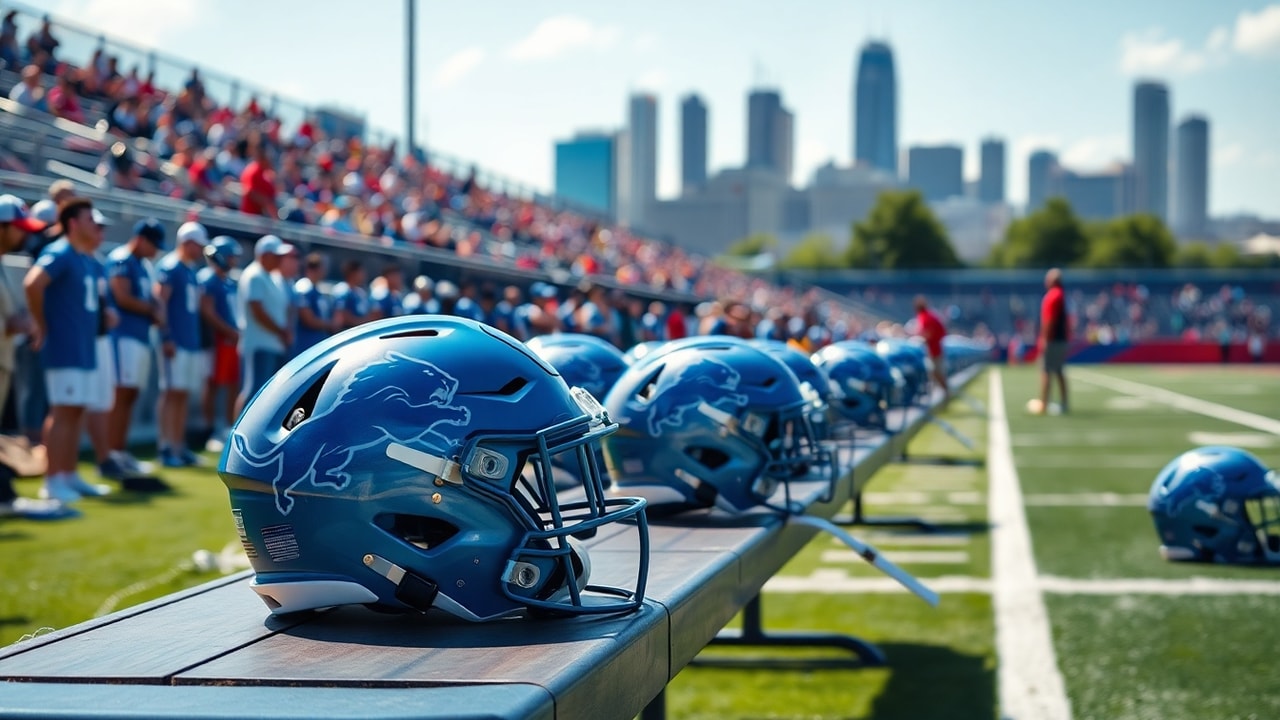
The Detroit Lions are set to host fans during training camp as the NFC North standings outlook tightens for a four-team race that includes the Green Bay Packers, Chicago Bears and Minnesota Vikings. While practices and position battles take place under summer lights, the competitive implications are already rippling through the city—particularly for local businesses that depend on steady weekday and weekend foot traffic during peak event weeks.
Detroit’s camp story is also a broader one: it arrives during the 2024 NFL offseason after months of personnel evaluation, roster turnover and coaching adjustments across the division. For Lions fans and the surrounding community, the question is no longer whether this group can contend, but how quickly it can turn training-ground development into results that matter in the standings.
Training camp in Detroit adds urgency to NFC North standings
In an NFC North that has recently seen momentum swing between offseason moves and regular-season execution, the Lions’ training camp schedule functions as an early measuring stick. Fans will watch quarterbacks refine timing, coordinators stress situational fundamentals, and young defenders learn the speed of the NFL game. But the division’s competitive balance means every step—especially early in the season—can influence tiebreakers and divisional confidence.
More than a football storyline, the camp-to-standings link is visible in how media coverage and betting markets typically treat each team’s preparation. Even before the first regular-season kickoff, league-wide performance signals are already being debated: how fast new starters adapt, whether injury prevention is working, and whether teams can execute cleanly in condensed practice windows.
According to USA Today Sports analysis ahead of the 2024 season, the NFC North is often framed by experts as a division where multiple teams can realistically compete rather than a two-team race. That context helps explain why Detroit camp carries heightened attention from outside the region and why visiting fans may plan trips that combine game-day enthusiasm with local dining and shopping.
What the division looks like right now—four teams chasing clarity
The NFC North standings conversation heading into 2024 doesn’t start at week one; it begins with who enters training camp most ready to translate offseason work into consistent play. For the Lions, the goal is to build a practical offensive rhythm and defensive structure that holds up under live-contact conditions. For Green Bay, Chicago and Minnesota, training camp becomes the test of how quickly their own changes can produce results against quality opponents.
Green Bay Packers: The Packers are often evaluated through quarterback continuity and the effectiveness of their offensive line. In a competitive division, the ability to sustain drives—and avoid big swings on third down—can be decisive for standings positioning.
Chicago Bears: The Bears’ trajectory is frequently tied to the development of young talent and the consistency of offensive play-calling. In recent seasons, Chicago has shown flashes, but the training camp focus tends to be on converting opportunities into points at a higher rate.
Minnesota Vikings: Minnesota’s camp narrative typically emphasizes defensive schemes, coverage cohesion and the ability to match up against divisional opponents. When defenses are disciplined early, teams often start the season faster and remain steadier through the schedule.
Across the division, the common thread is readiness. Data from the Pro Football Reference league play-by-play record supports the idea that early-season performance is influenced by how quickly teams establish baseline efficiency (not just explosive plays). That matters in a four-team race because a few losses against divisional opponents can narrow the margin for later recovery.
Impact on Detroit residents: local spending and weekday traffic
Training camp affects Detroit residents in ways that are easy to overlook if you only track Sunday outcomes. When fans—especially out-of-town visitors—choose to attend practices, they often add meals, coffee runs, and retail stops around the area. Those decisions can meaningfully support small businesses, from neighborhood restaurants to hospitality providers.
According to Visit Detroit, tourism demand in the city is influenced not only by major events, but also by recurring seasonal programming that gives visitors a reason to stay longer. Training camp week can create that “extra visit” effect for sports-focused travelers, family groups and fans who want to combine Detroit time with divisional football culture.
For residents who work in the service sector, the practical outcomes can include busier shifts and more predictable staffing needs. For neighborhoods near practice venues, increased activity can also bring both benefits and strain: more customers and revenue, but also higher parking pressure, traffic patterns and crowding at peak times.
There’s also a community dimension. Lions camp attracts youth interest, and Detroit’s sports culture—long anchored by civic pride—helps reinforce the idea that professional teams can be local institutions. Even when practices are closed to the general public, the broader training-camp ecosystem draws attention to Detroit as a regional hub.
Background & data: why the “four-team race” framing matters
The 2024 NFL offseason left the NFC North in a state of evaluation and adjustment. Teams are balancing roster needs with cap planning realities, and those choices are reflected in offseason workouts and training camp roles. While fans see depth charts, front offices focus on availability, matchup flexibility and how new players perform in system-specific assignments.
From a standings perspective, a four-team race is less about predicting the exact finish and more about understanding how standings scenarios develop:
- Divisional games multiply impact—a few early losses against a direct rival can raise the difficulty of climbing the standings later.
- Third-down efficiency and red-zone execution often decide games that look close on the scoreboard.
- Injury management and depth chart stability affect consistency, especially as the season moves into mid-year fatigue.
The broader Detroit angle is that sports demand is still a real economic driver for the city’s consumer economy. The U.S. Census Bureau’s retail trade reporting routinely underscores how spending patterns vary by local foot traffic and event timing—meaning that recurring events can shift sales performance for nearby businesses over specific weeks. Training camp can be one of those “timing” factors, especially for establishments near transit routes and commercial corridors.
What happens next for Lions camp and NFC North standings
The next phase is straightforward: practice reports will gradually become more specific, with stronger signals about starting roles, lineup stability and which schemes produce repeated success in controlled live reps. Those internal evaluations will quickly surface externally through beat reporting, preseason performance and, eventually, the standings outcomes that matter most.
For Detroit residents following the NFC North standings race, the practical takeaway is to watch how quickly each team builds a consistent identity. If the Lions are able to sharpen fundamentals—protect the football, convert in the red zone, maintain defensive discipline—training camp won’t just feel like a summer diversion. It will function as the early groundwork for how Detroit’s division position develops as games become real.
In the meantime, local businesses will continue preparing for the visitors that football creates. The city’s challenge is to manage the day-to-day impacts—traffic, parking and crowd flow—while capturing the economic upside that accompanies Detroit’s place in the national sports spotlight.
As the Lions’ training camp unfolds, the division’s four-team narrative will only intensify. One standout performance can swing public perception, but standings will ultimately reward the teams that combine preparation with execution when the schedule turns.