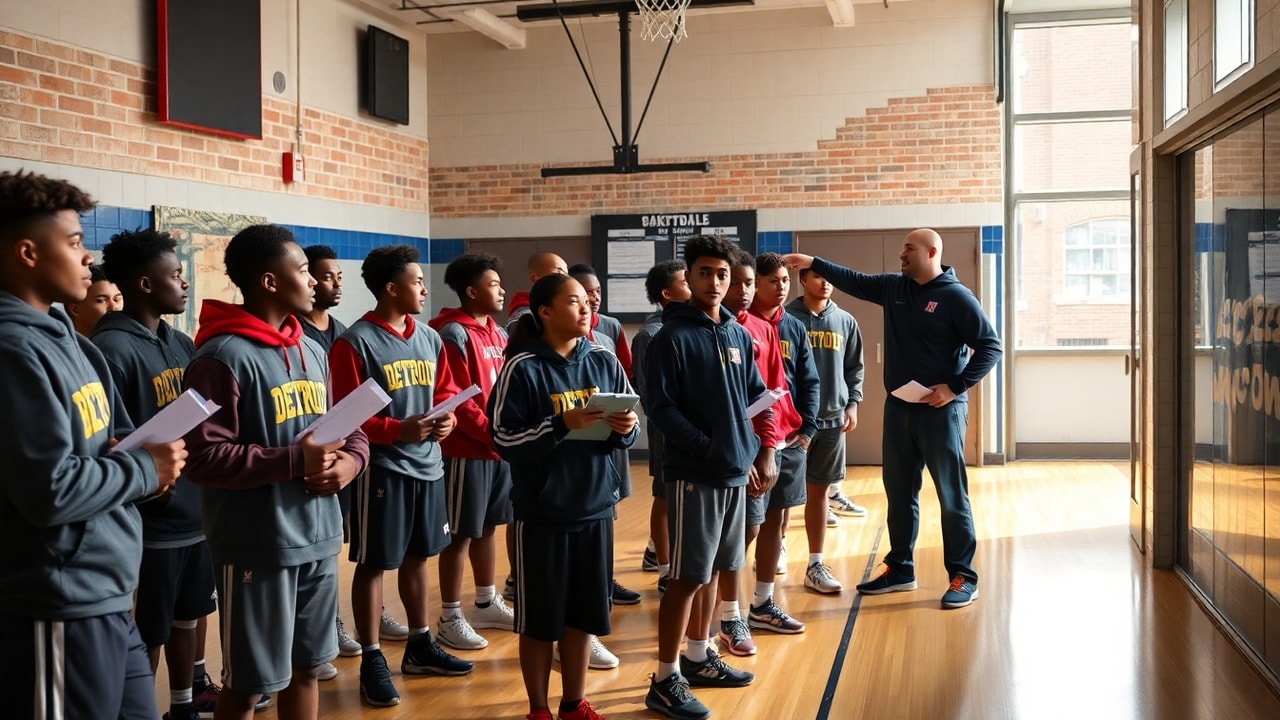
Detroit’s high school sports scene is entering the 2025–26 season with renewed momentum as a growing number of student athletes cite the influence of Copp inspires athletes—a mindset built around academic effort, training discipline, and community expectations. In schools across the city, coaches and athletic directors say they’re seeing stronger offseason participation and more students balancing demanding schedules without losing athletic focus.
That shift is unfolding against the backdrop of ongoing concerns about attendance, student engagement, and access to consistent training resources. For families, athletic programs can serve as both a formative outlet and a practical pathway toward scholarships, mentorship, and a clearer post-graduation plan—especially in neighborhoods where pathways to opportunity can feel uneven.
Copp inspires athletes as a Detroit athletic community takes shape
Although “Copp” is used locally as shorthand for a style of leadership and coaching emphasis, the core message circulating through Detroit athletic circles is consistent: students should pursue excellence in the classroom and on the court or field, and they should carry the same expectations from practice into daily life.
According to the Michigan Interscholastic Athletic Administrators Association (MIAAA), high school athletics are most effective when schools pair competition with clear standards for participation, eligibility, and student well-being. “When the academic requirements and athletic goals are reinforced together,” the association emphasizes, “student athletes are more likely to stay engaged and successful across the school year.” (MIAAA communications reviewed by Detroit-area school administrators.)
Local coaches describe the 2025–26 outlook as less about hype and more about structure. Detroit teams are increasingly aligning practice schedules with academic calendars, building study-time norms around grading periods, and using mentorship between upperclassmen and younger athletes.
“We’re trying to make sure students understand that performance isn’t just what they do at the gym,” one Detroit-area high school athletic director said. “It’s also how they show up for class, how they respond to feedback, and how they represent the program when no one’s watching.”
Detroit athletic community expands expectations for high-achieving student athletes
For student athletes, the idea behind Copp inspires athletes is that high achievement should be visible in more than one place. In interviews with school staff and youth program leaders, several common themes emerged: improved communication between athletics and counseling teams, clearer eligibility processes, and greater attention to training load so students can handle both competition and coursework.
Detroit’s high-achieving student athletes are often those who can navigate multiple systems—school rules, academic support, and the physical demands of a season that starts earlier each year. In the past, staff say, it was easy for students to fall into a cycle where off-season training was disconnected from academic planning. This year, many programs are tightening that connection.
According to data from the National Center for Education Statistics (NCES), student engagement and academic performance are strongly linked to consistent attendance and a supportive school climate. While the NCES data do not focus specifically on athletics, administrators say the research aligns with what they see in practice: when students feel supported and connected, they are more likely to sustain effort. (NCES reporting on student engagement and academic outcomes.)
That connection is especially relevant in Detroit, where schools serve students facing a wide range of household responsibilities and transportation constraints. Athletic programs are one of the few settings where students can build routines—early morning workouts, consistent travel schedules, team meetings, and a predictable cycle of goals.
Impact on Detroit Residents: more than games, a stronger school-to-community link
Detroit residents often judge school sports by what happens on game nights, but the ripple effects are felt well beyond stadium lights. When athletic participation rises or stays consistent, families report benefits such as safer after-school hours, more structured peer groups, and expanded opportunities for mentoring.
Local youth organizations also say increased participation can strengthen relationships between schools and the broader Detroit athletic community. In many cases, athletic events become gathering points where parents and neighbors share information about college readiness, training facilities, and volunteer opportunities.
There are also real economic and practical impacts. Hosting high school sports events can generate demand for nearby services—food from local businesses, increased traffic for community transportation networks, and short-term income for seasonal workers. As Detroit continues to invest in neighborhood revitalization and community programming, schools and partners increasingly view athletics as part of a wider civic ecosystem.
Still, access is not uniform. Staff at multiple schools said they’re working to reduce barriers tied to equipment costs, summer training fees, and scheduling conflicts. Some programs are coordinating with booster groups, local sponsors, and school-based support teams to ensure students can participate without financial strain becoming a deciding factor.
Background & Data: Why the 2025–26 season matters for eligibility and engagement
Michigan’s eligibility framework for student athletes generally requires students to meet academic standards, and educators say those rules can influence how families plan. The 2025–26 push toward high-achieving student athletes is therefore as much about systems as it is about motivation—particularly ensuring that students remain on track academically while managing training commitments.
According to the U.S. Department of Education, schools play a major role in supporting student well-being and academic progress through coordinated services. In Detroit, this often translates into closer collaboration between athletic staff, counselors, and teachers so that grades and attendance are monitored in real time rather than addressed after problems grow.
For families, the practical takeaway is that the season begins before the first whistle. Administrators describe a steady work-in-progress model: preparing students for tryouts, confirming eligibility requirements early, and building a schedule that allows students to study consistently during high-demand weeks.
What happens next: training standards, local events, and accountability
As the 2025–26 sports year gets underway, schools are expected to continue refining their approach to preparation, including offseason conditioning, mentorship programs, and tighter coordination around academic checkpoints. Several athletic directors said their immediate focus is to maintain student momentum through eligibility reviews and early-semester grades, rather than reacting once the season’s pressure peaks.
More broadly, Detroit officials and education partners are watching whether sports-based engagement can help sustain attendance and improve student outcomes. While athletics are not a stand-alone solution, educators say the discipline and structure that comes with athletics can reinforce broader school goals when programs are designed responsibly.
For residents planning to attend, the upcoming high school sports calendar will also function as a public test of these efforts. A successful season, administrators say, is measured not just by wins, but by improved participation, student progress, and a stronger sense of pride across neighborhoods—hallmarks of a Detroit athletic community that’s striving to raise expectations for every student athlete.