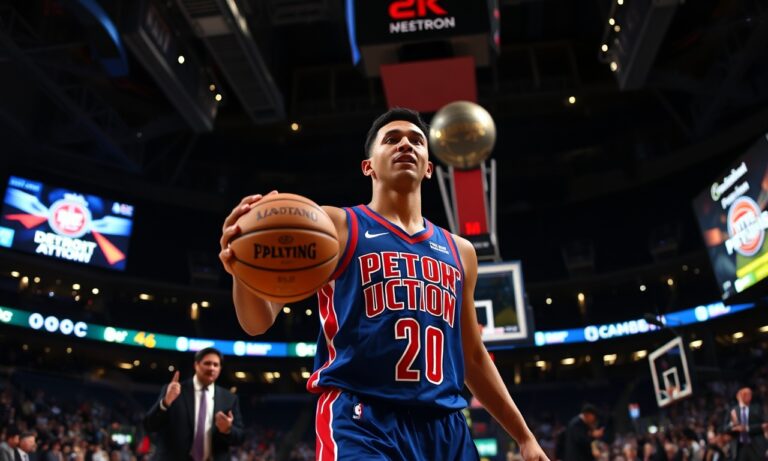
Detroit basketball fans are waking up to a significant roster shake-up: Detroit Tobias Harris is reportedly departing the Pistons to join the San Antonio Spurs, setting up a new pairing in the NBA with Victor Wembanyama. The move reshapes expectations for both teams—pushing Detroit’s current rebuild forward while giving San Antonio added runway around one of the league’s most high-ceiling players.
While specifics of the Tobias Harris trade terms were still being finalized at publication time, the development aligns with a broader pattern seen around Detroit’s approach in recent seasons: recalibrating roster priorities, managing salary and minutes, and creating space for a longer-term outlook. For Detroit, the change is both a sporting and a community-level story, since Pistons roster decisions ripple through local business activity and fan life across the city.
What the move means for the Spurs roster
San Antonio’s plans appear to lean into the same strategic center of gravity the franchise has signaled—building around Wembanyama’s unique two-way impact while rounding out the rotation with experienced, reliable wings. The Spurs roster moves around Wembanyama have been aimed at reducing decision-making pressure on a young star and improving lineups for both offensive spacing and defensive coverage.
According to reporting by ESPN, the Spurs have viewed adding veteran scoring and positional versatility as a way to accelerate team cohesion. In practical terms, Harris’ skill set has typically translated to stable minutes, structured offense, and a steady presence in games where rookies or second-year players need support.
Detroit’s departure: why it matters beyond the box score
For Detroit, the Detroit Pistons departure of Harris is a notable shift in the team’s on-court identity. Harris has long served as a veteran bridge—someone who can shoulder scoring responsibilities, keep rotations coherent, and provide a dependable option when matchups get complicated.
Detroit basketball news often focuses on draft picks and development arcs, but veteran exits also affect how fans experience the season. When a prominent player leaves, it can change jersey sales, game-day atmosphere, and the way local media narratives form around the team.
In a broader context, roster decisions also interact with local economic realities. Major sporting events help support nearby hospitality and transportation demand, particularly around home games at Little Caesars Arena. While the exact impact of this individual trade depends on scheduling and attendance trends, the nature of the move underscores how NBA team management decisions can influence local foot traffic.
Impact on Detroit Residents
The immediate impact in Detroit is likely to be felt in three overlapping areas: fan engagement, local small businesses, and the team’s developmental path.
Fan engagement and community routines: Pistons games are embedded in Detroit’s seasonal rhythm. Changes to the roster can alter how frequently casual fans attend, how families plan outings, and how supporters rally around new leaders. For many residents, a veteran’s departure creates a transition period—one that can be emotionally sharp even when fans understand the long-term rebuild logic.
Local business spillover: Game nights tend to benefit restaurants, bars, and retailers near the arena. According to data published by the U.S. Bureau of Labor Statistics, employment in leisure and hospitality is sensitive to consumer spending patterns and event-driven demand. While that doesn’t allow a direct, trade-by-trade estimate of revenue, it does highlight why shifts in ticket interest following roster changes can matter to workers and owners near entertainment districts.
Development opportunities: Detroit’s rebuild strategy has increasingly emphasized giving younger players real minutes and responsibility. A Harris departure could open additional reps for teammates who need to grow into larger roles—especially in areas like creating offense off the dribble, defensive reads, and consistent rebounding responsibilities.
“The front office still has to balance competitiveness with development, and roster turnover is part of that process,” a team analyst noted in The Athletic, reflecting the common tension in NBA rebuilds. For residents, the question is not only who replaces Harris statistically, but whether the team’s younger core will gain the stability needed to progress.
Background & data: how rebuilding fits Detroit’s sports economy
Detroit’s sports landscape has often been discussed through the lens of reinvestment and long-term planning—concepts that apply to both major franchise building and the way local communities sustain entertainment spending. The NBA’s roster churn is particularly relevant because it can rapidly change the team’s style of play and public appeal.
From a governance perspective, Detroit’s local economy also sits within broader regional patterns. According to the U.S. Census Bureau, metropolitan household income and spending dynamics influence demand for discretionary entertainment. That means fans respond not only to team performance but also to expectations about the product—how close the team feels to contending versus rebuilding.
In practical terms, the Tobias Harris trade outcome could be interpreted as a signal that Detroit intends to prioritize its next phase rather than maintain a veteran-heavy identity. That approach can be difficult for short-term results, but it may increase the probability of building a coherent rotation around emerging talent.
What happens next
As Detroit adjusts to this Detroit Tobias Harris news, multiple follow-on steps will likely shape the rest of the offseason and the early regular season:
1) Rotation reshaping: Detroit’s coaching staff will need to redistribute minutes at the forward positions, ensuring the lineup maintains defensive structure and spacing. The goal will be to protect young players from too much load while still giving them meaningful growth.
2) Salary-cap planning: Moves involving Harris typically influence how Detroit manages future flexibility. The Pistons’ broader cap picture will determine whether they pursue additional veteran support or keep the rotation geared toward development.
3) Spurs’ lineup integration: For San Antonio, integrating Harris alongside Wembanyama is the headline. Expect the Spurs to test lineups that capitalize on Harris’ mid-post and perimeter creation while leveraging Wembanyama as a rim protector and offensive focal point.
4) Detroit fan transition: Detroit supporters will watch closely to see who becomes the new face of the team’s day-to-day on-court identity—whether that’s a current starter moving into a larger role or a younger player taking a step forward.
Bottom line
The reported move of Detroit Tobias Harris to the San Antonio Spurs marks a meaningful turn for both franchises. For Detroit, the Detroit Pistons departure is part of the team’s long-term roster recalibration, likely reshaping the forward rotation and accelerating opportunities for younger players. For San Antonio, adding Harris could help complement Victor Wembanyama with veteran stability as the Spurs continue refining their roster around their cornerstone.
As transaction details become official and the first rotation adjustments are reported, Detroit residents will be watching not only for outcomes on the court, but for how this chapter affects the rhythm of basketball life across the city—from game-night plans to the local sports narrative that fans carry week to week.