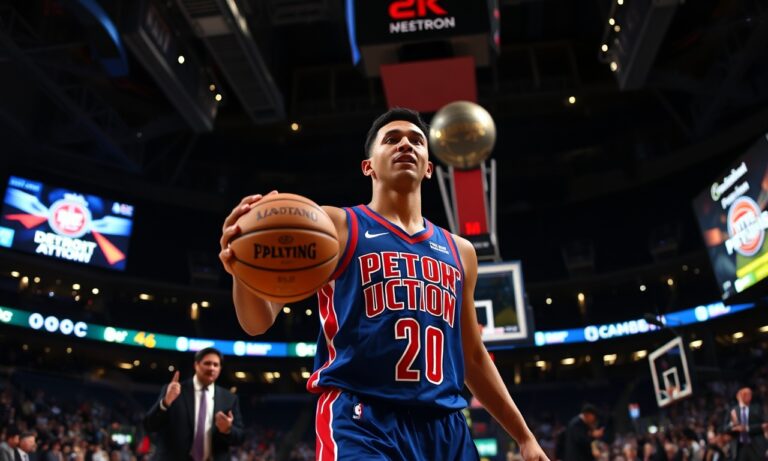
The Detroit Pistons are looking for consistent ways to score, space the floor, and make half-court offense less predictable—and the addition of NBA forward John Collins has quickly become the centerpiece of that conversation. While roster changes don’t automatically translate to wins, Pistons coaches and players often point to specific tactical needs: generating clean looks, maintaining pressure after the first drive, and turning offensive rebounds into second chances. Collins’ skill set, particularly as a big man scorer, could address several of those needs as Detroit builds its Pistons offense identity.
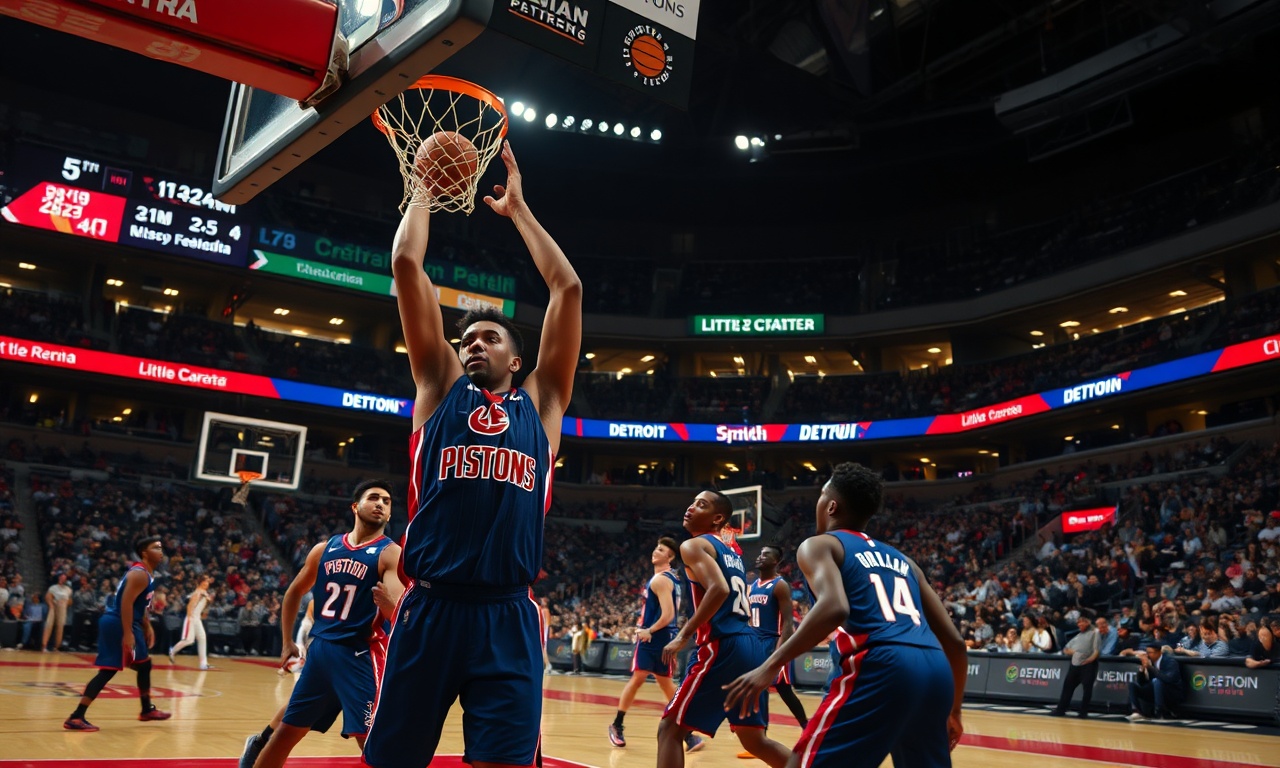
Detroit basketball fans have seen stretches where the offense flows—then stalls when the game slows and defenses settle in. Collins’ presence in the frontcourt offers a different type of threat: he can catch and finish around the rim, operate in pick-and-roll sequences, and punish defenses that allow too much space beyond the paint. The impact is not just about points; it’s also about whether teammates get better shot quality and whether the Pistons can sustain offensive possessions longer, especially against playoff-caliber half-court defenses.
How John Collins Can Level Up Detroit’s Pistons offense
In practical terms, the Pistons’ coaching staff will likely look for Collins to strengthen Detroit’s offensive decision-making. According to NBA.com, modern offenses are built on shot quality, spacing, and simplifying decisions by creating advantages through player positioning. For Detroit, Collins can help create those advantages by forcing help defenders to stay honest rather than collapsing instantly on drives.
One key area is rim pressure with a shooting threat. Collins has historically offered teams a way to score without relying entirely on perimeter shot-making. When a big man can convert at the rim and also threaten with midrange or short-range jumpers, defenses have to choose between protecting the paint and contesting a swing pass that can be punished quickly.
Another area is pick-and-roll efficiency. When a screening big can finish through contact and catch in stride, point guards spend less time second-guessing reads. If Collins’ man steps up, the ball-handler can attack the gap or kick out. If the defense drops, Collins is positioned to score closer to the rim. Either way, the Pistons can turn one touch into multiple options—an essential shift for any team trying to make its offense feel less like a single play and more like a system.
Collins also provides a pathway to improving offensive rebounding possessions, which can be especially important for teams that need to control tempo. Detroit plays a style where physicality matters, and second chances are often where game momentum swings. The Pistons offense doesn’t have to dominate the shot clock to win possessions—if it can extend trips and convert extra opportunities, it can keep pressure on opponents.
Spacing and “read-and-react” basketball
Detroit’s perimeter creation can take pressure off the bigs, but it only works if the frontcourt threat is credible. Collins’ role can help widen the floor and keep defenders from treating the paint as a safety zone. That matters for Detroit because it makes it harder for opponents to anticipate and trap ball-handlers. When help defense is less automatic, Detroit’s shooters and drivers can operate with clearer lanes and more decisive passes.
The NBA’s emphasis on spacing isn’t new, but local fans often notice it most during slow stretches: the game becomes a half-court puzzle. A big man who can score through contact and finish after movement helps turn those puzzles into read-and-react basketball—where players recognize the same defensive cues and respond quickly.
Impact on Detroit Residents: what winning basketball means locally
For Detroit residents, Pistons games aren’t only entertainment; they’re part of the city’s day-to-day sports culture and a recurring gathering point for neighborhoods, families, and businesses around downtown and the surrounding area. When the team competes, it can strengthen that ecosystem—higher attendance, more engagement, and increased attention on Detroit as a place to invest and spend.
That connection is supported by broader research on sports and civic life. According to a report from the Brookings Institution that discusses how major events and community sports ecosystems can influence local engagement and economic activity, teams can function as anchors for local identity—particularly when performance improves public interest. While a single player won’t reshape Detroit’s economy overnight, better on-court competitiveness tends to raise the intensity of that cultural pull.
At the same time, fans also care about how roster decisions align with the longer-term goal of building a stable, watchable product. Detroit’s front office has to balance immediate competitiveness with player development and roster structure. If Collins helps the Pistons offense generate more consistent looks, that can make games more predictable in the way fans define it: fewer empty possessions, more controllable scoring runs, and clearer momentum swings.
And there’s another local layer: watching a team that can score effectively makes Detroit basketball feel safer for casual viewers, too. When the Pistons can get points from multiple spots—especially through big-man scoring and pick-and-roll creation—it’s easier for fans to follow the flow of the game without needing a deep technical understanding of complex defensive schemes.
Background & Data: why big-man scoring still matters
Detroit’s offensive challenges have been widely discussed across the league: scoring in modern basketball depends on creating advantages, and advantages often start with positioning. The Sports Reference and other statistical services track how shots near the rim tend to be more efficient than heavily contested midrange attempts or low-quality threes. In that context, a big man who can operate close to the basket can influence the entire offense by raising efficiency and forcing defenses to adjust.
The Pistons also benefit when their offensive scheme creates “gravity.” That is, the opponent’s defense must account for multiple threats at once. Collins’ scoring role can make Detroit’s drivers better because defenders cannot focus solely on denying the lane. If the help defender steps away to contest the roller or the scoring big, the ball-handler gains a cleaner passing angle or a freer path to score.
In practical scouting terms, Collins can also be a bridge between different styles of offense. During possessions that start with structured plays—screen actions and interior reads—he can execute as a consistent finishing option. In transition or early offense, he can provide a target for outlets and quick passes that lead to high-percentage attempts. The Pistons offense, therefore, is not only about half-court strategy; it’s also about whether Detroit can turn defense into immediate scoring opportunities.
What happens next for Detroit and John Collins’ role
The early returns will likely show up in a few measurable ways. Detroit may look for whether the Pistons can increase scoring consistency during second and third quarters, when defenses usually adjust and the game becomes more execution-heavy. Fans will also be watching whether Collins’ presence improves spacing—meaning fewer late-clock possessions that rely on isolation or forced shots.
Coaches will also monitor chemistry: how quickly Collins and Detroit’s ball-handlers sync on timing, when to read for the pocket pass, and whether Collins is receiving the ball in the best scoring area rather than being forced into difficult low-efficiency attempts. In addition, the Pistons will evaluate matchups: whether Collins can be used effectively against mobile bigs, or if he should be paired with different lineups to optimize spacing and defensive coverage.
From a Detroit basketball perspective, the most meaningful outcome is simple: fewer offensive stalling points. If the Pistons offense becomes more capable of sustaining pressure—through big man scoring, better pick-and-roll outcomes, and higher-quality finishes—Detroit residents will see it not only in box scores but in the rhythm of each game.
In a city that values authenticity and steady progress, the Pistons’ biggest test will be turning a talented addition into a repeatable offensive identity. John Collins has the tools to help Detroit get there; now the question is whether the system, the matchups, and the chemistry align quickly enough to make it feel like more than just a new name in a new lineup.