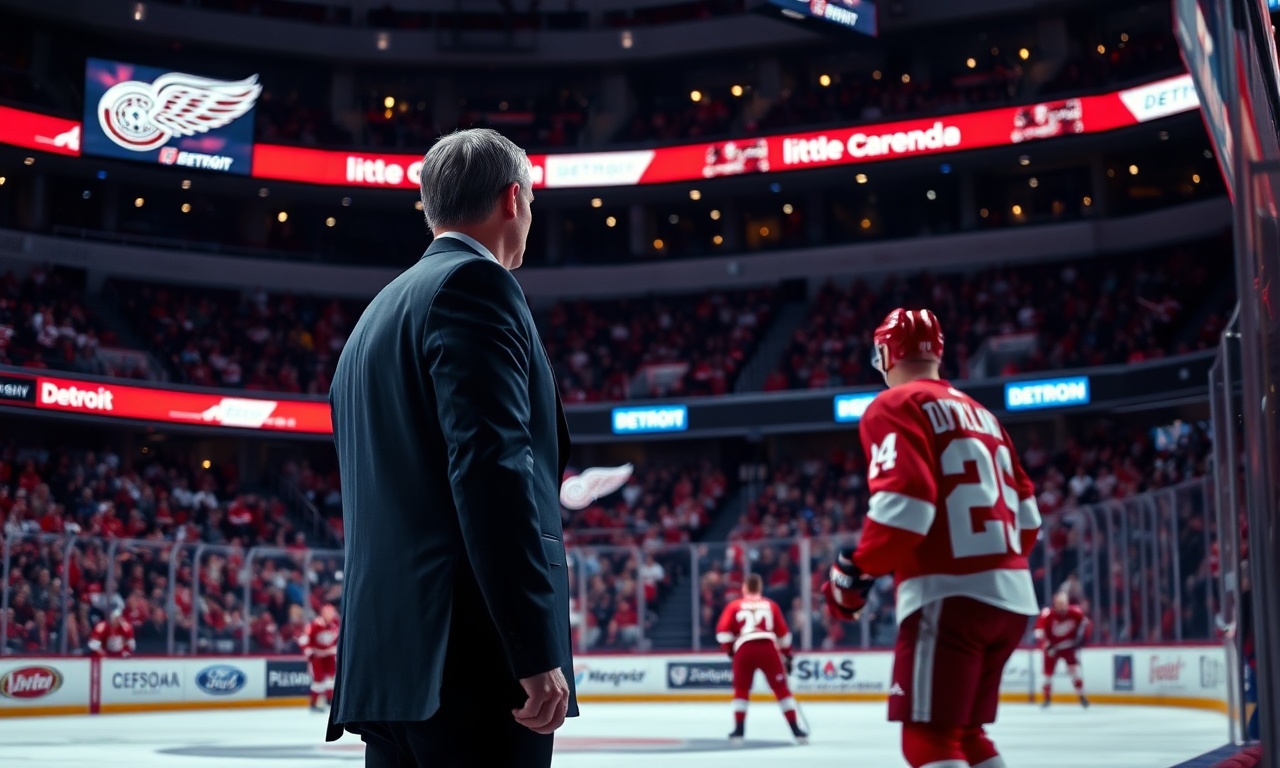
Detroit hockey fans have heard it all before: the trade rumor season that swirls when the standings tighten and every decision by the front office becomes a referendum on the rebuild. But as Detroit Red Wings discussions continue to orbit Dylan Larkin, the central question for supporters and skeptics alike is also the simplest: should Steve Yzerman act immediately—or wait?
In recent Detroit hockey news coverage, Larkin trade rumors have occasionally surfaced alongside broader questions about Detroit’s Red Wings rebuild timeline. Yet from a team-building standpoint, there are reasons to believe waiting—rather than forcing a trade because of speculation—may better serve both roster stability and long-term competitiveness.
Main Section: What a “wait” approach means for the Red Wings
At the NHL level, an effective NHL trade strategy is rarely about reacting to a single headline. Teams generally time trades around contract clarity, roster readiness, and the market value created by other deals. That’s particularly important for a franchise player like Larkin, whose value is not just statistical but also leadership and system-fit.
Yzerman’s history with Detroit emphasizes patience and structure—core components of rebuilding clubs attempting to avoid “reset” cycles. According to NHL general manager reviews discussed by The Athletic in season-by-season analysis, successful rebuilds typically balance short-term roster improvement with disciplined cap management and targeted acquisitions. While the paper doesn’t dictate what Detroit should do with Larkin, its broader framework aligns with why waiting can be a strategic advantage: it reduces the likelihood of selling too early into an uncertain market.
For Detroit, the calculus is also shaped by the practical realities of the salary cap and contract timing. Larkin’s situation—like many core players—can influence when and how the Wings can pursue complement pieces without compromising their ability to sign or extend their own players. If the goal is to strengthen the club’s “middle layer” (defensive stability, depth scoring, and reliable special teams), front-office patience can create more predictable leverage than an early sell-off.
Trade rumors can distort timing and valuation
Rumors tend to create urgency, but the market for NHL talent often settles only after key roster decisions by other teams. A trade demand that is too closely tied to public speculation may force a team into accepting deals that are less comprehensive than the return it would otherwise secure.
That matters because the Red Wings aren’t merely looking for draft picks or prospects—they need assets that fill specific roles. Detroit’s recent draft and development efforts have aimed at creating a pipeline, but the final step is turning potential into roster-ready players at the same time the team’s defensive and goaltending foundations can support them.
In the context of Detroit Red Wings decision-making, waiting can also help the team confirm its identity on ice. If the season’s on-ice performance clarifies which lines and defensive pairings are truly working, the organization can avoid trading away an anchor whose value may become more obvious once the system is stable.
Impact on Detroit Residents: Why this decision reaches beyond the rink
The question of whether Yzerman should wait on a potential Larkin trade carries real local implications because the business of pro sports is closely tied to community engagement, media attention, and downtown economic activity.
Detroit’s sports economy is documented in public research on event-driven spending. According to U.S. Census Bureau data used in broader economic reporting, major-cities consumers spend differently around events than during typical weeks, and local hospitality sectors can see measurable spikes in demand. While that data is not specific to the Wings alone, it supports the widely observed reality that a franchise’s on-ice momentum affects attendance patterns and surrounding foot traffic near Little Caesars Arena.
For residents, the practical impacts of a major trade extend to:
- Game-day spending at nearby restaurants and bars—especially when Detroit’s games feel “must-watch” rather than developmental.
- Local youth hockey visibility as star availability influences what kids see and model, an angle community coaches often emphasize after marquee trade or retention decisions.
- Neighborhood sentiment connected to the team’s direction—fans pay attention to whether the rebuild feels organized and credible.
In other words, while Larkin is a player, the decision about him can influence the mood around the city during the season—an intangible effect that nonetheless shows up in attendance and local commerce.
Background & Data: The cap, the clock, and Detroit’s rebuild timeline
To understand the logic of waiting, it helps to look at how rebuild timelines work in the modern NHL. Rebuilds typically involve three overlapping phases: establishing a young core, acquiring missing pieces, and bringing in veteran support at the right time. In practice, that means the “window” for meaningful contention often depends less on one trade and more on whether multiple roster moves align.
Detroit’s Red Wings rebuild timeline has progressed unevenly—like many teams rebuilding in the salary-cap era. Yet the organizational focus has been on building a durable foundation rather than chasing short-term results at the expense of long-term flexibility.
From a governance and legal perspective, sports team financial decisions are also tethered to collective bargaining rules, contract structures, and the timing of roster freezes and deadline compliance. While hockey fans debate player-for-player returns, front offices must consider whether a trade creates cap space, how it affects waiver exposure, and whether it allows Detroit to keep building without losing valuable roster depth.
That’s where Yzerman’s leverage comes from: waiting can broaden options. If the Wings keep a core intact through key assessment points—such as when a season clarifies injuries, line chemistry, and the level of play among young defenders—then the organization can approach the deadline with stronger internal data. That internal clarity can be as important as external rumor pressure.
What happens next: A realistic path that doesn’t reward rumor cycles
None of this guarantees Detroit will keep Larkin through the end of his current contract cycle, nor does it erase the possibility that circumstances change. Injuries, performance trends, and league-wide market shifts can all alter the equation quickly. But a waiting approach offers a clear set of advantages.
Here is what “wait” could realistically look like in Detroit hockey news terms:
- Monitoring market conditions as the trade deadline approaches, when other teams’ needs become clearer and offers become more specific.
- Evaluating roles on the roster so any deal would be aligned to Detroit’s actual on-ice requirements, not just speculation-driven narratives.
- Preserving leadership and system continuity while younger players continue to develop within the Wings’ chosen style.
Ultimately, Steve Yzerman’s job is to make decisions that improve Detroit’s long-term competitive position, not to respond to the loudest storyline of the week. If the current Larkin trade rumors remain speculative, patience may be the most rational move—because the cost of a rushed trade is often paid over seasons.
For Detroit residents, that kind of steadiness matters. The Red Wings aren’t only competing for a playoff spot; they’re competing for belief—among fans, local businesses, and a city that understands rebuilding is measured in years, not headlines.