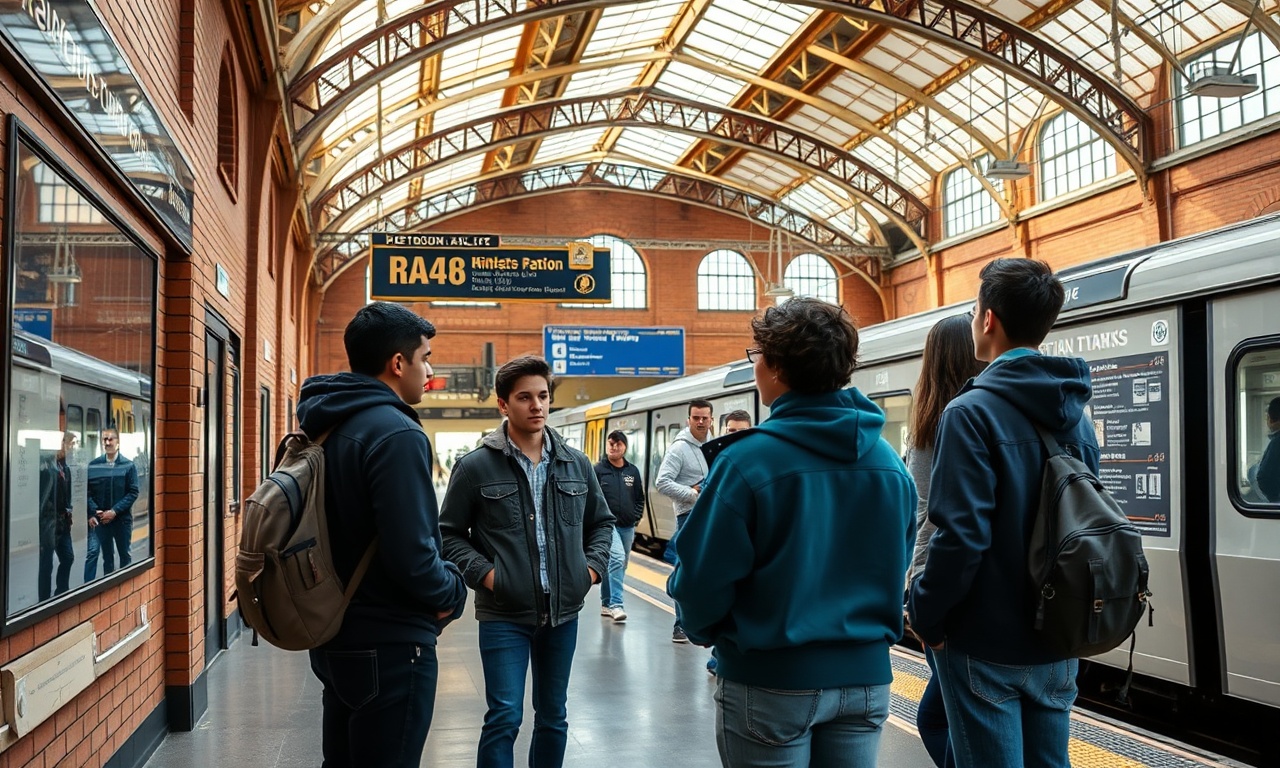
A restored Detroit rail station that reopened this week is starting a new teen workforce training program designed to connect young residents with skills for careers in transit, construction trades, and customer service.
Organizers say the initiative will pair guided learning inside the historic station with paid work experiences through local partners, with an emphasis on practical job readiness for Detroit teens.
Detroit teens get transit-linked career skills at the reopened hub
The program launches as part of the station’s broader restoration effort, which has focused on bringing the facility back as an active Detroit transportation hub. Officials and community partners are framing the teen workforce training as a pathway from classroom preparation to real-world work—both within the building and through partner organizations that support youth employment.
According to a news release from the City of Detroit, the project supports neighborhood goals that include increasing workforce readiness and expanding community youth programs connected to local infrastructure. A city spokesperson said the station’s reopening is intended to strengthen the connection between transit access and job opportunities for residents.
At the station, participants will receive instruction that organizers describe as “hands-on and hands-on-adjacent,” including sessions on professionalism and workplace expectations, basic safety training, and modules that reflect the needs of a modern transit environment. Depending on placement, teens may also be eligible for supervised project work tied to station operations and public-facing services.
“We want young people in Detroit to see transportation as more than where they go—it’s also a field where they can build careers,” said Maria Thompson, a representative for a youth employment partner participating in the program. “Detroit rail station education should translate into skills that employers recognize.”
Organizers say the restoration itself functions as a teaching tool, exposing participants to the kinds of tasks involved in maintaining public buildings—everything from wayfinding and accessibility considerations to the care required for aging architectural elements.
Impact on Detroit residents: job readiness where transit meets community
Community leaders view the teen workforce training as a practical extension of the broader Detroit rail station restoration, which has attracted attention for preserving historic design while repurposing the space for contemporary use.
For Detroit families, the initiative’s focus on paid or work-based learning is a key point. Employment and training opportunities can be difficult for teens to access, particularly those navigating limited transportation options or needing flexible schedules during the school year.
According to data from the U.S. Bureau of Labor Statistics, teen employment rates often fluctuate with the economy, and youth employment programs can help reduce barriers to entry by pairing training with structured opportunities. While specific outcomes for this new station program will depend on enrollment and placement, local partners say the goal is to create continuity—preparing teens now so they can compete for future roles.
Community organizations also said the station environment can help normalize career conversations for youth who may not have ready access to internships or job-shadowing experiences. The learning model emphasizes soft skills—communication with the public, reliability, and respectful conduct—alongside task-based training relevant to Detroit transportation hub operations.
“This is about building confidence and credentials at the same time,” said James Caldwell, who works with a local education partner supporting the program’s training modules. “When teens understand how a rail station works—from the visitor experience to the operational basics—they’re more prepared for the next step, whether that’s an apprenticeship, a summer job, or a pathway program.”
Background & data: why station restoration matters in Detroit
Detroit’s push to modernize transit and rehabilitate community assets has increasingly focused on making infrastructure useful beyond transportation—turning stations into places where economic activity, community engagement, and public services can intersect.
Transportation can also function as a mobility equalizer, offering reliable access to jobs and education. When a rail station is restored rather than left idle, it can support local priorities such as safety, walkability, and neighborhood connectivity.
According to the U.S. Department of Transportation, transit access is linked to employment and education opportunities, especially for people without consistent access to private vehicles. Local officials involved with the reopening said the station’s renewed role is intended to reinforce that connection.
Detroit residents have also watched the station restoration closely because of the symbolic and practical value of historic preservation—maintaining landmarks that reflect the city’s industrial and rail heritage while meeting current requirements for accessibility and public usability.
The teen training program is being positioned as part of that living legacy: instead of treating the restored Detroit rail station restoration as an end point, organizers are treating it as an ongoing community asset.
What happens next: enrollment, scheduling, and partner placements
Organizers said program intake will be handled through participating partners, which will coordinate eligibility screening and schedules compatible with school attendance. Teens are expected to rotate through learning sessions at the station and at partner sites, with the training designed to build progressively from introductory modules to job-readiness practices.
While the initial cohort will be limited, organizers said they plan to expand over time if enrollment targets are met and placements can be sustained. They also noted that the training is being designed to be transferable—preparing participants for a range of career skills that can apply across transit-related and construction-adjacent roles.
In addition to workforce skills, community youth programs connected to the station aim to create sustained mentorship. Organizers emphasized that the program is not simply a one-time workshop; it is intended to build momentum, helping teens understand steps they can take after the program ends, including additional certifications, summer employment, and apprenticeship exploration.
Officials encourage Detroit families to watch for enrollment announcements and to contact partner organizations for information about age requirements and application timelines.
Local impact: a station that trains, not just transports
For Detroit, the restored station’s return comes at a time when youth employment, career pathways, and infrastructure investment are often discussed together—but rarely executed in a single coordinated effort.
By combining Detroit transportation hub redevelopment with a teen workforce training program, organizers say the station becomes both a destination and a stepping stone. The underlying claim is straightforward: when local infrastructure improvements are paired with community youth programs, residents don’t just benefit from the buildings—they benefit from the opportunities that grow around them.
In the months ahead, the program’s strongest test will be its ability to turn training into measurable momentum: attendance, completion, and successful transitions into future roles or education plans. For now, the reopening and the new rail station education track offer Detroit teens a chance to translate civic restoration into career skills they can carry forward.