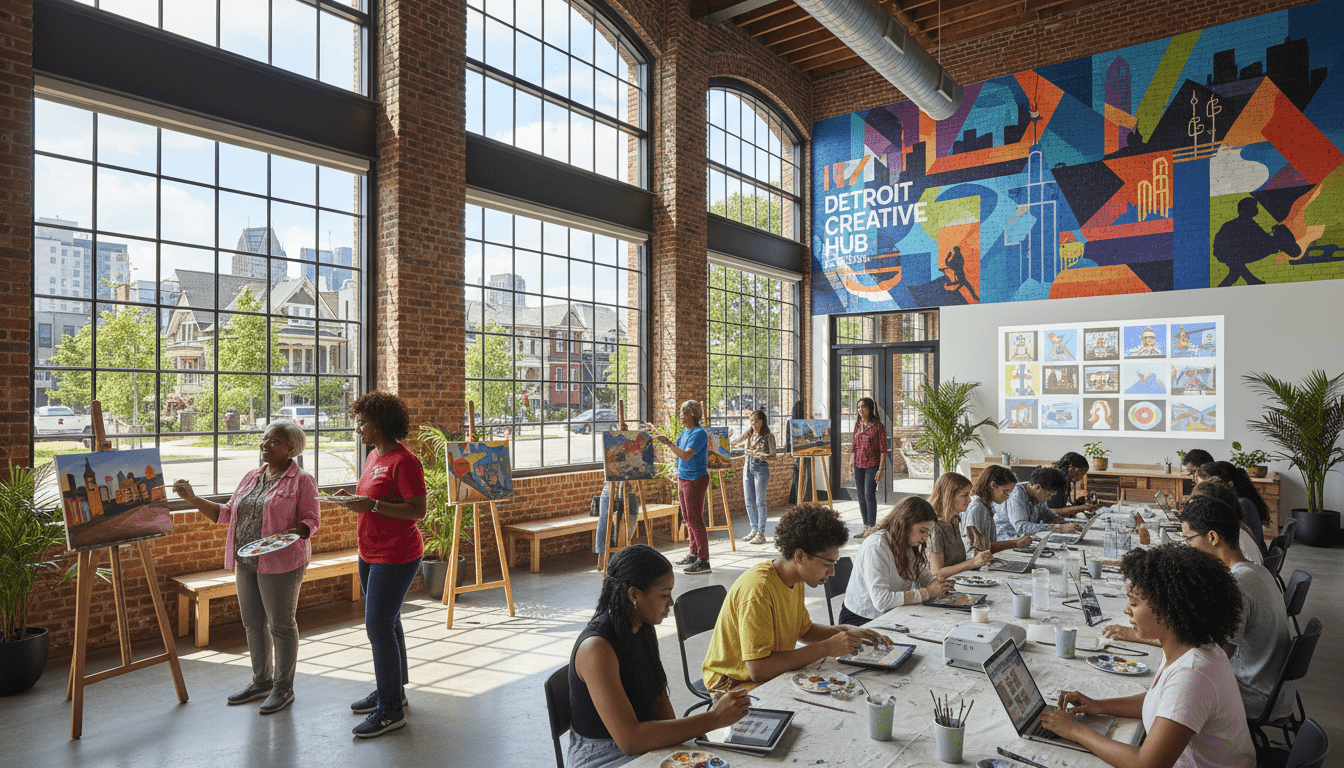
In 2026, the landscape of Detroit’s cultural sector is defined not just by its historic institutions, but by a decentralized network of neighborhood-based initiatives. Following years of targeted investment from both public and private sectors, Detroit arts programs have evolved into essential economic drivers, transforming vacant spaces into community hubs and offering residents new pathways to professional creativity.
According to a recent report from the City of Detroit Office of Arts, Culture, and Entrepreneurship (Detroit ACE), funding for hyperlocal arts initiatives has increased by 15% over the last two fiscal years. This shift reflects a broader strategy to leverage Detroit’s UNESCO City of Design designation to foster equity across all seven council districts.
The Shift to Neighborhood-Centric Arts
For decades, the narrative of Detroit art was heavily anchored in the Midtown cultural district. However, 2026 marks a maturing of the “20-minute neighborhood” concept applied to culture. Residents in areas like Fitzgerald, Brightmoor, and Osborn now have access to high-quality arts education and production facilities without needing to commute downtown.
Data from the Kresge Foundation indicates that multi-year operational support for small to mid-sized arts organizations has stabilized the sector. This stability allows organizations to focus on long-term programming rather than survival. The proliferation of adaptive reuse projects—turning former industrial sites into galleries and maker spaces—has provided the physical infrastructure necessary for this growth.
“The goal has always been to ensure that every Detroiter sees themselves reflected in the city’s cultural narrative,” stated officials from the city’s cultural office in a press briefing earlier this month. “By 2026, we are seeing the tangible results of investing in artists as community leaders.”
Impact on Detroit Residents
The expansion of Detroit arts programs has a direct impact on the daily lives of locals. For families, this means accessible after-school programs that go beyond basic crafts, offering training in digital design, music production, and public art installation. These programs serve as safe havens and skill-building centers for youth.
For adult residents, the integration of art into neighborhood revitalization projects has improved walkability and community pride. Mural festivals and pop-up performance spaces have activated commercial corridors, drawing foot traffic to local small businesses. The “creative placemaking” approach has proven effective in increasing perceived safety and community cohesion in historically underinvested corridors.
Furthermore, the gig economy for creatives has become more formalized. New workforce development initiatives connect local graphic designers, photographers, and fabricators with corporate clients and municipal contracts, keeping talent within the city limits.
Economic Data and Workforce Trends
The economic footprint of the creative sector in Southeast Michigan continues to grow. Regional economic analysis suggests that the creative industries in Detroit now support thousands of jobs, contributing significantly to the local GDP. This is no longer a niche sector; it is a pillar of the Detroit economic outlook.
Key statistics influencing the 2026 landscape include:
- Grant Distribution: A higher percentage of arts funding is now distributed to individual artists and collectives rather than solely to large institutions.
- Real Estate: Artist housing incentives have helped mitigate displacement in rapidly developing areas, ensuring that the creators who made neighborhoods desirable can afford to stay.
- Tourism: Cultural tourism remains a primary draw, with international visitors citing Detroit’s street art and music heritage as top reasons for travel.
Philanthropic organizations have also adjusted their models to support “risk capital” for artists—grants that allow for experimentation without the pressure of immediate commercial success. This has led to a surge in avant-garde and experimental works premiering in Detroit before moving to coastal markets.
Future Outlook for Local Culture
Looking ahead, the challenge for Detroit arts programs will be maintaining momentum amidst changing real estate markets. As property values rise in neighborhoods adjacent to these cultural hubs, the city faces the ongoing task of protecting affordable spaces for production and exhibition.
However, the infrastructure built by 2026 appears resilient. With strong partnerships between the City of Detroit, philanthropic giants, and grassroots organizers, the framework is in place to ensure that creativity remains a renewable resource for the city. The focus is now shifting toward digital equity in the arts, ensuring that Detroit’s next generation of creators has access to the advanced technology required to compete globally.