Detroit Riverfront renaissance is transforming one of the city’s most historic corridors into a modern urban destination for recreation, community, and economic development.
Once dominated by industrial sites and inaccessible waterfront areas, Detroit’s riverfront is now emerging as a national model for urban waterfront revitalization. Through years of strategic planning and public-private investment, the area has become a central gathering place for residents and visitors alike.
The project represents not just a new park system, but a reimagining of how Detroit connects people to its natural and cultural assets.
The Vision Behind the Detroit Riverfront Renaissance
The Detroit Riverfront renaissance has been driven by a combination of nonprofit leadership, city planning, and private investment.
Details
The Detroit Riverfront Conservancy, in partnership with the City of Detroit and philanthropic organizations, has led the redevelopment of miles of riverfront land into public parks, promenades, and green spaces.
Key projects such as the Detroit RiverWalk and Ralph C. Wilson, Jr. Centennial Park have turned formerly abandoned land into accessible community areas featuring playgrounds, sports facilities, event spaces, and waterfront views.
These projects were designed with a long-term lens, emphasizing inclusivity, accessibility, and environmental sustainability.
Detroit RiverWalk: From Industrial Corridor to Civic Landmark
The Detroit Riverfront renaissance became visible to the public through the development of the award-winning Detroit RiverWalk.
Details
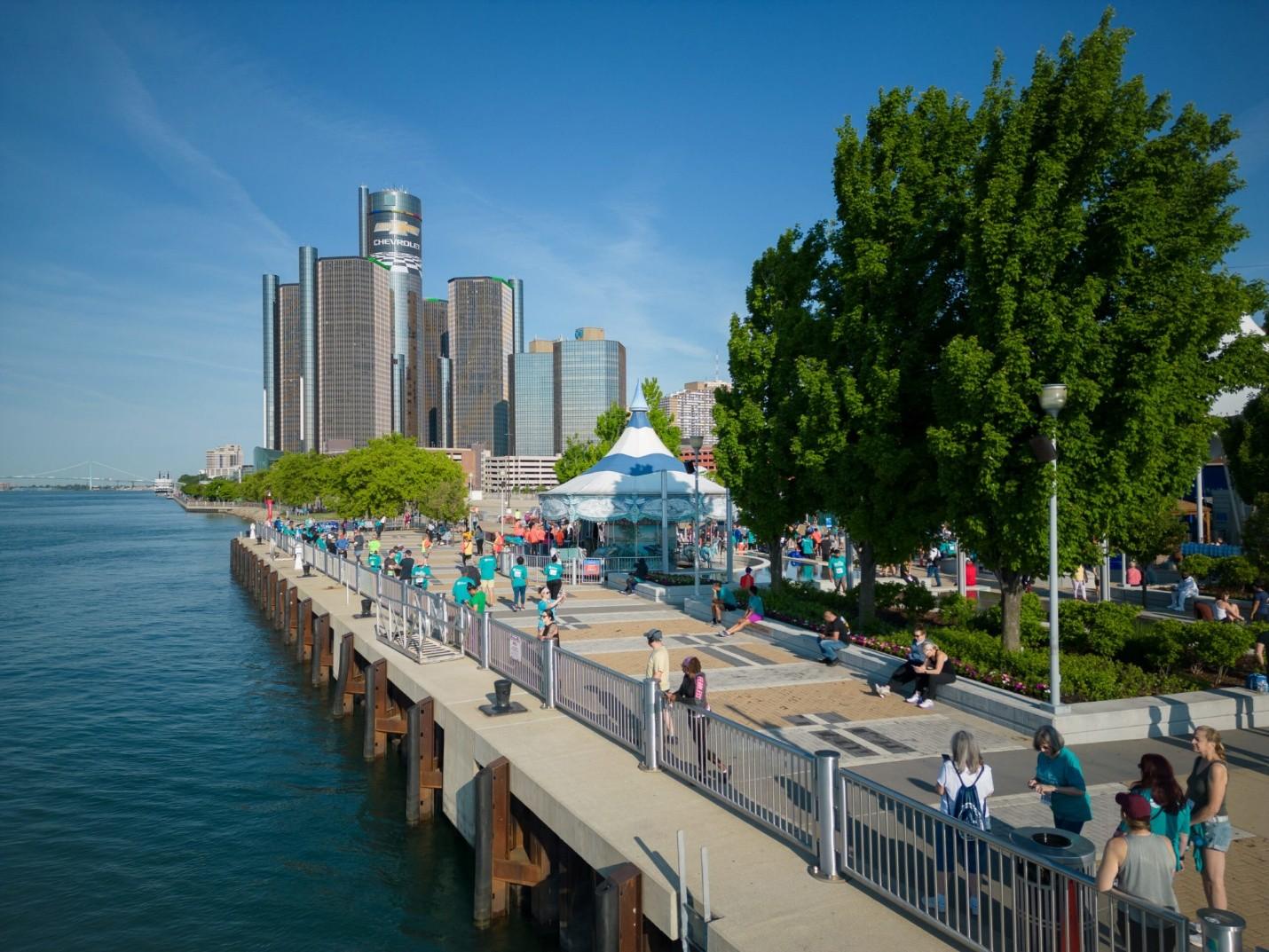
Stretching along the Detroit River, the RiverWalk offers walking and biking paths, pavilions, public art installations, and river access points connecting downtown with surrounding neighborhoods.
It has received national recognition as one of America’s best riverfront developments, drawing millions of visitors each year.
The RiverWalk also serves as a critical connector between major landmarks, including Hart Plaza, the Renaissance Center, and Belle Isle.
More on Detroit’s public spaces:
Detroit’s Historic Landmarks, New Roles: From Belle Isle to Campus Martius
Ralph C. Wilson, Jr. Centennial Park and Future Expansion
Another cornerstone of the Detroit Riverfront renaissance is the ongoing development of Ralph C. Wilson, Jr. Centennial Park.
Details
The 22-acre park includes sports courts, performance spaces, playscapes, and river lookout points designed to serve residents of all ages.
This park is part of a broader vision to expand green spaces east and west along the river, improving access for neighborhoods historically cut off from the waterfront.
City planners believe these expansions will strengthen community cohesion and improve public health outcomes by increasing access to outdoor recreation.
Economic and Tourism Impact
The Detroit Riverfront renaissance has also contributed to economic revitalization and tourism growth.
Details
New restaurants, retail spaces, and residential developments have emerged near the riverfront, increasing property values and attracting business activity.
According to Visit Detroit, the riverfront has become one of the city’s top tourist attractions, drawing both regional and national visitors who attend festivals, events, and outdoor activities throughout the year.
This steady foot traffic has helped support small businesses and contributed to Detroit’s growing hospitality sector.
Environmental Benefits and Sustainability
In addition to economic gains, the Detroit Riverfront renaissance has brought environmental improvements.
Details
Green stormwater infrastructure, native plant restoration, and shoreline stabilization projects have improved water quality and wildlife habitats along the Detroit River.
Environmental groups highlight the riverfront as an example of how urban redevelopment can contribute to ecological recovery and climate resilience.
These efforts align with broader sustainability strategies adopted by the City of Detroit and regional environmental organizations.
Access and Equity in Riverfront Development
A core goal of the Detroit Riverfront renaissance has been to ensure equitable access for residents across socioeconomic backgrounds.
Details
Free public programming, public transportation access, and ADA-compliant design features have been integrated into the riverfront to make it accessible to all Detroiters.
Community engagement sessions were held throughout the planning phases to incorporate feedback from nearby neighborhoods and grassroots organizations.
However, some residents and advocates continue to stress the need for ongoing outreach and investment to prevent surrounding development from pushing out longtime communities.
The Riverfront as a Cultural Space
Beyond recreation, the Detroit Riverfront renaissance has positioned the riverfront as a vibrant cultural space.
Details
The area hosts concerts, cultural festivals, public art installations, and community gatherings that reflect Detroit’s diverse population.
Major events such as summer festivals and holiday celebrations have helped reinforce the riverfront’s role as Detroit’s collective waterfront living room.
Local artists and cultural groups have increasingly used the riverfront as both a performance stage and creative showcase.
Future Plans and Ongoing Development
The next phase of the Detroit Riverfront renaissance focuses on extending access, increasing programming, and strengthening connections to nearby neighborhoods.
Details
Plans include expanded trail networks, additional recreational facilities, and improved transportation links connecting the riverfront to underserved areas.
Future projects aim to ensure the riverfront remains not just a downtown destination, but a citywide asset integrated into Detroit’s broader urban fabric.
Conclusion
The Detroit Riverfront renaissance stands as one of the most visible symbols of Detroit’s urban comeback.
By transforming industrial land into inclusive public space, the city has reclaimed its waterfront as a place for community, culture, and connection — reinforcing Detroit’s identity as a city of resilience and renewal.
For more on large-scale urban waterfront projects, see coverage from the Detroit Riverfront Conservancy:
Detroit Riverfront Conservancy