As temperatures plummet and snow begins to blanket the Motor City, public health officials and urban planners are joining forces to address a perennial challenge: keeping residents moving during the long Michigan winter. While hibernation might be the natural instinct, a concerted effort by the City of Detroit, the Detroit Riverfront Conservancy, and the Downtown Detroit Partnership (DDP) is transforming the city’s outdoor landscape to make staying active in Detroit a viable option year-round.
Historically, public spaces in the Midwest have suffered from underutilization between November and March. However, recent data suggests a shift in how Detroiters engage with their city during the colder months. Driven by new infrastructure investments and a reimagining of public parks, the city is seeing an increase in winter foot traffic—a trend that local leaders hope will combat seasonal inactivity and improve overall community health.
The Shift Toward Year-Round Urban Planning
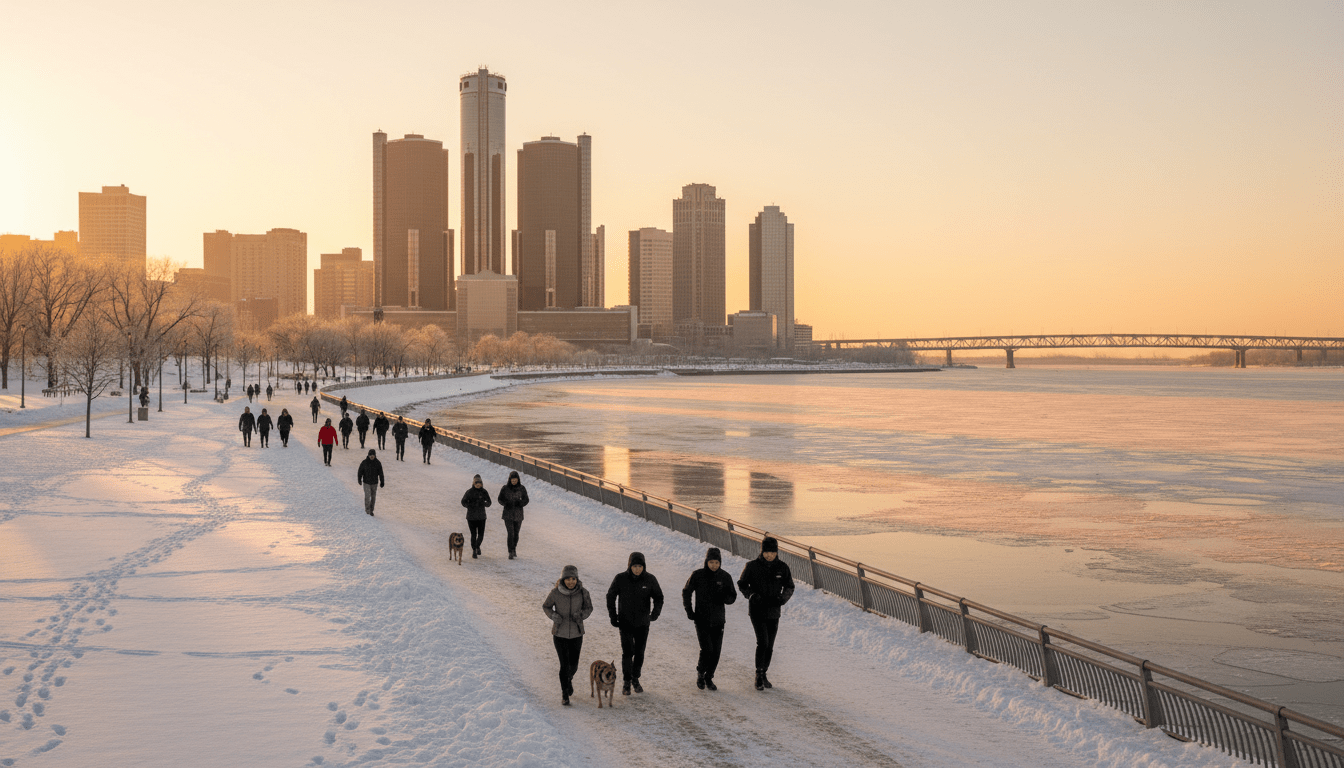
The concept of the “four-season city” has moved from a buzzword to a tangible planning strategy in Detroit. The focal point of this shift is visible along the Detroit Riverfront. The Detroit Riverfront Conservancy has aggressively programmed spaces like Valade Park to ensure they remain destinations even when the wind chill drops below zero.
According to representatives from the Detroit Riverfront Conservancy, the strategy involves more than just clearing snow from pathways. It involves creating “destinations of warmth”—installing oversized fire pits, synthetic ice rinks, and winter-specific festivals that draw residents out of their homes. This infrastructure is critical for staying active in Detroit, as it provides safe, lit, and maintained environments for walking and recreation when neighborhood sidewalks might be less accessible.
Similarly, the Downtown Detroit Partnership has continued to evolve Campus Martius Park into a winter hub. While the ice rink is a well-known attraction, the surrounding walkable areas are now designed to facilitate movement through the downtown core, connecting distinct districts and encouraging pedestrian travel over vehicular transport for short trips.
Public Health Implications of Winter Inactivity
The push for outdoor engagement is not merely aesthetic; it is a public health necessity. Health data consistently shows that physical activity levels among Midwesterners drop significantly during the winter months. This sedentary shift contributes to weight gain, weakened immune systems, and a spike in Seasonal Affective Disorder (SAD).
Local health experts note that the barrier to entry for winter exercise is often infrastructure rather than motivation. When bike lanes are unplowed or parks are unlit, residents are less likely to run, walk, or cycle. By maintaining the Dequindre Cut and expanding the Joe Louis Greenway, the city is attempting to remove these physical barriers.
“Access to safe outdoor spaces is a determinant of health,” stated a spokesperson for the Detroit Health Department in a recent community briefing. “If we want to see better heart health and mental wellness statistics in our neighborhoods, we cannot afford to lose four to five months of the year to inactivity. Maintaining our greenways in January is just as important as it is in July.”
Impact on Detroit Residents and Neighborhoods
For long-time Detroiters, the expanded winter programming offers a cost-effective alternative to private gyms. Gym memberships can be prohibitively expensive for many working families, making public parks essential infrastructure for health equity. The ability to utilize the Riverwalk or the Dequindre Cut for a three-mile run in February ensures that staying active in Detroit does not come with a price tag.
Local business owners are also feeling the impact of a more active winter population. Coffee shops and restaurants located near these activity hubs report sustained foot traffic that was previously non-existent during the bleakest weeks of the year. This economic continuity helps stabilize small businesses that often struggle with the post-holiday slump.
“Ten years ago, you wouldn’t see a soul walking down the cut on a Tuesday in February,” said a local business owner near the Eastern Market district. “Now, you see run clubs, people walking dogs, and families heading to the river. It changes the energy of the neighborhood completely.”
Infrastructure Updates and Future Outlook
Looking ahead, the city’s commitment to winter activation is set to grow. The ongoing expansion of the Joe Louis Greenway is designed with winter maintenance in mind, promising a 27.5-mile loop that will connect neighborhoods across the city. This connectivity is vital for residents in areas historically underserved by recreational amenities.
Furthermore, the revitalization of neighborhood parks outside of the downtown core is beginning to adopt similar winter-ready principles. Planners are looking at lighting improvements and shelter installations that allow these spaces to function as community hubs regardless of the weather.
While the cold will always be a factor in Michigan, the narrative is changing. Through strategic planning and robust infrastructure management, Detroit is proving that a drop in temperature does not necessitate a drop in activity. For residents, the message is clear: the city is open, the paths are cleared, and the opportunities for staying active in Detroit are more abundant than ever.