By Sarah Jenkins
Published: October 24, 2023
Location: Detroit, Michigan
Detroit’s Economic Growth: Key Trends, Development, and Local Impact for 2025
Detroit is currently navigating a pivotal moment in its post-bankruptcy era, characterized by sustained economic expansion, historically low unemployment rates, and significant infrastructure investment. While challenges remain regarding equitable distribution of wealth, data from 2024 and forecasts for 2025 suggest that Detroit economic growth is stabilizing into a long-term upward trajectory.
According to recent reports from the University of Michigan’s Research Seminar in Quantitative Economics, the city’s economy has shown resilience despite national inflationary pressures. The focus has shifted from mere recovery to strategic development in the technology, automotive, and small business sectors.
Drivers of the Local Economy
Several factors are currently fueling the city’s financial momentum. The automotive industry’s transition to electric vehicles (EVs) has anchored major manufacturing investments within the region, but diversification is playing an increasingly vital role.
“We are seeing a shift where Detroit is no longer just a manufacturing hub, but a center for innovation and entrepreneurship,” said a representative from the Detroit Economic Growth Corporation (DEGC) in a recent press briefing. Programs like Motor City Match have continued to support small business openings, filling storefronts in neighborhoods outside of the immediate downtown core.
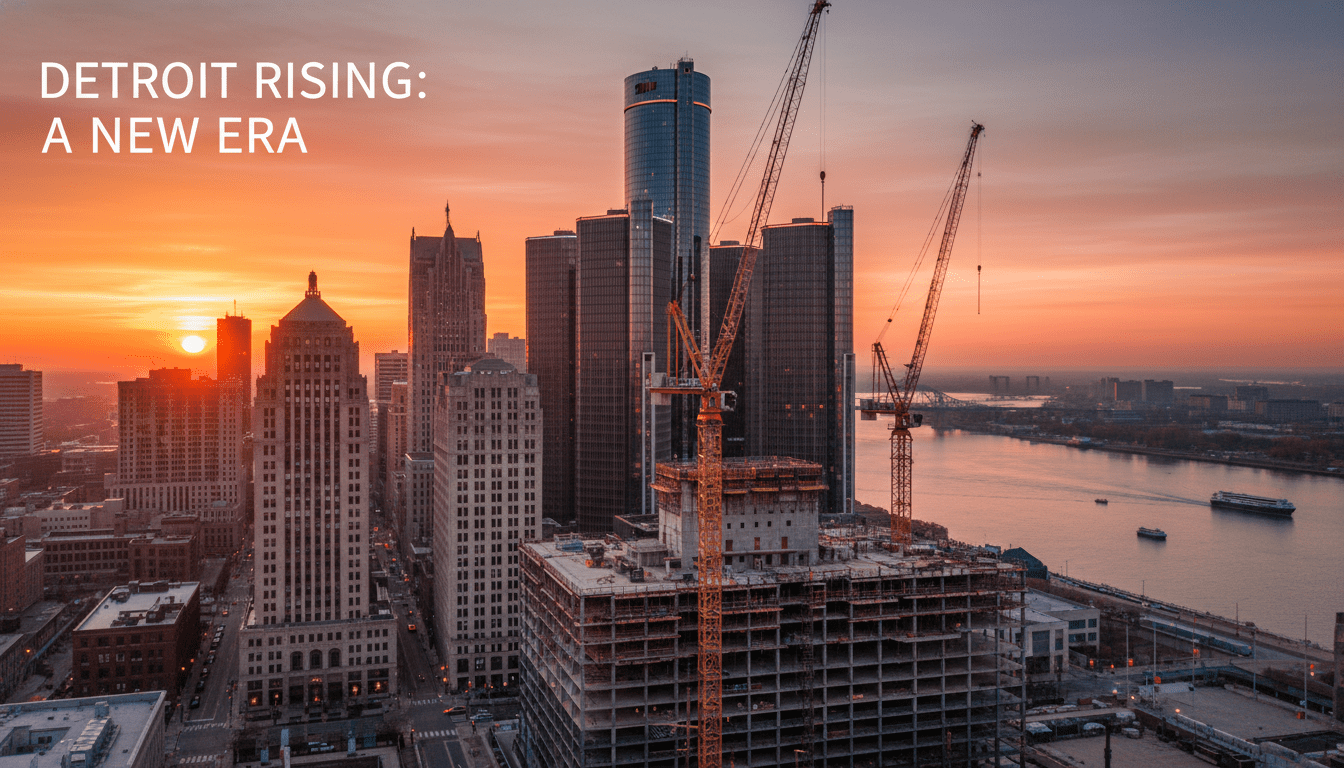
Major development projects, such as the restoration of Michigan Central Station by Ford and the towering Hudson’s site development, are nearing operational phases. These anchors are expected to draw tourism and permanent jobs, further stimulating Detroit real estate markets and commercial leasing activity.
Impact on Detroit Residents
For long-time residents, the headline numbers of economic success are weighed against the reality of the cost of living. The unemployment rate in Detroit dropped below 6% in 2024, a figure that was nearly unimaginable a decade ago. This tightening labor market has forced wages up in several sectors, providing more disposable income for local families.
However, the rapid pace of development has raised questions regarding housing affordability. As property values rise, the city has implemented tax abatement strategies and affordable housing mandates to ensure current residents are not displaced by the very growth intended to help them. Community leaders continue to advocate for neighborhood-level investment, ensuring that the economic boom is not contained solely within the 7.2 square miles of downtown and Midtown.
Background & Data
The statistical backdrop supports the narrative of a recovering city. Data from the U.S. Bureau of Labor Statistics indicates that the Detroit-Warren-Dearborn Metropolitan Statistical Area has seen consistent job gains in the leisure, hospitality, and professional services sectors over the last 18 months.
Furthermore, the City of Detroit recently exited active state financial oversight, marking a symbolic and practical milestone in its fiscal management. The city has posted consecutive budget surpluses, allowing for increased spending on public services, parks, and transportation infrastructure without incurring new debt.
What Happens Next
Looking toward 2025, the outlook for Detroit economic growth remains cautiously optimistic. Economists predict a stabilization of housing prices and a continued, albeit slower, rate of job creation as the national economy cools.
The city’s ability to attract tech talent and retain graduates from local universities will be a deciding factor in sustaining this momentum. With the NFL Draft scheduled for 2024 having highlighted the city on a national stage, officials hope to convert visibility into long-term investment. As the landscape evolves, the priority for local government remains clear: translating high-level economic data into tangible improvements for Detroit’s neighborhoods.