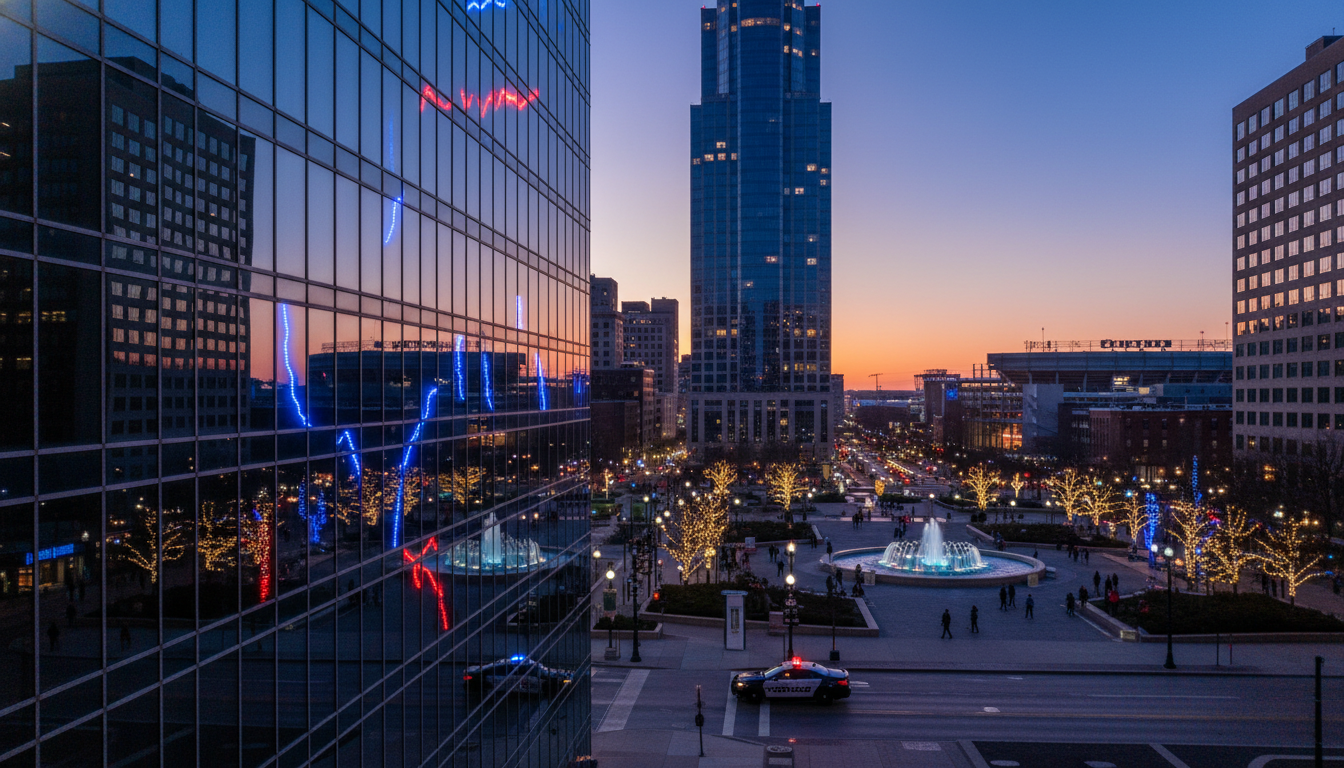
The Detroit Police Department has significantly intensified its presence in the city’s central business district, marking a strategic pivot in how law enforcement manages the dense foot traffic and commercial activity of the urban core. As the city prepares for a busy summer season of festivals and outdoor events, the visibility of uniformed officers and specialized units has become a defining feature of the downtown landscape. According to recent data from the Detroit Police Department (DPD) and the City of Detroit’s Open Data Portal, these tactical shifts are beginning to manifest in the city’s statistical crime reporting.
The Strategy Behind Increased Detroit Police Visibility
The recent surge in patrols is part of a broader initiative led by Police Chief James E. White to address both actual criminal activity and the public perception of safety. The department has deployed the Downtown Services Unit (DSU) with a renewed focus on high-traffic areas such as Campus Martius Park, the Woodward Avenue corridor, and the Greektown district. This initiative includes a combination of foot patrols, bicycle units, and increased precinct-level vehicle monitoring.
Reports from the City of Detroit suggest that the increased presence is not merely a response to rising incidents, but a proactive measure to sustain the momentum of the city’s economic recovery. Law enforcement officials have noted that the presence of officers serves as a deterrent for low-level property crimes and retail fraud, which often fluctuate with the volume of shoppers and tourists. This strategy aligns with broader efforts discussed in our previous coverage of Detroit’s small business outlook, where safety was cited as a primary concern for local entrepreneurs.
Analyzing Recent Detroit Crime Trends
Data provided by the DPD’s CompStat reporting system indicates a nuanced shift in Detroit crime patterns over the first quarter of the year. While the city has seen a celebrated decline in certain categories of violent crime—including a significant drop in homicides compared to the same period five years ago—property crimes in the downtown area remain a focal point for investigators. Larcenies, particularly those involving motor vehicles, continue to be a challenge despite the increased patrol density.
According to the 2023 end-of-year report by the Detroit Police Department, the city recorded its lowest homicide rate since the 1960s. However, the department remains vigilant regarding non-fatal shootings and aggravated assaults. In the downtown sector specifically, the influx of visitors for sporting events and theater performances has necessitated a more agile response team. Police officials have utilized the Real-Time Crime Center and Project Green Light—a public-private partnership using high-definition cameras—to supplement the physical patrols on the ground.
Impact on Downtown Residents and Businesses
For the thousands of residents who have moved into downtown apartments over the last decade, the shift in policing is a daily reality. Many local business owners have expressed support for the increased patrols, noting that a visible police presence helps stabilize the environment for evening patrons. The Downtown Detroit Partnership (DDP), which manages several public spaces in the core, has also collaborated with DPD to ensure that private security efforts are synchronized with municipal law enforcement.
However, the impact of these patrols extends beyond mere statistics. For many Detroiters, the balance between public safety and the feel of a welcoming urban environment is a delicate one. Community leaders have emphasized the importance of “neighborhood-style” policing in the downtown area, where officers interact with the public rather than remaining in patrol vehicles. This approach is intended to build trust and ensure that the downtown experience remains accessible to all residents, a theme also explored in our report on neighborhood investment and growth.
Background & Data: The Broader Context
To understand the current state of Detroit crime, one must look at the long-term trends identified by the Michigan State Police and the FBI’s Uniform Crime Reporting (UCR) Program. Historically, Detroit has faced significant challenges with high crime rates, often linked to systemic economic issues and population loss. The current administration has argued that by securing the downtown core, the city can better attract the investment necessary to fund public safety initiatives in the outlying neighborhoods.
The data suggests that while downtown is safer in terms of violent crime per capita than many other major U.S. urban centers, the perception of crime often lags behind the reality of the statistics. DPD officials have frequently pointed out that the concentration of technology, such as automated license plate readers and increased lighting, has made it significantly harder for criminal activity to go undetected in the central business district.
What Happens Next for Public Safety
As the city moves further into the year, the Detroit Police Department plans to evaluate the effectiveness of the downtown surge to determine if similar models can be expanded to other high-activity corridors like the Avenue of Fashion or Corktown. The department is also currently navigating staffing challenges, with ongoing recruitment efforts aimed at filling vacancies to maintain these patrol levels without relying excessively on overtime.
Future public safety strategies are expected to integrate more mental health co-response teams, a program that has seen success in de-escalating situations that do not necessarily require a traditional law enforcement response. The goal, according to city officials, is to create a multi-layered safety net that addresses the root causes of crime while maintaining the order necessary for Detroit’s continued resurgence. Residents and visitors alike can expect the heightened visibility to remain a staple of the downtown experience for the foreseeable future, as the city monitors the correlation between police density and crime reduction.