In a pointed critique of state and federal leadership, U.S. Representative Jack Bergman (R-MI) attributed the state’s ongoing financial challenges and population stagnation directly to Democratic governance. Speaking recently on Newsmax’s “The Chris Salcedo Show,” Bergman argued that the policies championed by Governor Gretchen Whitmer and President Joe Biden—specifically regarding electric vehicle (EV) mandates and government spending—are the primary drivers of Michigan economic struggles.
Bergman’s comments come at a critical time for Detroit, a city attempting to navigate a complex post-pandemic recovery while serving as the epicenter of the nation’s shifting automotive industry. The Congressman’s assertion that the “Green New Deal” agenda is harming the working class strikes a chord in a region where manufacturing jobs remain the backbone of the local economy.
Bergman’s Argument: Policy Over Politics
During the interview, Rep. Bergman focused heavily on the correlation between Democratic policy decisions and the lived reality of Michigan residents. He suggested that the administration’s push for a rapid transition to electric vehicles is disconnected from consumer demand and logistical reality, a move he claims is jeopardizing the stability of Michigan’s auto sector.
“It is not just about ideology; it is about the math,” Bergman reportedly suggested, emphasizing that top-down mandates are creating uncertainty for manufacturers and suppliers alike. He drew a sharp contrast between Michigan’s current economic climate and that of states like Florida, noting that residents are voting with their feet by leaving the Great Lakes State for more business-friendly environments.
According to recent legislative tracking, Bergman has consistently opposed measures he views as federal overreach, particularly those tied to the Inflation Reduction Act, which he argues has failed to reduce costs for average families. His appearance on Newsmax reinforced his stance that the current administration’s refusal to pivot from these policies is exacerbating Michigan economic struggles rather than resolving them.
The EV Mandate and Detroit’s Auto Industry
The core of Bergman’s critique revolves around the electric vehicle transition, a topic of intense debate within Detroit’s city limits. While the “Big Three” automakers—General Motors, Ford, and Stellantis—have committed billions to electrification, the transition has been rocky, marked by fluctuating demand and labor concerns.
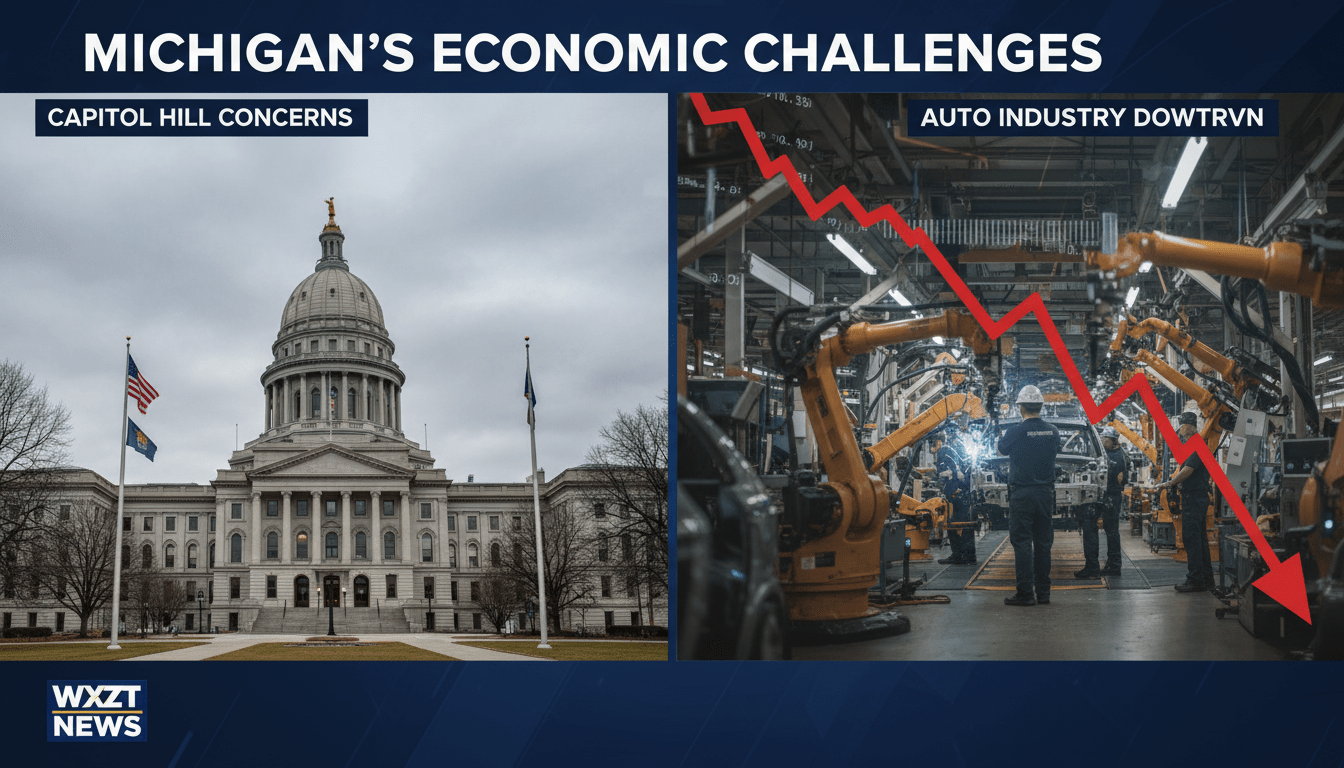
For Detroit, the stakes are incredibly high. The city’s economic revival relies heavily on the success of Detroit’s shifting automotive landscape. Bergman argues that government mandates forcing this transition faster than the market can bear puts union jobs at risk. He contends that by prioritizing environmental goals over economic stability, Democratic leadership is inadvertently undermining the very workers they claim to protect.
Industry analysts have noted mixed signals in the market. While EV sales continue to grow, the pace has slowed, leading some automakers to delay production targets. This uncertainty fuels the argument that the government’s timeline may be too aggressive, lending credence to the concerns raised by representatives like Bergman.
Population Trends and Economic Data
To understand the context of Bergman’s claims, it is necessary to look at the hard data regarding Michigan’s demographics. Data from the U.S. Census Bureau confirms that Michigan has struggled with population growth compared to southern states. While the state has not seen a mass exodus on the scale of some coastal regions, it has failed to attract new residents at a rate necessary to robustly expand its tax base.
“When you look at the numbers, the stagnation is evident,” said a local economic analyst. “Michigan ranked 49th in population growth in recent years. While Detroit has seen some stabilization, the broader state trend supports the narrative that we are losing talent to other regions.”
This population stagnation contributes directly to Michigan economic struggles. A stagnant population means a smaller workforce and fewer consumers, which in turn makes it difficult for small businesses in Detroit neighborhoods to thrive. Bergman cites this trend as proof that the current regulatory environment is repelling rather than attracting growth.
Impact on Detroit Residents
How do these high-level political disputes affect the average Detroiter? The impact is felt primarily through the cost of living and job security.
Inflation and Grocery Prices:
Despite cooling inflation rates nationally, Detroit residents continue to pay high prices for essentials. Local business owners said that supply chain costs and energy prices remain elevated, forcing them to pass costs on to consumers. Bergman attributes this “sticky” inflation to excessive federal spending.
Housing and Energy Costs:
Detroiters are also facing rising utility bills. Critics of the state’s rapid shift toward renewable energy, including Bergman, argue that moving away from traditional energy sources too quickly leads to grid instability and higher costs for ratepayers—a burden that falls disproportionately on lower-income households in Detroit.
Employment Anxiety:
Perhaps the most significant impact is the anxiety surrounding manufacturing jobs. As plants retool for EVs, workers are concerned about job redundancy. If Bergman’s assessment is correct—that the market isn’t ready for an all-EV future—Detroit auto workers could face layoffs if inventory piles up unsold.
The Counterpoint: Democratic Defense
While Bergman lays the blame squarely on Democratic failures, state officials offer a different narrative. The Whitmer administration points to low unemployment rates and record investments in business attraction as evidence that their strategy is working. According to the State of Michigan’s economic development reports, billions of dollars in battery plant investments have been secured, promising to future-proof the state’s economy.
Supporters of the Governor argue that the transition to green energy is inevitable and that Michigan must lead or get left behind. They contend that the short-term pains of transition are necessary to secure long-term prosperity and that blaming “Green New Deal” policies ignores the global shift toward sustainability.
What Happens Next?
As the 2024 election cycle heats up, the debate over the cause of Michigan economic struggles will likely intensify. Michigan remains a pivotal swing state, and the economic sentiment of Detroit voters will play a crucial role in determining the outcome.
Residents can expect to hear more from both sides regarding the future of the auto industry and the cost of living. For Rep. Bergman, the solution lies in a return to deregulation and market-driven energy policies. For Democratic leaders, the path forward involves continued government support for green technology and infrastructure.
For now, Detroiters are left navigating an economy that feels caught between two visions of the future, watching closely to see which policy approach will eventually deliver the stability and growth the region desperately needs.
For more detailed statistics on regional economic health, readers can visit the Bureau of Labor Statistics Michigan summary.