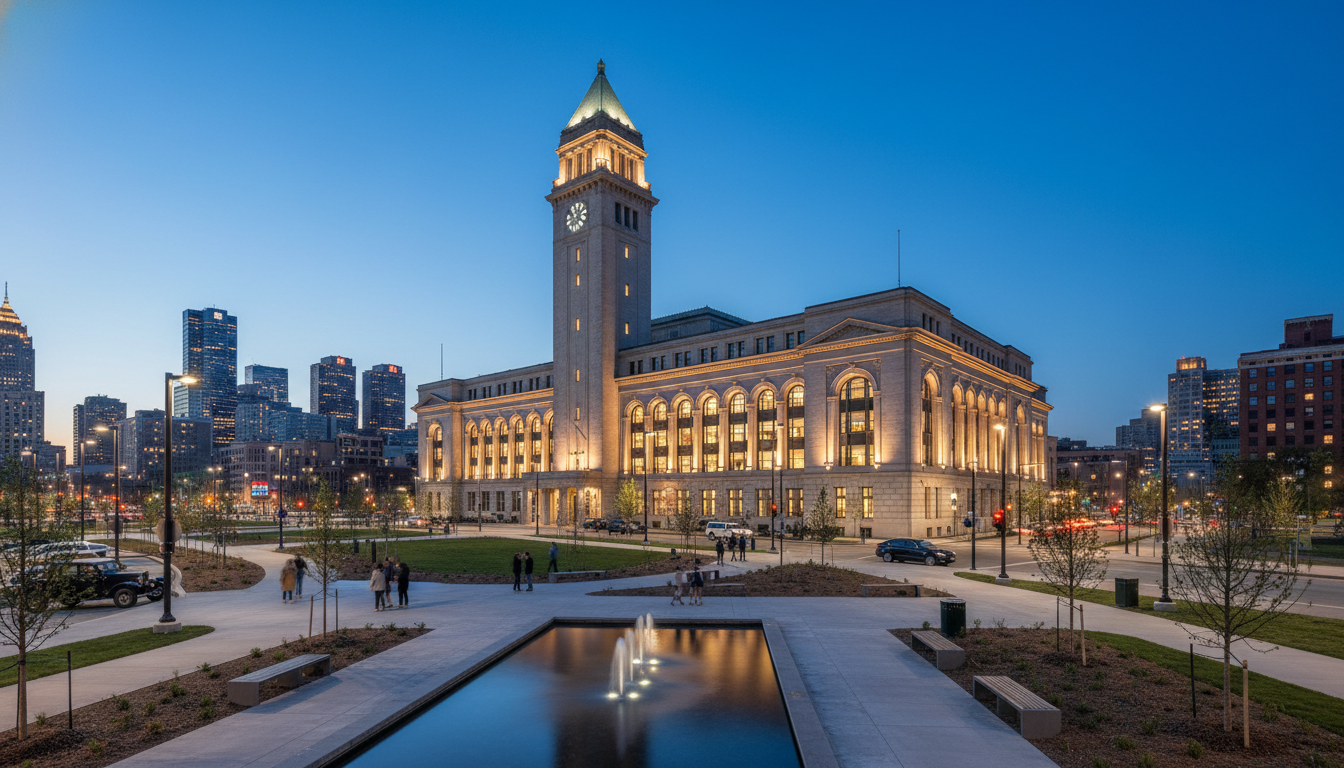
For decades, the towering silhouette of the Michigan Central Station stood as a silent sentinel over Corktown, its empty windows serving as a visual shorthand for Detroit’s economic contraction. However, following a massive six-year restoration project led by Ford Motor Company, the station has transitioned from a symbol of decay into the centerpiece of a sprawling 30-acre innovation district. This Detroit Michigan Central development represents more than just a historic preservation success; it is a strategic pivot intended to position the city at the forefront of global mobility technology.
A Catalyst for Innovation and Mobility
The Detroit Michigan Central development is designed to function as a collaborative ecosystem where tech giants, startups, and academic researchers work alongside one another. According to official project documentation from Ford Motor Company, the district is anchored by the 640,000-square-foot station itself, which now houses office spaces, retail outlets, and public gathering areas. Nearby, the Book Tower and the newly renovated Roosevelt Park serve as supporting infrastructure for this burgeoning tech hub.
Central to this vision is Newlab at Michigan Central, a startup incubator that has already attracted dozens of companies focused on autonomous vehicle technology, energy equity, and smart city infrastructure. By providing shared laboratories and prototyping spaces, the district aims to create a sustainable pipeline for high-tech jobs within the city limits. This initiative aligns with the City of Detroit’s broader goals to diversify the local economy beyond traditional manufacturing and into software-driven automotive services.
Impact on Detroit Residents and Corktown
For the residents of Corktown and the surrounding Southwest Detroit neighborhoods, the Detroit Michigan Central development brings a mixture of opportunity and anxiety. On one hand, the influx of workers and visitors has provided a significant boost to local businesses. Long-standing restaurants and new retail boutiques along Michigan Avenue have reported increased foot traffic since the station’s public reopening events. Additionally, Ford has committed to community benefit agreements that include funding for local parks and educational programming for neighborhood youth.
However, the rapid development has also accelerated housing pressures. Data from local real estate tracking shows that property values in Corktown have climbed significantly over the last three years. This trend mirrors broader Detroit housing market trends, where revitalized districts often face challenges regarding affordability for long-term residents. To address these concerns, the city has worked with developers to ensure that a percentage of new housing units in the immediate area are designated as affordable housing, though community advocates argue that more aggressive measures are needed to prevent displacement.
Infrastructure and Connectivity
The scale of the Detroit Michigan Central development necessitated significant upgrades to local infrastructure. The City of Detroit’s Planning and Development Department has overseen the reconfiguration of streets surrounding Roosevelt Park to improve pedestrian safety and integrate the district with the Joe Louis Greenway. These transportation upgrades in Metro Detroit are vital for ensuring that the tech hub remains accessible to those who do not rely solely on personal vehicles.
Furthermore, the district serves as a real-world testing ground for “smart” infrastructure. This includes the installation of inductive charging roads and advanced sensors that collect data on traffic patterns and air quality. By embedding these technologies into the physical fabric of the neighborhood, Detroit is effectively marketing itself as a laboratory for the future of urban living, a move that city officials hope will attract further international investment.
Background and Economic Data
The economic footprint of the project is substantial. Ford Motor Company initially committed roughly $740 million to the acquisition and restoration of the Michigan Central campus. When including the contributions from state and federal tax incentives, as well as private investment from partners, the total economic impact is estimated to reach into the billions over the next decade. According to reports from the Michigan Economic Development Corporation (MEDC), the district is expected to support approximately 5,000 jobs, ranging from high-level software engineering to hospitality and facility management.
Contextualizing this within Detroit’s history, the project represents a shift in how large-scale urban renewal is handled. Unlike the urban renewal projects of the mid-20th century that often demolished historic fabrics, the Michigan Central initiative has prioritized the adaptive reuse of existing structures. This approach not only preserves the architectural heritage of Corktown but also creates a unique “sense of place” that is attractive to the modern tech workforce, which increasingly favors walkable, historic urban environments over isolated suburban office parks.
What Happens Next for Corktown
As the initial phase of the Detroit Michigan Central development concludes, focus is shifting toward long-term sustainability. The challenge moving forward will be maintaining the momentum of the tech hub while ensuring that the benefits of the investment are felt across the city. Future phases of the project include the development of additional residential units and the expansion of the mobility testing zones further into Southwest Detroit.
City officials and community leaders are expected to continue their dialogue regarding the district’s impact on local infrastructure. With the station now active, the focus moves from construction to operations, where the success of the district will be measured by the number of patents filed, the growth of the resident startups, and the degree to which the project can foster equitable economic growth for all Detroiters. While the lights are back on at Michigan Central, the real work of building a 21st-century economy in its shadow is only just beginning.