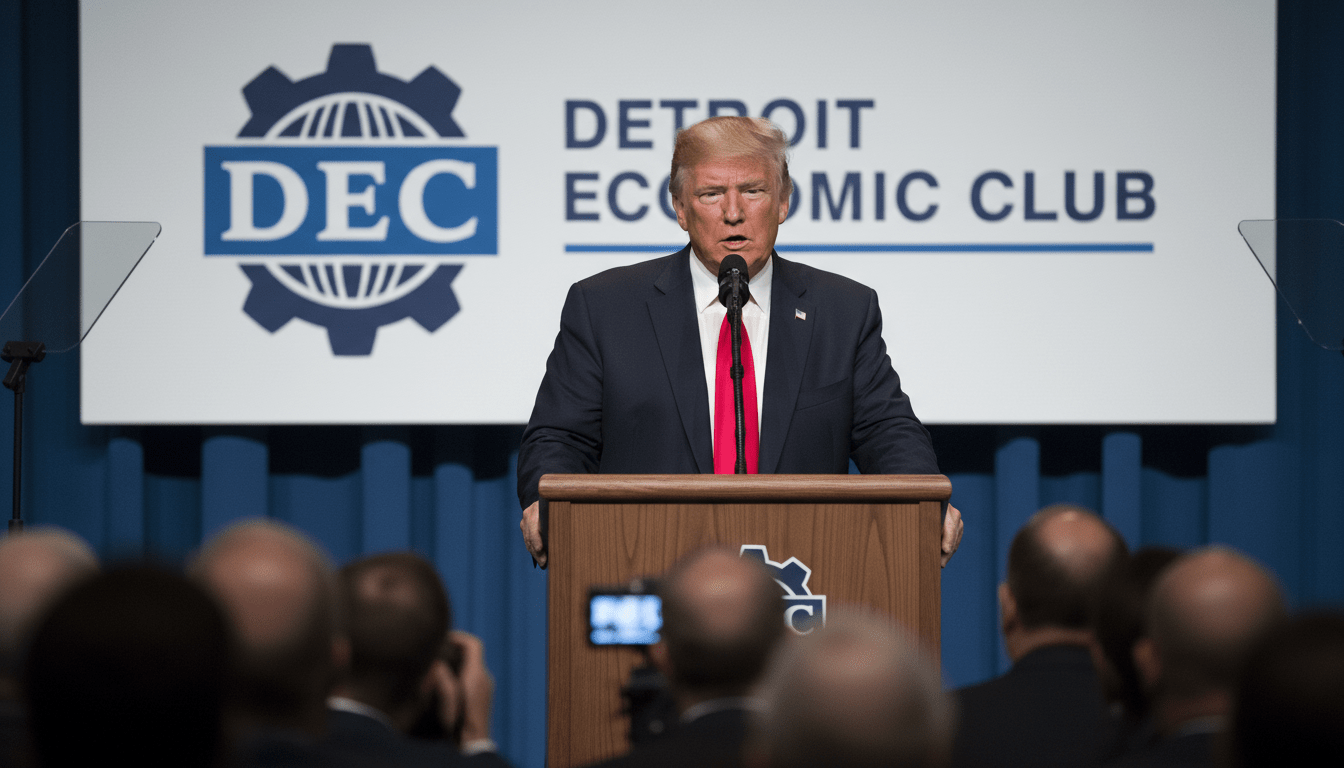
Former President Donald Trump addressed a packed audience at the Detroit Economic Club on Thursday, outlining an aggressive economic agenda focused on revitalizing the American automotive industry through steep tariffs and new tax incentives. In a speech that touched on trade protectionism, immigration, and regulatory rollbacks, Trump centered his message on shielding Detroit’s historic manufacturing base from foreign competition, specifically targeting Chinese automakers establishing operations in Mexico.
Speaking to business leaders and local stakeholders, the Republican nominee framed the 2024 election as a pivotal moment for the survival of the U.S. auto industry. He argued that current federal policies favoring electric vehicle mandates would decimate jobs in Michigan, promising instead to prioritize gasoline-powered engines and hybrid technologies favored by traditional manufacturers.
Focus on the Auto Industry: Tariffs and Tax Breaks
The centerpiece of Trump’s economic presentation was a new proposal to make interest on car loans fully tax-deductible. This policy, which mirrors the mortgage interest deduction for homeowners, is designed to stimulate vehicle sales by lowering the effective cost of borrowing for American consumers. With interest rates currently elevated, the cost of financing a new vehicle has become a significant barrier for many buyers.
“I will make interest on car loans fully tax-deductible,” Trump announced, drawing applause from the crowd. “This will revolutionize your industry. It will stimulate massive domestic production and make car ownership affordable for millions of working families again.”
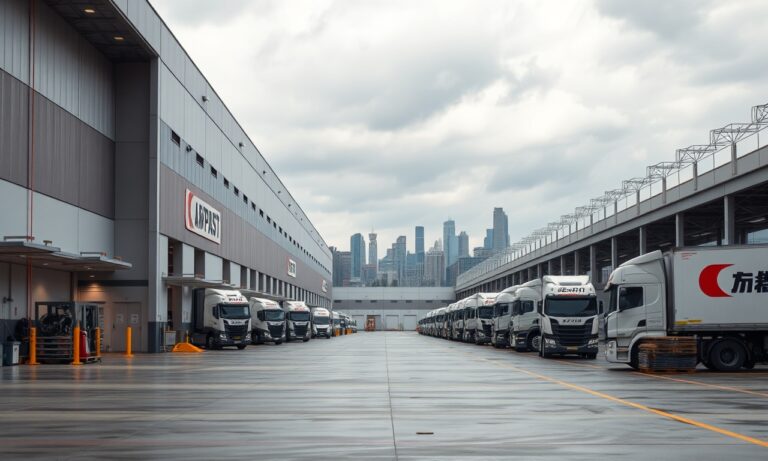
In addition to the tax proposal, Trump doubled down on his protectionist trade rhetoric. He warned that Chinese automakers are building massive plants in Mexico to bypass U.S. trade barriers and flood the American market with inexpensive vehicles. To combat this, he threatened tariffs ranging from 100% to 200% on vehicles imported from across the southern border.
According to data from the U.S. Census Bureau, Mexico remains one of the United States’ largest trading partners in the automotive sector. Supply chain analysts suggest that while such tariffs could protect domestic assembly jobs, they might also raise prices for consumers and disrupt the deeply integrated North American supply chain established under the USMCA (United States-Mexico-Canada Agreement).
Controversial Remarks on Detroit’s Economy
The speech was not without controversy regarding the host city itself. While discussing his opponent’s economic record, Trump drew a stark comparison, suggesting that the entire United States would “end up being like Detroit” if Vice President Kamala Harris were elected. The comment, intended to highlight urban economic struggles, drew immediate pushback from local leaders who cite Detroit’s recent resurgence.
Detroit has seen significant stabilization in recent years. Recent development reports indicate that the city’s credit rating has improved, and downtown investment continues to grow. However, Trump maintained that the city’s manufacturing base remains vulnerable without strict protectionist policies.
Impact on Detroit Residents and Workers
For the residents of Detroit and the broader Southeast Michigan region, Trump’s proposals carry significant weight. The promise to make car loan interest tax-deductible could directly boost sales for the “Big Three” automakers—General Motors, Ford, and Stellantis—which are the region’s largest employers. Increased sales volume typically translates to job security for UAW members and stability for the vast network of suppliers based in Metro Detroit.
“If the deductibility plan passes, it puts money back in the pockets of consumers immediately,” said a local automotive analyst present at the event. “However, the tariff strategy is a double-edged sword. It protects the market share of Detroit automakers, but it could also provoke retaliatory trade measures that hurt our agricultural exports and increase the cost of imported parts used in Michigan assembly plants.”
Furthermore, Trump’s pledge to roll back EPA emissions standards resonates with many in the industry who feel the transition to electric vehicles (EVs) has been too rapid and government-mandated. By slowing the EV transition, Trump argues that Michigan can retain more traditional manufacturing jobs related to internal combustion engines.
Immigration and Economic Stability
Linking immigration policy to economic health, Trump argued that strict border enforcement is necessary to protect wages for American workers. He outlined plans for what he termed the “largest deportation operation in American history,” asserting that an influx of undocumented immigrants strains local resources and depresses wages for low-skilled labor.
“We must have a border to have a country, and we must have a border to have an economy,” Trump stated. He connected border security directly to the housing crisis, suggesting that reducing the population would alleviate demand on housing stock, though housing economists debate the extent of this correlation.
Background & Data: The State of the Industry
The context of Trump’s speech comes at a time of uncertainty for the auto industry. While profits remain healthy, high interest rates have cooled consumer demand. According to Cox Automotive, the average interest rate on a new car loan has hovered near 10% for subprime borrowers, making affordability a critical issue.
Local business owners in Detroit have expressed mixed reactions. Some welcome the deregulation and tax cuts, remembering the pre-pandemic economy fondly. Others worry that aggressive tariffs could trigger a trade war similar to the steel and aluminum tariffs of 2018, which raised material costs for local manufacturers.
For more on how local policies are shaping the city’s future, read our coverage on Detroit small business grants and incentives.
What Happens Next
As the election approaches, Michigan remains a critical battleground state. The reception of these economic proposals by union workers in Macomb and Wayne counties could prove decisive. While the UAW leadership has endorsed the Democratic ticket, Trump is actively courting the rank-and-file membership with promises of job protection against foreign EV competition.
The Detroit Economic Club, a non-partisan forum, has long been a testing ground for presidential candidates to refine their economic platforms. As the campaigns enter their final stretch, the focus on Detroit underscores the city’s symbolic and practical importance in the national economic conversation.