DETROIT — The floor of the North American International Auto Show has often been a barometer for the health of the Motor City, but the 2026 exhibition offers a distinct frequency. Beneath the LED arrays and sustainable architecture, the unmistakable silhouette of American muscle has returned, albeit with a different heartbeat. As the Big Three automakers roll out their 2026 portfolios, a new era of electric muscle cars is not only redefining performance but also stabilizing manufacturing jobs across Metro Detroit.
The New Age of Heavy Metal
For the better part of a decade, industry analysts predicted the death of the muscle car, citing tightening emissions regulations and a shift toward utilitarian crossovers. However, the 2026 model year marks a decisive pivot. Stellantis and General Motors have successfully transitioned their halo performance vehicles to electrified platforms, effectively merging heritage design with battery-electric vehicle (BEV) technology.
According to production data released by Stellantis earlier this month, output at the Windsor and Detroit assembly plants has shifted significantly toward the new STLA Large platform. This architecture underpins the latest iteration of the electric Charger, a vehicle that company executives promise retains the “visceral experience” of its gas-powered ancestors through patented acoustic vibration systems and simulated transmission shift points.
“We aren’t just selling transportation; we are selling emotion,” said a Stellantis spokesperson during a press briefing at the Jefferson North Assembly Plant. “The 2026 lineup proves that high-torque, high-performance vehicles can coexist with zero-emission mandates. This is the new golden age of muscle, and it is being built right here in Detroit.”
This sentiment is echoed across town at General Motors’ Factory Zero. The facility, straddling the border of Detroit and Hamtramck, has reached full capacity this quarter, driven largely by the demand for high-performance variants of the electrified Corvette and the reintroduced Camaro EV nameplate.
Impact on Detroit Residents and Labor
For the residents of Detroit, the success of these high-margin vehicles translates directly into economic stability. The United Auto Workers (UAW) union has reported a 4.2% increase in stable assembly jobs in the Metro Detroit area over the last 18 months, a figure attributed to the labor-intensive nature of assembling these complex performance machines.
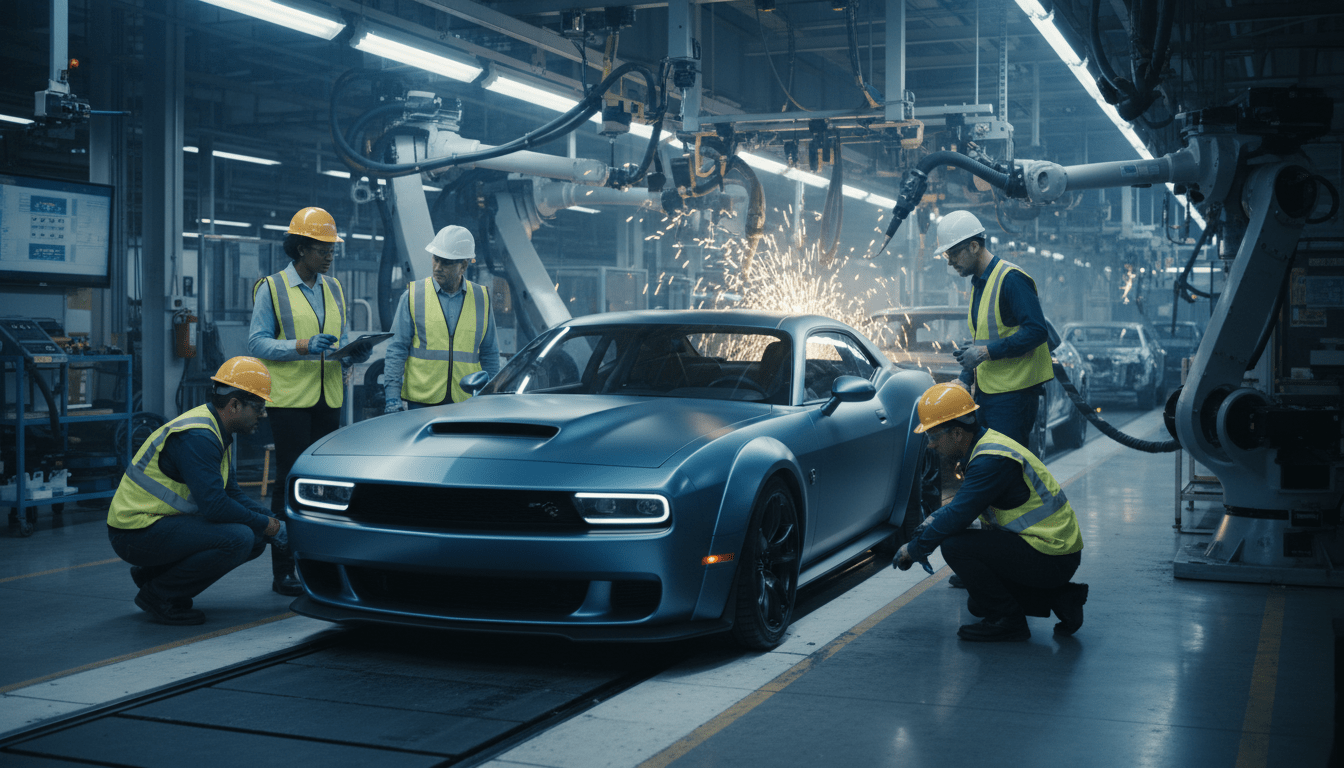
Unlike the fully automated processes feared in the early 2020s, the final fit-and-finish required for premium electric muscle cars demands skilled human labor. This has led to a hiring surge for quality control specialists and electrical systems technicians.
“The fear was that EVs would require fewer workers, leading to plant closures,” explained Dr. Marcus Thorne, a labor economist at Wayne State University. “However, the shift to luxury and performance EVs has required a higher degree of customization and quality assurance. For neighborhoods surrounding Jefferson North and Factory Zero, this means shift work is consistent, and overtime is back on the table. It stabilizes the local tax base significantly.”
Local business owners are feeling the ripple effect. Small business growth in Detroit has ticked upward near these industrial hubs. Maria Gonzales, owner of The Assembly Line Diner on East Jefferson, noted a return to pre-pandemic bustle. “The lunch rush is real again,” Gonzales said. “When the plants are running three shifts to build these new cars, everyone from the line workers to the supply chain drivers comes through here. It feels like the city has its swagger back.”
Balancing Heritage with Innovation
The cultural shift is perhaps most visible on Woodward Avenue. The annual Dream Cruise, once dominated by carbureted V8s, now features a growing contingent of “e-Muscle” enthusiasts. This synthesis of old and new is critical for the branding of electric muscle cars.
However, the transition has not been without challenges for the city’s infrastructure. The influx of high-voltage performance vehicles has accelerated the need for robust charging stations. The City of Detroit, in partnership with DTE Energy, has expedited the “Motor City Charge” initiative, aiming to install 500 new DC fast-chargers within city limits by the end of 2026.
Data from the U.S. Department of Energy indicates that Michigan has climbed into the top five states for public charging infrastructure density, a necessary metric to support the local adoption of the very cars built in the city.
Economic Data and Future Outlook
The economic implications of this automotive renaissance extend beyond the assembly line. The resurgence of the performance segment has bolstered the supply chain in the region. Tool and die shops in Macomb County and software developers in Corktown are seeing renewed contracts focused on thermal management systems and battery performance tuning.
According to the Detroit Regional Chamber’s Q1 2026 Economic Report:
- Automotive manufacturing GDP in the region is up 3.1% year-over-year.
- Median household income in neighborhoods adjacent to major assembly plants has risen by 2.8%, adjusting for inflation.
- Commercial vacancy rates in industrial zones have dropped to a five-year low.
While the focus remains on the shiny metal rolling off the lines, the broader narrative is one of resilience. Detroit has successfully navigated the perilous transition from internal combustion dominance to the electric era without losing its identity as the performance capital of the world.
What Happens Next
As the year progresses, all eyes will be on sales figures. Early pre-order numbers suggest that the appetite for electric muscle cars is strong, particularly among younger demographics who prioritize both performance and connectivity. If these models succeed commercially, it will validate billions of dollars in investment made by Detroit automakers.
For now, the hum of machinery at Factory Zero and Jefferson North is a reassuring sound. It signals that while the technology propelling the vehicles has changed, Detroit’s role as the arsenal of automotive democracy remains intact. As the city looks toward future infrastructure developments in 2027, the foundation built by this new generation of auto metal appears solid.