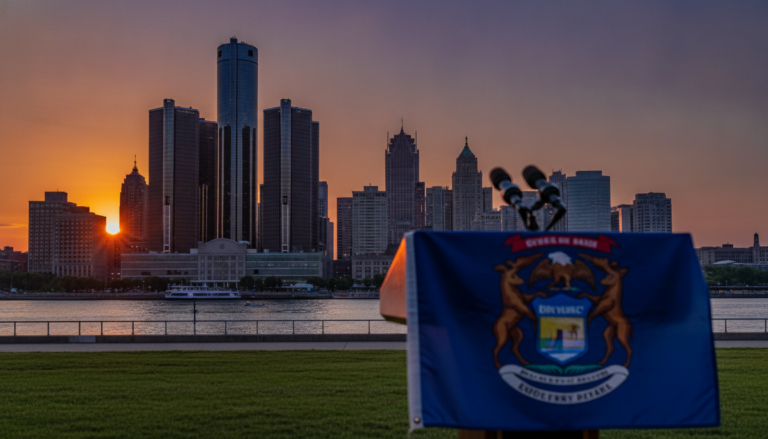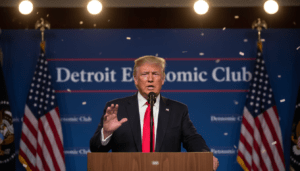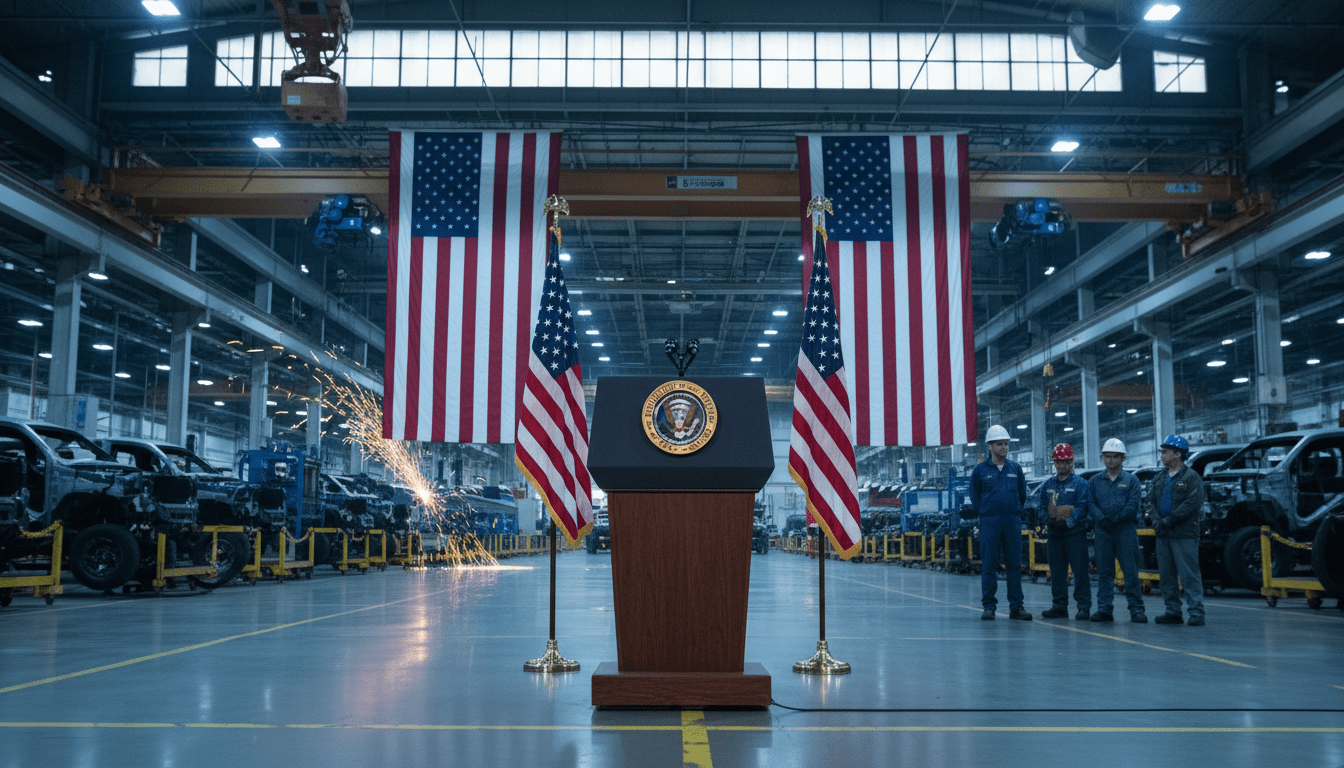
President Donald Trump returned to the Motor City this week to deliver a sweeping address on the economy, focusing heavily on the revitalization of the American automotive sector and the broader financial health of Detroit families. Speaking to a crowded venue of manufacturing workers, business leaders, and local officials, the President laid out a series of policy proposals aimed at incentivizing domestic production while imposing strict penalties on foreign competitors.
The speech comes at a pivotal moment for the Trump Detroit economy strategy, as the region continues to navigate the complex transition toward electric vehicles (EVs) and grapples with fluctuating inflation rates. The President’s remarks underscored a commitment to traditional manufacturing, promising to shield Detroit’s legacy automakers from what he described as unfair global trade practices.
A Focus on Tariffs and Domestic Manufacturing
Central to the President’s economic platform presented in Detroit was the implementation of aggressive tariffs on vehicles imported from foreign markets, specifically citing China and Mexico. Trump argued that these measures are necessary to level the playing field for the “Big Three” automakers—General Motors, Ford, and Stellantis.
“We are going to bring jobs back to Michigan, and we are going to keep them here,” Trump stated during the address. He proposed a reciprocal trade act that would mirror tariffs placed on American goods by other nations, a move he claims will force international companies to build plants within the United States if they wish to access the American consumer market.
According to data from the U.S. Bureau of Labor Statistics, manufacturing employment in the Detroit-Warren-Dearborn area has seen slow but steady stabilization over the last year. However, industry analysts note that uncertainty regarding trade policies often leads to hesitation in long-term capital investments by major corporations. The President addressed this by assuring attendees that his administration would prioritize tax incentives for companies that maintain their supply chains entirely within the U.S.
The Debate Over Electric Vehicle Mandates
A significant portion of the remarks was dedicated to rolling back federal mandates regarding electric vehicle adoption. Trump criticized current regulatory pressures that require automakers to hit specific EV sales targets, arguing that the market, not the government, should dictate what vehicles are produced in Detroit.
“The mandate is crushing our industry,” Trump told the crowd, suggesting that the push for electrification relies too heavily on battery components sourced from overseas. He promised to eliminate EPA tailpipe emission limits that effectively force the production of EVs, a stance that drew applause from workers concerned about the lower labor requirements associated with assembling electric drivetrains compared to internal combustion engines.
For more on how the shift to EVs is changing the local landscape, read our coverage on Detroit development projects adapting to green energy infrastructure.
Impact on Detroit Residents
Beyond the macro-level discussions of international trade and industrial regulation, the President outlined specific measures aimed at the wallets of everyday Detroiters. One of the most notable proposals mentioned was the concept of making interest on car loans fully tax-deductible. This policy is designed to stimulate vehicle sales, which would theoretically boost production demands at local assembly plants.
For the average resident in Wayne County, this proposal could lower the effective cost of vehicle ownership. Local real estate agents and lenders have been watching these economic signals closely. As noted in our previous reporting on Detroit housing market trends, the financial stability of the automotive workforce is directly correlated with home buying power in the city’s neighborhoods.
“If the auto workers are doing well, the restaurants on the avenue do well, and the housing market stabilizes,” said a representative from the Detroit Regional Chamber in a statement following the event. “However, we need to ensure that trade wars do not increase the cost of raw materials, which could inadvertently hurt the very manufacturers we are trying to protect.”
Local Reactions and Union Sentiment
The reaction to the Trump Detroit economy speech was mixed among local union leaders and community organizers. While the promise of protecting jobs from foreign outsourcing resonated with many rank-and-file workers, leadership figures within the labor movement expressed caution regarding the potential for retaliatory tariffs from trading partners.
Local business owners in the Corktown and Midtown areas expressed cautious optimism. “Anything that puts more money in the pockets of the auto workers is good for us,” said the owner of a long-standing diner near the Jefferson North Assembly Plant. “But we also need stability. We can’t have prices on goods going up because of import taxes.”
Context: Detroit’s Economic Resilience
Detroit has spent the last decade emerging from bankruptcy and restructuring its economy. While the city has diversified into fintech and mortgage lending (led by companies like Rocket Mortgage), the automotive sector remains the beating heart of the region’s GDP.
According to the City of Detroit’s most recent financial reports, income tax revenue has been on an upward trajectory, signaling better employment rates. However, the city remains vulnerable to national economic shifts. The President’s visit highlights Michigan’s status as a crucial battleground state where economic policy is scrutinized heavily by voters.
What Happens Next?
As the proposals outlined by President Trump move from rhetoric to potential legislative action or executive order, Detroit stakeholders are preparing for various scenarios. The automotive industry is currently assessing how a rollback of EV mandates would affect their long-term strategies, given that billions have already been invested in battery plants and EV architecture.
In the coming weeks, DetroitCityNews.com will continue to monitor the specific legislative language regarding the tax deductibility of auto loans and how new tariff schedules might be implemented. For now, the message from the President is clear: the road to American economic recovery runs directly through Detroit.