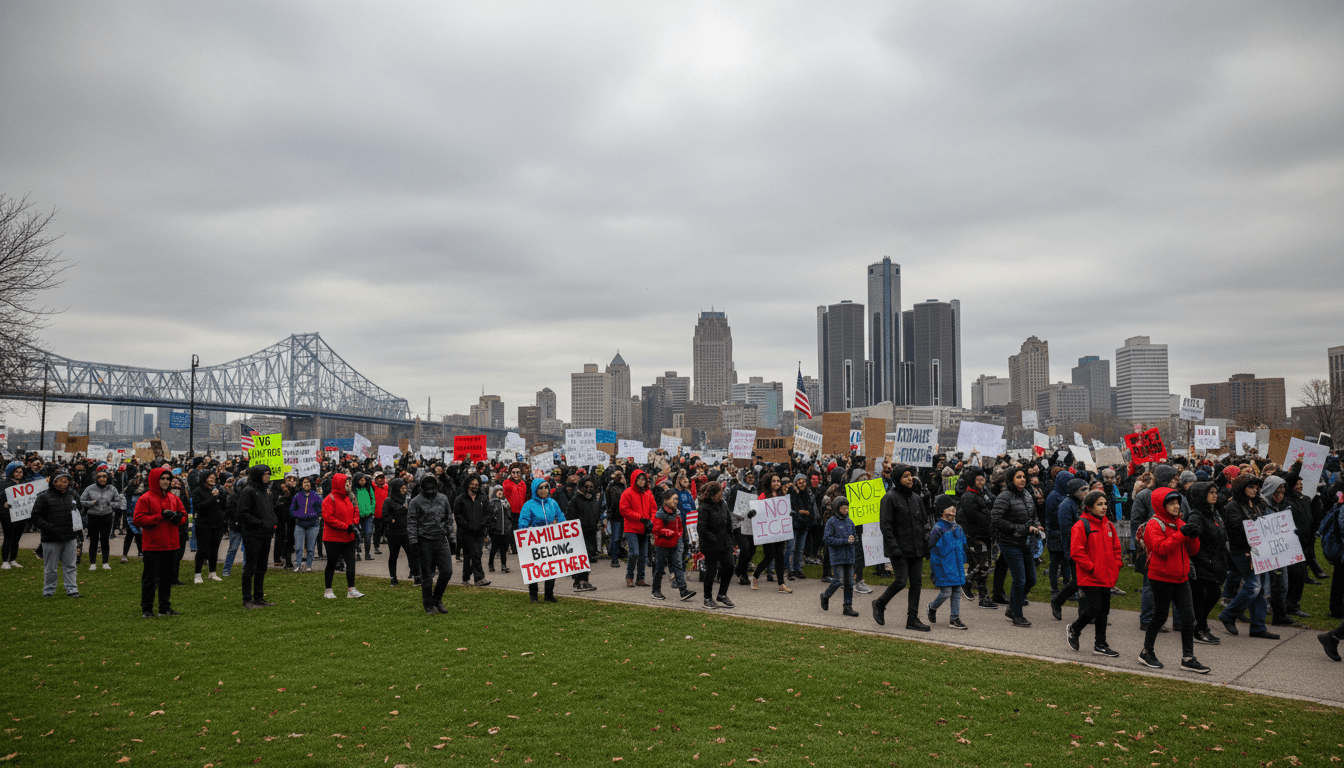
DETROIT — Hundreds of demonstrators gathered in Southwest Detroit on Saturday afternoon, staging a vocal anti-ICE rally just hours before former President Donald Trump was scheduled to speak at a campaign event downtown. The protest, organized by a coalition of local immigrant rights groups and community leaders, aimed to draw a sharp contrast between the city’s identity as a welcoming hub for immigrants and the strict enforcement policies championed by the Republican candidate.
Crowds began forming at Clark Park around 1:00 p.m., carrying banners that read “Families Belong Together” and “Detroit is a Sanctuary.” The timing was deliberate, intended to send a message ahead of Trump’s arrival at the Huntington Place convention center later in the evening. As the 2024 election cycle heats up, immigration remains a flashpoint issue, particularly in diverse urban centers like Detroit.
Community Mobilizes Against Deportation Rhetoric
The atmosphere at the rally was tense but peaceful. Organizers from Michigan United and other local advocacy groups took turns at the microphone, expressing concern over Trump’s recent campaign promises, which have included pledges to launch the largest domestic deportation operation in U.S. history if re-elected.
“We are here to remind the country that Detroit was built by immigrants and continues to be sustained by them,” said Elena Marquez, a community organizer in Southwest Detroit. “When politicians come to our city and threaten the safety of our neighbors with aggressive ICE tactics, we have a responsibility to stand up. This isn’t just about policy; it’s about the people who keep our local businesses running and our schools full.”
The anti-ICE rally highlighted fears that a return to stricter federal immigration enforcement could devastate local families. Attendees shared stories of past family separations and the lingering anxiety within the community regarding interactions with Immigration and Customs Enforcement (ICE).
Impact on Detroit Residents and Economy
For Detroit, the stakes of immigration policy are economic as well as humanitarian. After decades of population decline, Detroit has seen stabilization in recent years, driven in significant part by an influx of immigrant families moving into neighborhoods that had previously suffered from high vacancy rates.
According to data from Global Detroit, a regional economic development organization, immigrants have played a crucial role in stabilizing the city’s population and revitalizing commercial corridors, particularly in Southwest Detroit and increasingly on the Banglatown border. Small businesses launched by immigrant entrepreneurs are a staple of the local economy.
“If you look at the housing market in Southwest Detroit compared to other areas, the resilience is largely due to immigrant homeownership,” said a representative from the Detroit Hispanic Development Corporation during the event. “Mass deportations wouldn’t just hurt families; they would create a new wave of vacant homes and shuttered storefronts. It would be an economic disaster for the city.”
Residents expressed that the rhetoric surrounding the Trump visit felt personal. Many attendees live in mixed-status households where the threat of deportation affects not just undocumented individuals, but their U.S. citizen children and spouses.
Political Landscape: A City Divided?
While Detroit is a Democratic stronghold, the visit by the former President underscores the strategic importance of Michigan as a swing state. The Trump campaign has made concerted efforts to court voters in Wayne County, focusing on economic dissatisfaction and manufacturing jobs.
However, the protesters argued that economic populism should not come at the expense of civil rights. “You cannot claim to want to save Detroit’s economy while trying to remove the very people who are rebuilding it,” said Marcus Johnson, a local labor union member who joined the rally in solidarity. “Solidarity between labor and immigrant rights is essential here.”
For more coverage on how local elections are shaping up, read our analysis on Wayne County voter trends and the shifting political landscape.
Official Stances and Future Outlook
The City of Detroit has maintained a complicated relationship with federal immigration authorities. While often referred to as a “Welcoming City,” local law enforcement cooperates with federal agencies under specific circumstances. Activists at the rally demanded a complete cessation of cooperation with ICE, regardless of who occupies the White House.
In response to the protests, supporters of the former President gathering near the downtown venue emphasized national security and the rule of law. Local Republican groups have stated that border security remains a top priority for their constituents, arguing that current federal policies are insufficient.
As the rally at Clark Park dispersed, organizers urged attendees to translate their energy into voter turnout. With Michigan likely to be decided by narrow margins, the mobilization of Detroit’s immigrant communities and their allies could prove pivotal.
“Today is just one day,” Marquez told the crowd as the event concluded. “The real work happens at the ballot box and in our daily protection of one another. We will remain vigilant long after the campaign bus leaves town.”
For ongoing updates on community events and infrastructure projects affecting these neighborhoods, visit our section on Southwest Detroit development.
As evening approached, police presence increased around Huntington Place, anticipating the arrival of the motorcade. While the anti-ICE rally remained peaceful, it served as a stark reminder of the deep ideological divides facing the electorate as the campaign season intensifies.