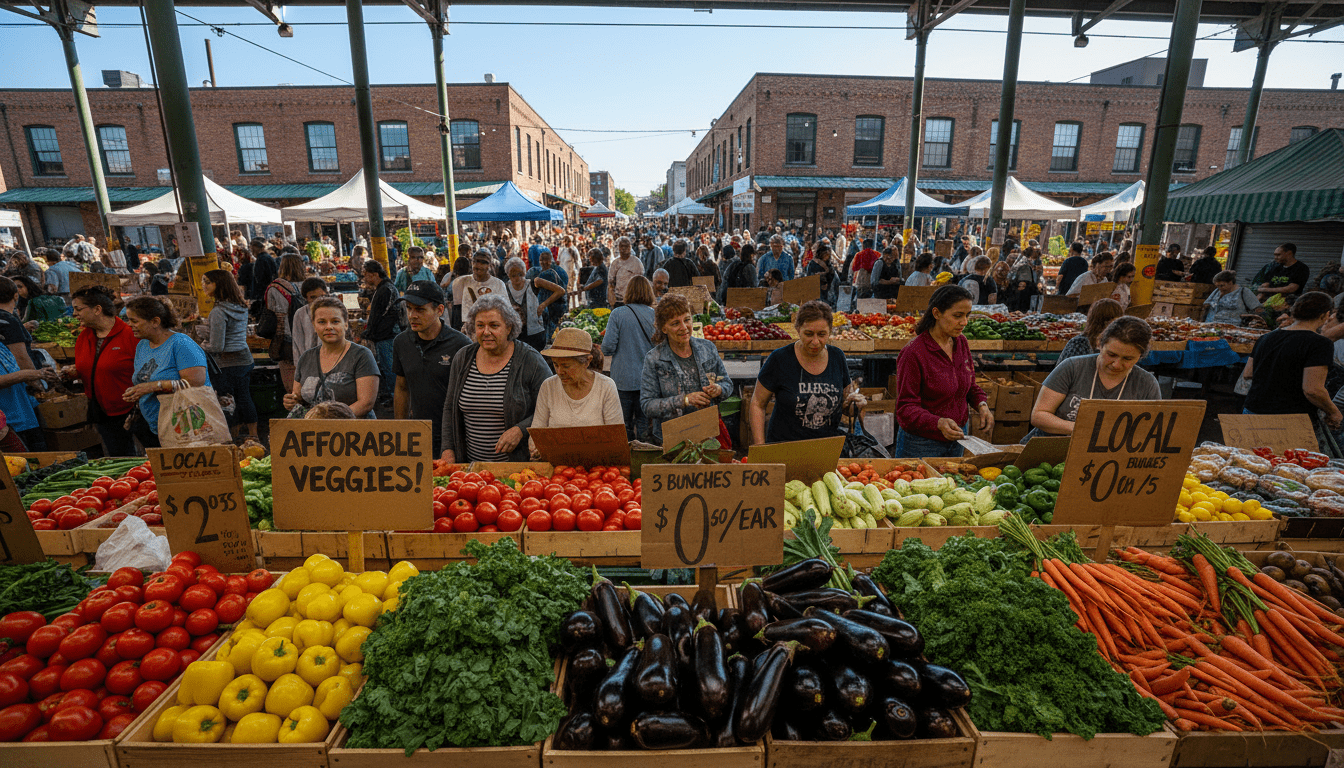
For thousands of families across the city, the challenge of healthy eating on a budget in Detroit has intensified as inflation continues to impact grocery prices. While the city has made strides in shedding its former designation as a “food desert,” economic pressures and logistical barriers still force many residents to choose between affordability and nutrition.
Recent data from the U.S. Bureau of Labor Statistics indicates that while food inflation has cooled slightly compared to the peak of 2022, prices for fresh fruits and vegetables remain significantly higher than pre-pandemic levels. For Detroit residents, particularly those in neighborhoods with limited access to full-service grocery stores, this economic reality complicates the daily effort to put nutritious meals on the table.
The Economic Landscape of Food Access
According to the Detroit Food Policy Council, nearly 30,000 Detroit households lack access to a private vehicle, making the proximity of grocery stores a critical factor in public health. When the nearest source of food is a gas station or a dollar store, the availability of fresh produce diminishes while the cost per calorie of healthy food rises.
Local economists warn that the intersection of rising housing costs and food prices is squeezing the working class. “When rent goes up, the food budget is often the first thing to get cut,” stated a representative from a local economic development group. “People aren’t choosing unhealthy food because they don’t want to be healthy; they are choosing it because it is shelf-stable and affordable.”
For ongoing coverage on financial trends in the city, see our report on the shifting landscape of the Detroit economy.
Double Up Food Bucks and State Initiatives
In response to these challenges, state and local organizations have ramped up efforts to subsidize fresh food purchases. A key player in facilitating healthy eating on a budget in Detroit is the Double Up Food Bucks program, administered by the Fair Food Network. The program matches Bridge Card (SNAP) spending on fresh fruits and vegetables, effectively cutting the cost of produce in half for low-income residents.
Data from the Fair Food Network shows that millions of dollars in healthy food have been purchased through this program in Michigan. Participating locations include not just major supermarkets, but also smaller independent grocers and farmers markets throughout Wayne County. However, community organizers note that awareness remains a hurdle. While the program is robust, ensuring every eligible resident knows how to utilize it requires constant outreach.
The Role of Urban Agriculture
Detroit’s unique landscape of vacant land has allowed for a surge in urban agriculture, which plays a pivotal role in the local food system. Organizations like Keep Growing Detroit support a network of over 2,000 urban gardens and farms within the city limits. These gardens are not merely hobbies; they are essential food sources for many neighborhoods.
According to the U.S. Department of Agriculture (USDA), urban farming initiatives contribute significantly to food security in metropolitan areas. In Detroit, produce grown locally helps bypass supply chain costs, often resulting in lower prices at farm stands compared to corporate grocery chains.
Impact on Detroit Residents
The impact of these initiatives is felt daily by locals like Marcus Thorne, a resident of the Jefferson Chalmers neighborhood. “It takes planning,” Thorne said regarding his weekly grocery runs. “I have to check which markets are accepting Double Up, and I try to buy from Eastern Market on Saturdays because the prices for bulk greens are better than the chain stores.”
For families with children, the stakes are higher. Access to nutrient-dense food is directly linked to academic performance and long-term health outcomes. By leveraging community gardens and state subsidies, many families are finding ways to bypass the high costs of processed foods, though the time investment required to source these ingredients is substantial.
Read more about how local neighborhoods are transforming through our coverage on Detroit neighborhood development.
Challenges in the Supply Chain
Despite the success of local programs, systemic issues persist. Independent grocers in Detroit operate on razor-thin margins. Wholesalers have increased prices on everything from eggs to lettuce, forcing store owners to pass costs on to consumers. Supply chain disruptions, though less volatile than in 2021, continue to affect inventory stability.
A survey of local business owners revealed that energy costs and transportation fees are currently the primary drivers of price increases at the shelf. This macroeconomic pressure makes the work of food banks and subsidized markets even more critical for stabilizing food security in the region.
Future Outlook for Food Security
Looking ahead, the City of Detroit continues to court major grocers to open locations in underserved areas, though progress is gradual. The focus has largely shifted toward strengthening the existing network of independent grocers and food co-ops.
As the city continues its revitalization efforts, the metric of success for many residents will remain simple: the ability to walk into a nearby store and afford fresh apples, spinach, and lean proteins without sacrificing other bills. Until inflation stabilizes further, the reliance on state programs and community agriculture will remain a cornerstone of life for Detroiters aiming to maintain a healthy diet.