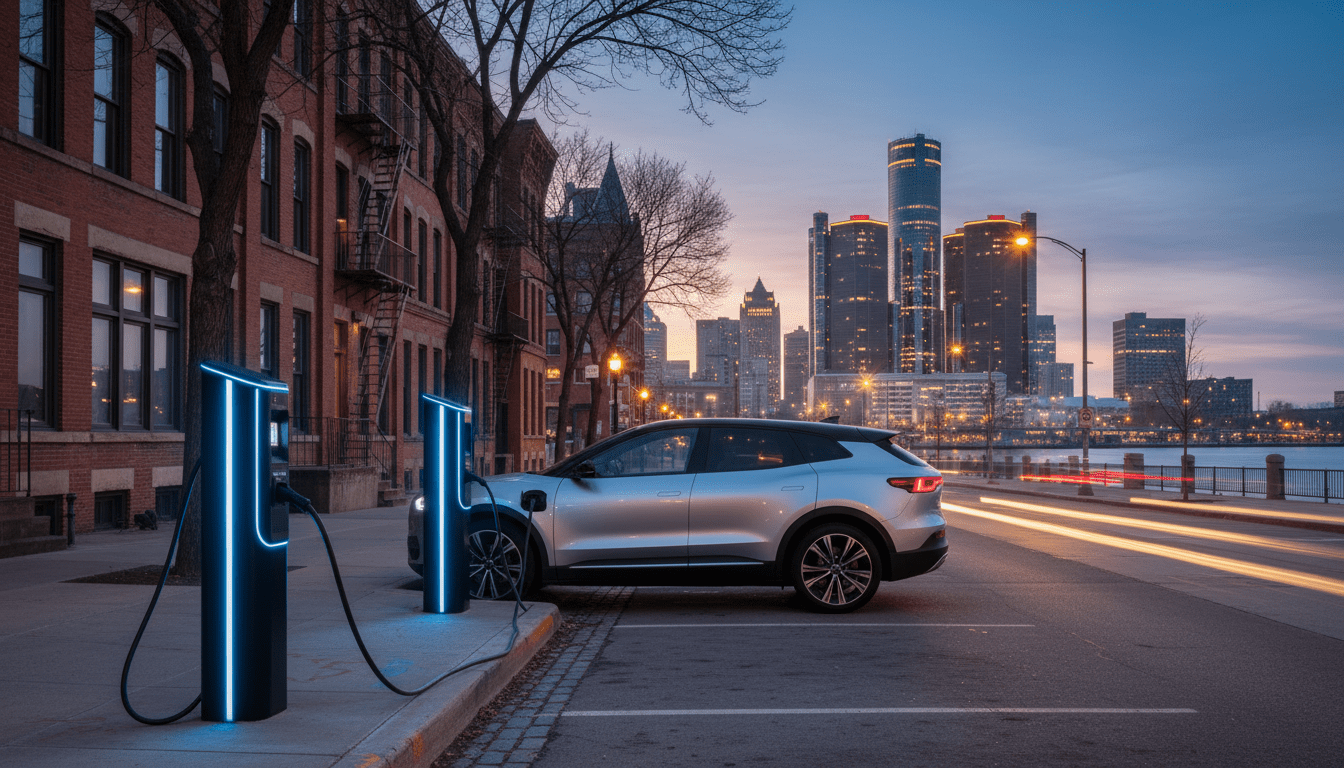
As the automotive industry pivots aggressively toward electrification, the spotlight has firmly returned to Detroit. The city that put the world on wheels is now tasked with keeping them moving in a battery-powered era. While major automakers like General Motors and Ford invest billions into electric vehicle (EV) production, a critical question remains for local residents and policymakers: Is Detroit’s EV infrastructure ready for the transition?
For decades, the gas station has been a ubiquitous fixture of Detroit’s street corners. Replacing, or at least supplementing, that network with reliable, accessible electric charging stations is a logistical challenge of massive proportions. From federal funding injections to innovative wireless charging pilots in Corktown, the landscape of Detroit transportation is shifting, but experts warn that equitable access remains the primary hurdle.
Federal Funds and State Strategy
The push for expanded infrastructure is being fueled largely by the National Electric Vehicle Infrastructure (NEVI) formula program. Michigan is set to receive approximately $110 million over five years to build out fast-charging stations along alternative fuel corridors. This influx of capital is critical for Detroit, which serves as a major hub for the state’s transportation network.
According to data from the Michigan Department of Environment, Great Lakes, and Energy (EGLE), the state’s goal is to support two million EVs on Michigan roads by 2030. To meet this demand, the density of public chargers must increase exponentially. Currently, the focus is on high-traffic corridors, including I-75 and I-94, ensuring that long-distance travel through the metro area is viable.
However, city officials are looking beyond the highways. The City of Detroit’s Transportation and Mobility division is working to ensure that the rollout doesn’t just serve commuters passing through, but also the residents who live here. The strategic deployment of Level 2 and DC Fast Chargers in municipal parking lots and public spaces is part of an ongoing effort to normalize EV ownership within the city limits.
Beyond Downtown: The Equity Challenge
While charging stations are becoming more common in Downtown, Midtown, and Corktown, a significant disparity exists in Detroit’s neighborhoods. For the EV transition to be successful, it cannot be a luxury reserved for those with private garages and high-speed home chargers.
A major hurdle for Detroit EV infrastructure is the housing stock. Many Detroit residents live in multi-family housing or single-family homes that rely on street parking. Without a driveway, installing a home charger is virtually impossible. This creates a “charging desert” effect in dense residential areas.
To combat this, local stakeholders and utility partners are exploring curbside charging solutions. Detroit development projects are increasingly being encouraged to include EV-ready wiring in new constructions. Furthermore, DTE Energy has launched various pilot programs and rebates to incentivize businesses to install public chargers. According to DTE, updating the grid to handle the increased load is a priority, ensuring that the electrical infrastructure in older neighborhoods can support the demand without compromising reliability.
Innovation in Corktown: The Wireless Road
Detroit is not just playing catch-up; in some areas, it is leading the curve. In late 2023, officials unveiled the nation’s first wireless charging public roadway on 14th Street, adjacent to the Michigan Central innovation district.
Using inductive charging coils buried beneath the asphalt, the quarter-mile stretch allows equipped vehicles to charge while driving or idling. While this technology is currently in a pilot phase and primarily serves transit shuttles and test vehicles, it represents a significant leap forward. This project serves as a signal to the tech world that Detroit intends to be a testbed for future mobility solutions.
“This isn’t just about testing technology; it’s about signaling that Detroit is open for innovation,” said a spokesperson involved with the Michigan Central mobility hub. “If we can make wireless charging viable here, it changes the conversation about range anxiety entirely.”
Impact on Detroit Residents
For the average Detroiter, the expansion of EV infrastructure has direct economic and social implications. As automakers transition fleets, the local workforce is seeing a shift in the types of jobs available, moving from mechanical assembly to software and electrical engineering support.
However, the immediate impact is regarding transportation costs. EVs generally offer lower operating and maintenance costs compared to internal combustion engines. If the infrastructure allows lower-income residents to charge affordably—without relying solely on expensive commercial fast chargers—it could lower the barrier to personal mobility.
Conversely, if infrastructure lags in the neighborhoods, residents may be locked out of the EV market, forcing them to rely on aging gas vehicles that will become increasingly expensive to maintain as the market shifts. Community advocates are urging the city to prioritize public charging stations at community centers, libraries, and parks to bridge this gap.
What Happens Next?
The next 24 months are critical for Detroit’s EV readiness. Residents can expect to see significantly more construction activity related to charging stations, particularly at grocery stores and shopping centers. Read more about how this intersects with Detroit economy trends in our previous coverage.
The Southeast Michigan Council of Governments (SEMCOG) continues to map out optimal locations for chargers based on traffic patterns and grid capacity. As federal funds are disbursed and private companies vie for market share, the map of Detroit is being redrawn, not with new roads, but with new nodes of energy.
The Motor City is undoubtedly changing. Whether it can transition from the oil capital of the automotive world to a leader in electric mobility depends entirely on how quickly, and how equitably, it can build the network to power it.