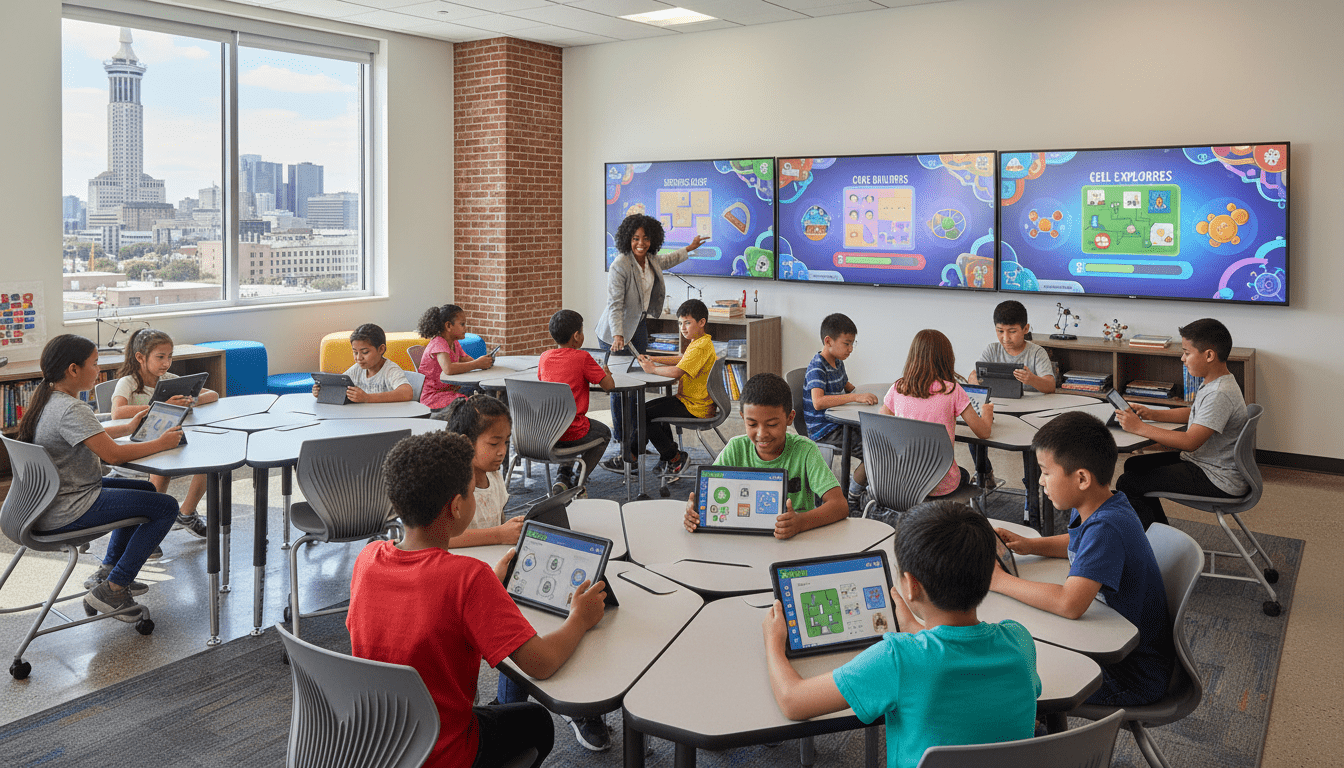
In classrooms across Detroit, the traditional sounds of pencils scratching on paper are increasingly being accompanied by the chime of digital achievements and the hum of collaborative problem-solving. As the Detroit Public Schools Community District (DPSCD) and local charter networks work to recover from pandemic-era learning loss, a growing number of educators are adopting gamification in education—the application of game-design elements in non-game contexts—to reinvigorate student interest and deepen learning outcomes.
While not a new concept, the integration of game mechanics such as points, leaderboards, badging, and narrative-driven quests has accelerated significantly within Detroit’s educational landscape over the last two years. Educational technology experts suggest that this shift is not merely about making learning “fun,” but about leveraging psychological motivators to improve attendance, participation, and mastery of complex subjects, particularly in Science, Technology, Engineering, and Mathematics (STEM).
Leveraging Game Mechanics for Deeper Learning
Gamification in education goes beyond playing video games in class. It involves restructuring the learning process to provide immediate feedback and clearly defined goals, mimicking the engagement loops found in popular gaming platforms. According to research cited by the Office of Educational Technology at the U.S. Department of Education, digital games and game-based learning systems can significantly enhance student focus and resilience in problem-solving.
In Detroit, where chronic absenteeism has been a persistent challenge, these mechanics offer a new way to incentivize presence and participation. Teachers are utilizing platforms that convert homework assignments into “quests” and class participation into “experience points” (XP). This method shifts the focus from punitive grading systems to a progression-based model where students feel a sense of continuous accomplishment.
“The goal is to change the narrative around failure,” said Dr. Elena Ross, an education consultant working with several Metro Detroit schools to integrate technology standards. “In a game, if you fail a level, you try again immediately. You learn from the mistake and adapt. We are trying to bring that same resilience into the mathematics classroom, where students often shut down after a single wrong answer.”
University Partnerships Driving Innovation
The push for gamification in education within the city is being bolstered by local higher education institutions. Wayne State University and the University of Michigan have both spearheaded initiatives that bring game-based learning tools into K-12 classrooms in Detroit.
Recent collaborations have focused on Detroit’s growing tech ecosystem. For example, localized pilot programs have introduced coding challenges that operate like puzzle games, allowing students to learn Python and JavaScript through interactive storytelling. These programs are designed not only to teach the curriculum but to align with the city’s broader workforce development goals, preparing students for future careers in Detroit’s burgeoning mobility and tech sectors.
Data from pilot programs in Michigan suggests that students in gamified learning environments show a marked increase in time-on-task compared to traditional instruction methods. By contextualizing abstract concepts—like algebra or physics—within a game world, students are often able to grasp the material more intuitively.
Impact on Detroit Residents and Families
For Detroit parents, the shift toward gamified learning offers a potential solution to the disengagement crisis. With the district prioritizing attendance and literacy, tools that make students excited to enter the classroom are viewed as vital assets.
“My son used to dread math, but now he talks about ‘leveling up’ his algebra skills,” said Marcus Thorne, a resident of the grandmont Rosedale neighborhood and parent of a middle schooler. “It’s speaking their language. If it gets him to do the work and actually understand it, I’m all for it.”
However, the implementation creates a new set of requirements for local infrastructure. Effective gamification requires reliable internet access and updated devices, issues that Detroit has been working to address through various city and federal broadband initiatives. Ensuring equitable access to these high-tech learning tools remains a priority for the Board of Education and city officials.
The Future of Classroom Tech in Detroit
As the Michigan Department of Education continues to update its technology competencies for students, the role of gamification is expected to expand. Local charter networks are already experimenting with Augmented Reality (AR) historic tours of Detroit, turning local history lessons into interactive scavenger hunts.
While traditional textbooks aren’t disappearing, the methodology of teaching is evolving. By embracing the mechanics that capture students’ attention outside of school, Detroit educators hope to channel that energy into academic success, ultimately fostering a generation of learners who are as engaged with their education as they are with their entertainment.