




Detroit, long recognized globally as the Motor City, is currently undergoing a significant transformation aimed at redefining its industrial legacy through environmental sustainability. As the City of Detroit advances its Detroit Sustainability Action Agenda, local entrepreneurs and established corporations alike are finding new economic avenues within the green sector. From energy-efficiency grants to waste reduction initiatives, the push for a sustainable business ecosystem in Detroit is creating distinct opportunities for economic growth and community revitalization.
The shift comes as municipal leaders and the Detroit Economic Growth Corporation (DEGC) prioritize investments that align with the city’s broader climate goals. According to data from the City of Detroit’s Office of Sustainability, the roadmap to reducing municipal greenhouse gas emissions involves a heavy reliance on commercial retrofitting and the adoption of clean energy technologies by the private sector. For business owners, this translates into a rapidly expanding landscape of financial incentives designed to lower the barrier to entry for eco-friendly operations.
Incentivizing the Eco-Friendly Transition
One of the primary drivers for the current surge in green business activity is the availability of targeted funding. Programs such as Property Assessed Clean Energy (PACE) financing have become instrumental for Detroit property owners looking to upgrade building infrastructure. PACE allows commercial property owners to finance energy efficiency, water conservation, and renewable energy projects with long-term repayment schedules added to the property’s tax bill.
Local financial experts note that these mechanisms differ from traditional loans, offering immediate cash flow positivity by offsetting repayment costs with energy savings. “The conversation has shifted from sustainability being a moral choice to it being a strategic financial decision,” said a representative from a Detroit-based commercial real estate consultancy. “Businesses are realizing that reducing their carbon footprint through updated HVAC systems or solar installation is directly correlated with long-term operational stability.”
Furthermore, DTE Energy has expanded its suite of incentives for small and medium-sized businesses. These programs provide rebates for installing energy-efficient lighting, refrigeration, and heating equipment. By leveraging these utility-backed offers, Detroit businesses are effectively lowering their overhead while contributing to the city’s environmental targets.
Impact on Detroit Residents
The rise of the sustainable business sector is having tangible effects on Detroit neighborhoods, extending beyond corporate balance sheets. Residents are seeing the emergence of what economists call “green-collar jobs”—roles dedicated to renewable energy installation, waste management logistics, and sustainable construction. The demand for skilled labor to retrofitting Detroit’s aging building stock is creating workforce development pathways for locals.
Additionally, the focus on environmental impact is addressing long-standing health disparities in the city. By encouraging businesses to reduce emissions and manage waste more responsibly, the city aims to improve air quality in industrial corridors. Residents living near manufacturing zones, who have historically borne the brunt of pollution, stand to benefit from stricter adherence to eco-friendly practices encouraged by these new economic programs.
Community advocates have pointed out that sustainable development also fosters local resilience. Detroit development projects that incorporate green stormwater infrastructure, for example, help mitigate street flooding during heavy rains, a recurring issue in many neighborhoods.
Data and Environmental Goals
The urgency behind these opportunities is backed by hard data. The City of Detroit has committed to reducing greenhouse gas emissions by 35% by the year 2024, relative to 2012 levels, with a long-term goal of 100% reduction by 2050. Achieving these benchmarks requires aggressive participation from the commercial sector, which accounts for a significant portion of the city’s energy consumption.
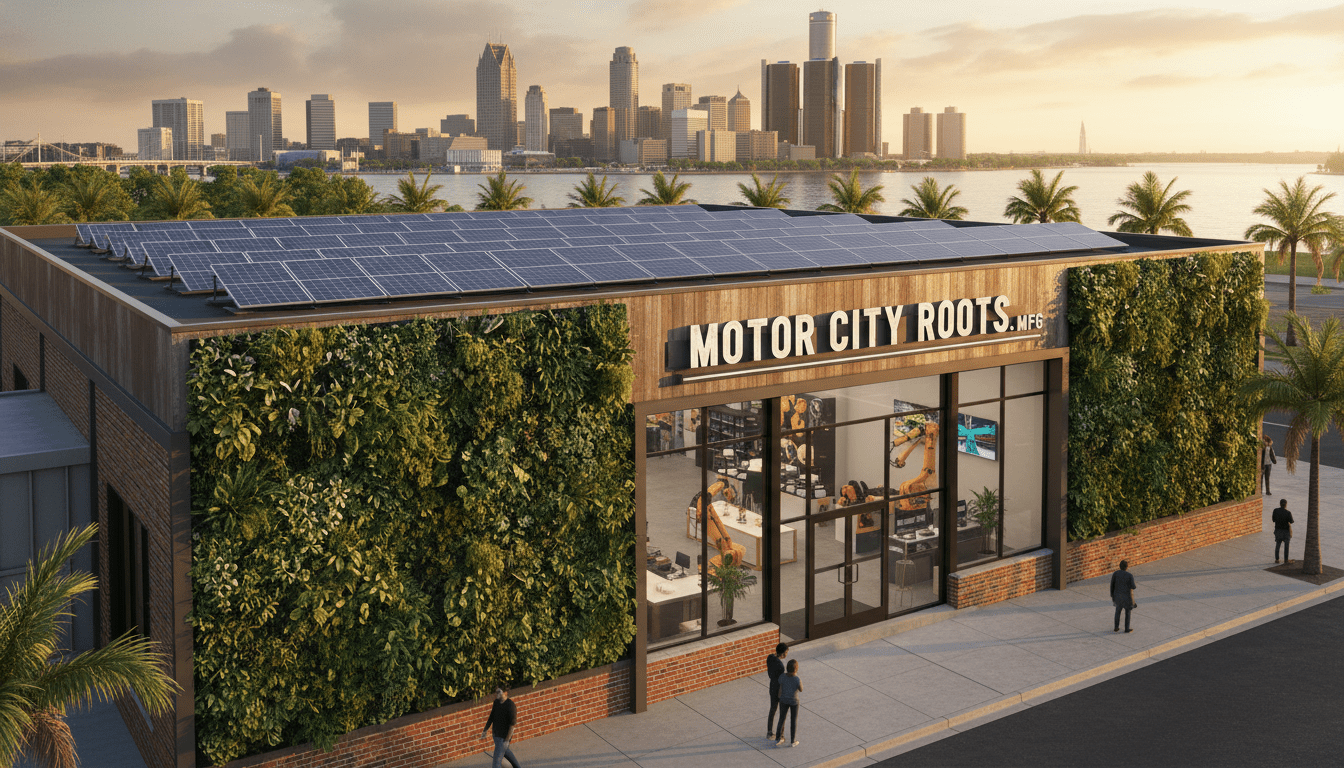
Reports indicate that commercial and industrial buildings are responsible for a substantial percentage of urban carbon emissions. Consequently, the Detroit economy is being steered toward circular economic models where waste is minimized. Local manufacturing startups are increasingly utilizing recycled materials, and food service businesses are adopting composting programs to divert organic waste from landfills.
According to the U.S. Green Building Council, Michigan has seen a steady increase in LEED-certified projects, with Detroit serving as a hub for this activity. This trend signals to investors that the local market is maturing and prioritizing high-performance, healthy buildings.
Navigating the Path Forward
For business owners asking how to go eco-friendly, the path forward involves navigating a mix of federal, state, and local resources. The Inflation Reduction Act (IRA) has introduced federal tax credits that layer on top of local incentives, making 2024 a pivotal year for capital investments in green technology.
However, challenges remain. Access to information and the complexity of applying for grants can be hurdles for smaller, minority-owned enterprises. Local business associations are stepping in to bridge this gap, offering workshops and technical assistance to ensure that the green transition is equitable across all of Detroit’s districts.
As the city continues to rebuild and reinvent, the integration of environmental responsibility with economic strategy appears to be the new standard. For Detroit entrepreneurs, the message is clear: the future of business in the city is green, and the tools to build that future are more accessible than ever before.