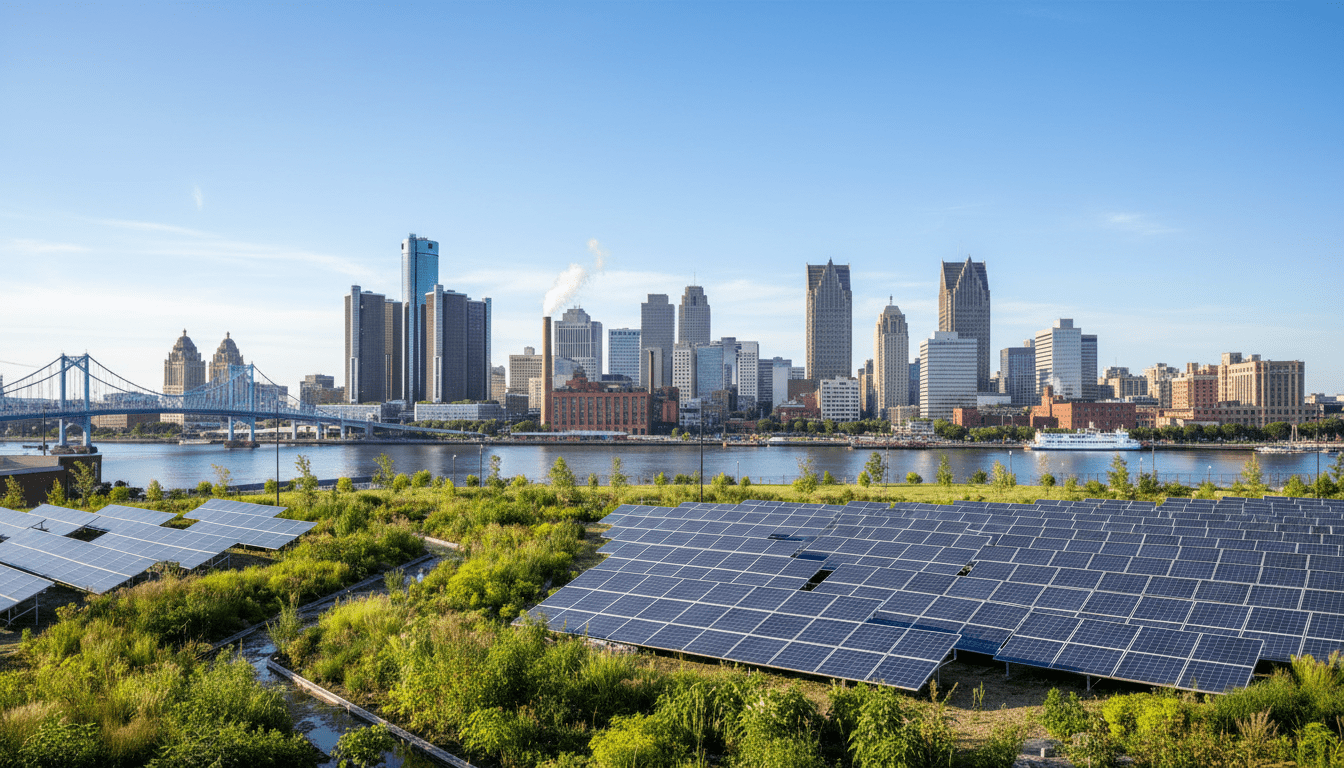
Detroit, historically defined by the internal combustion engine and heavy industry, is currently undergoing a significant transformation aimed at redefining its environmental and economic identity. As the city grapples with the legacy of industrial pollution and vacant land, a concerted effort involving municipal government, local corporations, and community organizations is pushing Detroit sustainability to the forefront of urban development.
The shift represents more than just an aesthetic change; it is a fundamental restructuring of how the city manages energy, land use, and infrastructure. From the ambitious “Solar Neighborhoods” initiative to the expansion of green stormwater infrastructure, Detroit is positioning itself as a potential model for post-industrial climate resilience.
The Push for Renewable Energy and Solar Neighborhoods
At the heart of the city’s green strategy is the transition toward renewable energy sources. In a move that has garnered national attention, the City of Detroit has proposed utilizing roughly 200 acres of vacant, city-owned land to install large-scale solar arrays. This initiative, often referred to as the Solar Neighborhoods project, aims to generate enough clean energy to offset the electricity usage of municipal buildings.
According to the City of Detroit’s Office of Sustainability, this move is not merely about carbon reduction. It serves a dual purpose: addressing the persistent issue of blight caused by vacant lots and reducing the city’s vulnerability to energy price volatility. By converting underutilized properties into productive energy assets, the administration hopes to stabilize neighborhoods while contributing to the city’s climate goals.
“We are taking liabilities—vacant, blighted land—and turning them into assets that power our city,” Mayor Mike Duggan stated during the initial rollout of the solar proposal. While the project has sparked debate regarding community benefits and land selection, it underscores the scale at which Detroit sustainability efforts are being planned.
Green Infrastructure and Stormwater Management
Beyond energy, water management remains a critical component of Detroit’s environmental strategy. The Detroit Water and Sewerage Department (DWSD) has been aggressively implementing green stormwater infrastructure (GSI) to manage the heavy rainfall events that have historically caused flooding in the region.
These projects involve replacing impermeable concrete surfaces with bio-swales, rain gardens, and permeable pavement. These installations absorb stormwater naturally, reducing the load on the city’s aging sewer system and preventing untreated overflow from entering the Detroit River and Rouge River. For residents, this translates to improved Detroit infrastructure and a reduction in the basement flooding that has plagued neighborhoods like Jefferson Chalmers.
Data from the Great Lakes Water Authority suggests that integrating green infrastructure is cost-effective compared to traditional gray infrastructure solutions, such as building massive underground storage tunnels. This pragmatic approach to eco-friendly development highlights how fiscal responsibility and environmental stewardship are converging in the city’s planning departments.
Impact on Detroit Residents
For the average Detroiter, these high-level policy shifts have tangible impacts on daily life and the local economy. The expansion of the green economy is creating new workforce demands. Programs focusing on training residents for jobs in solar installation, weatherization, and electric vehicle (EV) manufacturing are becoming increasingly available.
General Motors’ transformation of the Detroit-Hamtramck assembly plant into “Factory ZERO,” an all-electric vehicle assembly plant, serves as a prime example. This facility anchors the region’s claim to being a leader in the green automotive revolution, securing thousands of manufacturing jobs that are future-proofed against the decline of the internal combustion engine.
Furthermore, sustainability initiatives are directly targeting household costs. Weatherization programs funded by state and federal grants are helping low-income residents upgrade insulation and windows. These improvements lower utility bills, a crucial factor in a city where energy poverty remains a significant challenge.
However, the transition is not without concerns. Local community groups have voiced the need for equitable implementation to ensure that Detroit sustainability projects do not spur gentrification or displace long-term residents. Ensuring that the economic benefits of green development reach all neighborhoods remains a priority for advocacy groups.
Urban Agriculture and Local Ecosystems
Detroit’s unique landscape, characterized by available open space, has also allowed for the flourishing of urban agriculture. Organizations like Keep Growing Detroit have supported a network of over 2,000 gardens and farms across the city. This movement contributes to food security and reduces the carbon footprint associated with transporting produce.
These green spaces do more than provide food; they mitigate the “urban heat island” effect. By increasing the tree canopy and vegetation cover, these projects help cool neighborhoods during increasingly hot summers, providing a public health benefit alongside the ecological one. The integration of agriculture into the urban fabric is influencing Detroit neighborhoods and redefining how land is valued in the city.
Future Outlook: A Net-Zero Ambition
Looking ahead, the trajectory for Detroit involves deeper integration of sustainability into the city code and long-term planning. The Detroit Climate Strategy outlines goals to significantly reduce municipal greenhouse gas emissions by 2032 and achieve net-zero emissions by 2050.
Achieving these targets will require sustained investment in public transit, further electrification of the city fleet, and continued retrofitting of older buildings. As federal funding for climate resilience becomes available through the Inflation Reduction Act, Detroit is well-positioned to accelerate these projects.
While challenges regarding funding and equitable distribution remain, the data indicates a clear trend: Detroit is moving away from its rust-belt reputation toward a future defined by green innovation. The success of these initiatives will likely serve as a litmus test for how other post-industrial American cities can adapt to the demands of the 21st century.