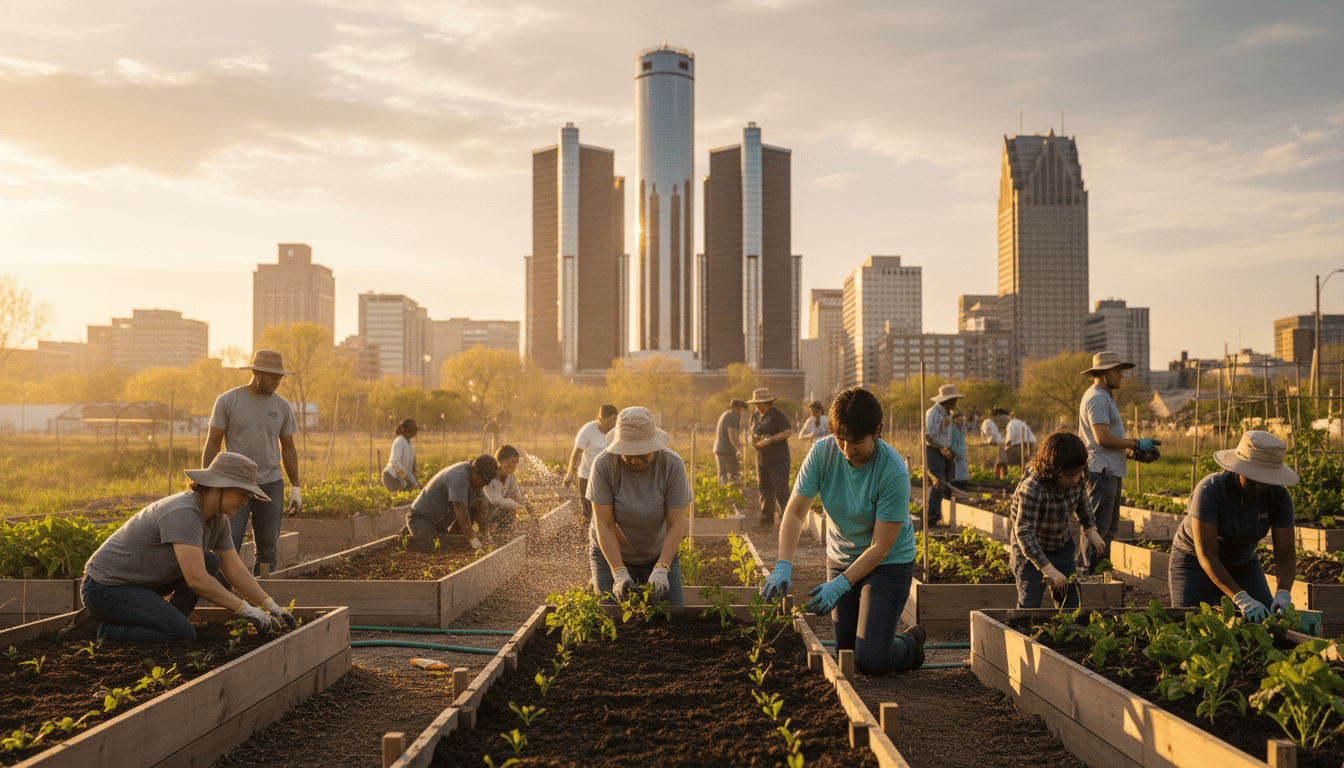
As temperatures slowly rise across Southeast Michigan, the Detroit gardening season is officially underway, marking a critical period for the city’s extensive network of urban farms and residential growers. This year, however, local cultivators are adapting to updated environmental data that suggests a shifting climate for the region, altering traditional timelines for when to put seeds in the ground.
Preparation is visible across the city’s neighborhoods, from the historic plots in Corktown to the sprawling urban agriculture initiatives in the North End. While enthusiasm is high, experts from Michigan State University (MSU) Extension are advising caution regarding the “last frost date,” a pivotal metric that dictates the success or failure of early spring crops.
Updated Hardiness Zones Change the Landscape
One of the most significant developments for this year’s Detroit gardening season is the recent update to the USDA Plant Hardiness Zone Map. Released late last year, the new data indicates that much of the Metro Detroit area has shifted. Historically firmly rooted in Zone 6a, many parts of the city are now trending toward Zone 6b. This shift represents a warming trend that technically allows for a slightly longer growing season and the survival of plants that can withstand minimum temperatures of -5 to 0 degrees Fahrenheit, rather than the colder -10 to -5 degrees of the past.
“The data confirms what many local growers have anecdotally observed over the last decade,” said a representative from a local urban agricultural coalition. “While a warming trend might sound beneficial for extending the harvest, it brings unpredictability regarding pest cycles and early thaws followed by sudden freezes.”
For Detroit residents, this means the traditional “safe” planting date—often cited as Memorial Day weekend—might be flexible for certain crops, but the risk of a late freeze remains. The updated map is a tool, not a guarantee, and local agriculturalists are urging residents to monitor soil temperature rather than relying solely on the calendar.
Impact on Detroit Residents and Urban Farms
The implications of the planting schedule go beyond hobbyist gardening. Detroit is home to over 1,400 community gardens and urban farms, making it one of the national leaders in urban agriculture. For many Detroit neighborhoods, these gardens are essential sources of fresh, affordable produce.
Keep Growing Detroit, a prominent organization supporting food sovereignty in the city, emphasizes that the timing of the Detroit gardening season directly impacts food availability for thousands of families. A successful spring planting of cool-weather crops like kale, collards, and spinach ensures that fresh greens are available in community markets by late May. Conversely, planting too early can result in crop loss due to frost, creating a gap in local food supply.
Local business owners in the nursery and landscaping sectors report a surge in demand for seeds and soil amendments earlier than usual. “We are seeing traffic pick up in mid-March that we usually wouldn’t see until April,” noted a manager at a hardware store in Southwest Detroit. “People are eager to get their gardens started, but we have to remind them that tomatoes and peppers cannot go outside yet.”
When to Plant: A Data-Driven Timeline
According to climatological data for the Detroit area, navigating the spring transition requires a phased approach. The growing season in Detroit typically lasts around 160 to 170 days, but maximizing this window requires strategic planting.
- Early April: This is the window for cold-hardy crops. Residents can currently plant peas, spinach, radishes, and onion sets directly into the ground as soon as the soil is workable. These crops can tolerate light frosts.
- Late April to Early May: Semi-hardy vegetables such as beets, carrots, and chard are typically sown during this window.
- Late May (Post-Frost): The most critical phase of the Detroit gardening season involves warm-season crops. Tomatoes, peppers, cucumbers, and squash should only be transplanted outdoors after the danger of frost has passed. Historically, the average last frost date is around May 20th, though microclimates within the city can vary.
MSU Extension suggests that urban heat islands—areas within the city that retain more heat due to concrete and asphalt—may experience a slightly earlier last frost date than the surrounding suburbs, granting inner-city growers a slight advantage.
Community Support and Resources
To support residents through the season, the City of Detroit and various non-profits are ramping up resource distribution. The Garden Resource Program provides seeds and vegetable transplants to Detroit residents for a nominal fee, ensuring that cost is not a barrier to participation. This program serves as a backbone for the city’s local business ecosystem surrounding food systems.
“The goal is to empower residents to grow their own food, which builds resilience,” stated a program coordinator during a recent community workshop. “Whether you are growing in a backyard raised bed or a window box, understanding the local climate is the first step to success.”
What Happens Next
As April progresses, the focus will shift from planning and soil preparation to active planting and pest management. Agricultural experts will be closely monitoring precipitation levels, as wet springs have historically delayed planting in low-lying areas of the city.
Residents are encouraged to connect with local garden leaders and consult the MSU Extension for real-time updates on pest alerts and weather anomalies. With the adjusted hardiness zones and a strong community network, the 2024 growing season is poised to be a productive year for Detroit’s urban landscape.