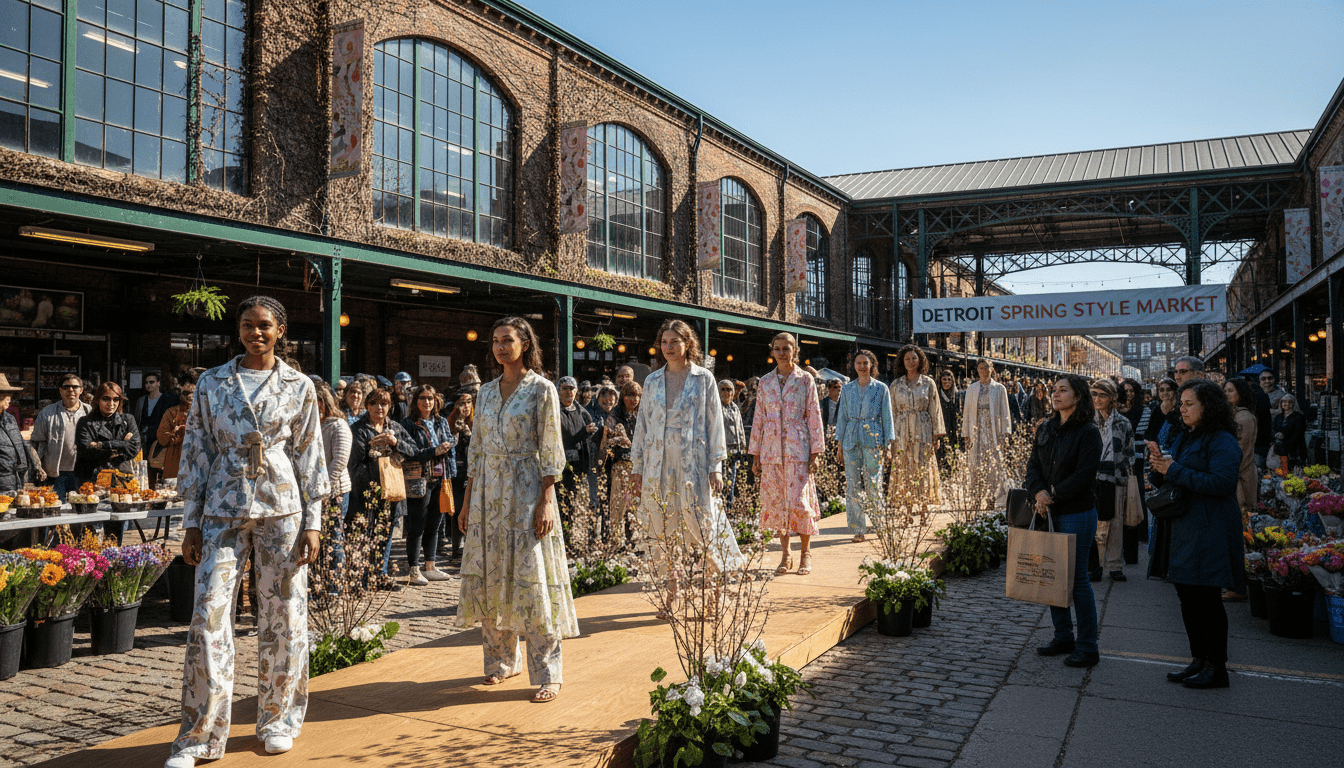
As the winter chill begins to recede from the Woodward corridor, the city’s creative sector is preparing for its most ambitious season yet. Detroit, historically known as a manufacturing giant, is rapidly cementing its status as a burgeoning fashion capital. This year’s calendar of Detroit spring fashion events signals not just a seasonal change, but a strategic expansion of the local textile and design economy, with industry leaders already setting their sights on major milestones for 2026.
While New York and Paris dominate the global headlines, Detroit has been quietly building a distinct ecosystem focused on sustainable design, small-batch manufacturing, and streetwear innovation. According to data from Design Core Detroit, the city’s design economy is an active driver of regional growth, and the upcoming spring showcases serve as a litmus test for the sector’s vitality.
The Upcoming Spring Calendar
The immediate focus for local designers and retailers is the upcoming slate of exhibitions and runway shows. Organizers have noted a distinct shift this year from exclusive, invite-only galas to more inclusive, community-centric shopping events in Detroit that bridge the gap between high fashion and street-level retail.
This spring, the Detroit Fashion Week (DFW) series is expected to draw significant attention. While official dates are often fluid, preliminary schedules suggest a robust lineup of runway presentations centered in the Midtown and Downtown districts. Unlike previous years, where the focus was heavily on established names, this season emphasizes emerging talent from the College for Creative Studies (CCS) and local incubators.
Local industry analysts point to a growing trend of "see-now, buy-now" events. "The traditional six-month lead time doesn’t work for the modern Detroit consumer," said Sarah Jenkins, a local retail consultant and former buyer for major department stores. "The events we are seeing scheduled for this spring are hybrid models—part runway, part pop-up market. It allows designers to capitalize on immediate interest."
Key Shopping Events in Detroit
Beyond the runway, several retail activations are planned to revitalize foot traffic in key commercial corridors:
- Eastern Market Fashion Fusion: Leveraging the historic market sheds, this event combines local textile makers with the traditional flower day crowds, offering a unique shopping experience unique to the city.
- Corktown Vintage & Vinyl: A recurring spring pop-up series focusing on upcycled fashion, a sector where Detroit is becoming a national leader.
- Midtown Maker’s Row: A coordinated weekend event where boutiques along Cass Avenue collaborate to host trunk shows for independent designers.
Looking Ahead: Detroit Fashion Shows 2026
While the current spring season is the immediate priority, there is a palpable buzz regarding the long-term trajectory of the industry. Discussions among the Michigan Fashion Council and city planners have increasingly referenced Detroit fashion shows 2026 as a target benchmark for international recognition.
Following the success of luxury brand Bottega Veneta’s takeover of the Michigan Theatre in previous years, local stakeholders are working to attract another major international house to present a resort or pre-fall collection in the city by 2026. The goal is to establish Detroit not just as a location for one-off spectacles, but as a recurring destination on the global fashion map.
This long-term planning is backed by infrastructure investments. Several mixed-use developments currently under construction in the District Detroit and New Center areas include dedicated zones for light manufacturing and fashion retail, scheduled to be fully operational by the 2026 season. These developments aim to solve a critical supply chain issue: keeping production local.
Economic Context and Data
The push for a robust fashion ecosystem is supported by economic data. According to the U.S. Census Bureau, retail trade and creative services have seen uneven but promising recovery curves post-pandemic. In Detroit specifically, boutique retail has served as a stabilizer for neighborhood commercial strips.
Furthermore, reports from Design Core Detroit indicate that the city is home to the largest concentration of commercial and industrial designers in the country. The transition from automotive interior design to apparel and accessories is a natural evolution of the local talent pool. "The skill set is transferrable," noted a representative from a Detroit-based industrial sewing incubator. "The same precision required for car seat upholstery is being applied to high-end leather goods and durable streetwear."
Impact on Detroit Residents
For the average resident, the expansion of Detroit spring fashion events and the broader industry growth translates to tangible economic benefits. The fashion sector is increasingly becoming a source of employment, offering jobs that range from retail management and visual merchandising to skilled trade positions in sewing and textile production.
Neighborhood vitality is another key factor. As fashion entrepreneurs take up residence in vacant storefronts—often supported by programs like Motor City Match—they bring foot traffic and lighting to blocks that may have previously been dormant. This “retail activation” strategy creates safer, more walkable neighborhoods.
However, accessibility remains a topic of discussion. Community leaders have emphasized the need for these shopping events to remain accessible to long-time residents, ensuring that the "new" Detroit fashion scene celebrates the city’s rich, existing culture rather than displacing it. Efforts to include legacy businesses in marketing for events like Detroit Fashion Week have been stepped up in response to these concerns.
What Happens Next?
As the city moves through the spring season, data collected from attendance and sales at these events will likely influence funding decisions for the 2026 initiatives. The success of the upcoming spring pop-up series will demonstrate whether the local market can sustain year-round fashion retail beyond the holiday spikes.
Residents and visitors can expect to see a full schedule of events released by individual districts in the coming weeks. With a focus on sustainability, local production, and authentic Detroit style, the spring season is set to be a defining moment for the city’s creative economy.