Recent internal audits and reports presented to the Detroit City Council have shed light on significant administrative bottlenecks within the city’s building and safety departments, revealing that the Detroit permitting process is facing continued delays that are hampering both residential renovations and commercial development.
As Detroit continues its trajectory of economic recovery, the demand for construction permits has surged. However, data suggests that the administrative infrastructure required to process these applications has struggled to keep pace with the volume of requests, leaving contractors, homeowners, and small business owners in limbo.
Audits Point to Systemic Bottlenecks
According to recent findings discussed by the Office of the Auditor General, the Building, Safety Engineering, and Environmental Department (BSEED) has faced challenges in meeting target turnaround times for permit issuance and inspection scheduling. While the city has made strides in digitizing its systems over the past five years, the audit indicates that staffing shortages and legacy software integration issues remain persistent hurdles.
The reports highlight that while simple trade permits are often processed quickly, complex projects requiring plan reviews—such as structural alterations for new restaurants or multi-family housing rehabilitation—are experiencing wait times that exceed departmental goals. In some instances, permit applications that should be reviewed within weeks are stretching into months.
“The data clearly shows that while application volume is up, our processing capacity has not scaled linearly,” stated a source familiar with the municipal findings. “This creates a backlog that compounds over time, specifically affecting those trying to rehabilitate Detroit’s older building stock.”
For a city focused on eradicating blight and revitalizing neighborhoods, these delays present a tangible obstacle. Detroit’s neighborhood revitalization efforts rely heavily on the ability of private citizens and developers to legally and safely improve properties. When the Detroit permitting process slows down, capital sits on the sidelines.
Impact on Detroit Residents and Contractors
The consequences of these administrative delays are felt most acutely by local small business owners and independent contractors. For many Detroiters attempting to open brick-and-mortar businesses, rent payments often begin before the doors can officially open, contingent on final inspections and certificates of occupancy.
Local contractors have voiced frustration regarding the unpredictability of the timeline. “It is difficult to bid on jobs or schedule subcontractors when we cannot guarantee when the city will sign off on the rough inspections,” one Detroit-based general contractor explained. “We lose money when crews are standing around waiting for a green light that was supposed to come last week.”
Residents attempting to repair historic homes also face hurdles. Navigating the intersection of historic district regulations and standard building codes adds a layer of complexity to the Detroit permitting process. When delays occur, homeowners are often left with open walls or unfinished roofs, exposing properties to the harsh Michigan weather.
Furthermore, these delays can inadvertently encourage unpermitted work. When legal channels become too cumbersome or slow, some property owners may be tempted to bypass safety inspections entirely, leading to potential safety hazards and future legal liabilities.
Economic Ripple Effects
The economic impact extends beyond individual frustrations. Large-scale development projects, which bring jobs and tax revenue to the city, are also sensitive to timeline disruptions. Financing for commercial real estate is often tied to strict construction schedules; delays in permitting can lead to increased carrying costs and, in some cases, the cancellation of projects.
Analysts monitoring the Detroit economy note that efficiency in municipal services is a key indicator for investor confidence. “Time is money in development,” notes a regional economic analyst. “If Detroit wants to compete with suburban municipalities for business investment, the ease of doing business—specifically regarding the speed of the Detroit permitting process—must be a competitive advantage, not a liability.”
Data from the U.S. Census Bureau regarding construction spending suggests that while the Midwest region is seeing activity, efficient regulatory environments capture the bulk of sustained growth. Detroit’s ability to streamline these operations is critical for maintaining its current development momentum.
City Response and Modernization Efforts
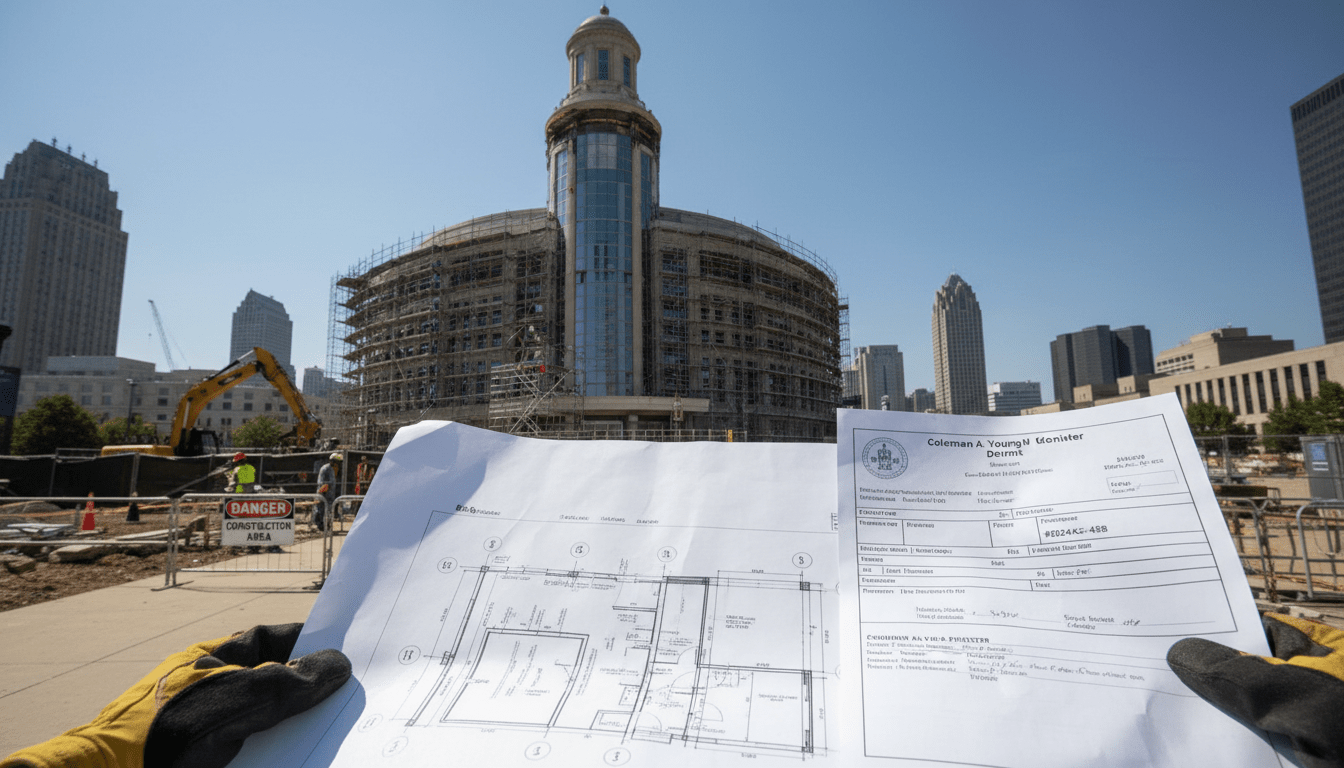
In response to these challenges, the City of Detroit has not remained idle. Administration officials have acknowledged the friction points and have rolled out several initiatives aimed at modernization. This includes the expansion of the ePLANS electronic plan review system, which allows for digital submissions rather than requiring applicants to visit the Coleman A. Young Municipal Center in person.
Official statements from city representatives emphasize a commitment to hiring and training more inspectors to reduce the ratio of applications to staff. The city is also exploring third-party inspection options to handle overflow during peak construction seasons, a strategy used effectively in other high-growth municipalities.
“Our goal is to ensure safety first, but we recognize that efficiency is vital for our residents,” a city spokesperson noted in a recent press briefing. “We are actively recruiting qualified inspectors and engineers to clear the backlog and improve the user experience for everyone interacting with BSEED.”
For more information on current building codes and permit applications, residents can visit the official City of Detroit BSEED website.
Looking Ahead
As Detroit moves forward, the scrutiny provided by these audits serves as a necessary diagnostic tool. City Council members have requested regular updates on backlog reductions and staffing levels to ensure accountability.
For Detroiters, the hope is that these exposed inefficiencies will lead to a more streamlined, transparent, and user-friendly system. A faster Detroit permitting process means more businesses opening, more homes being renovated, and a stronger local economy for all.