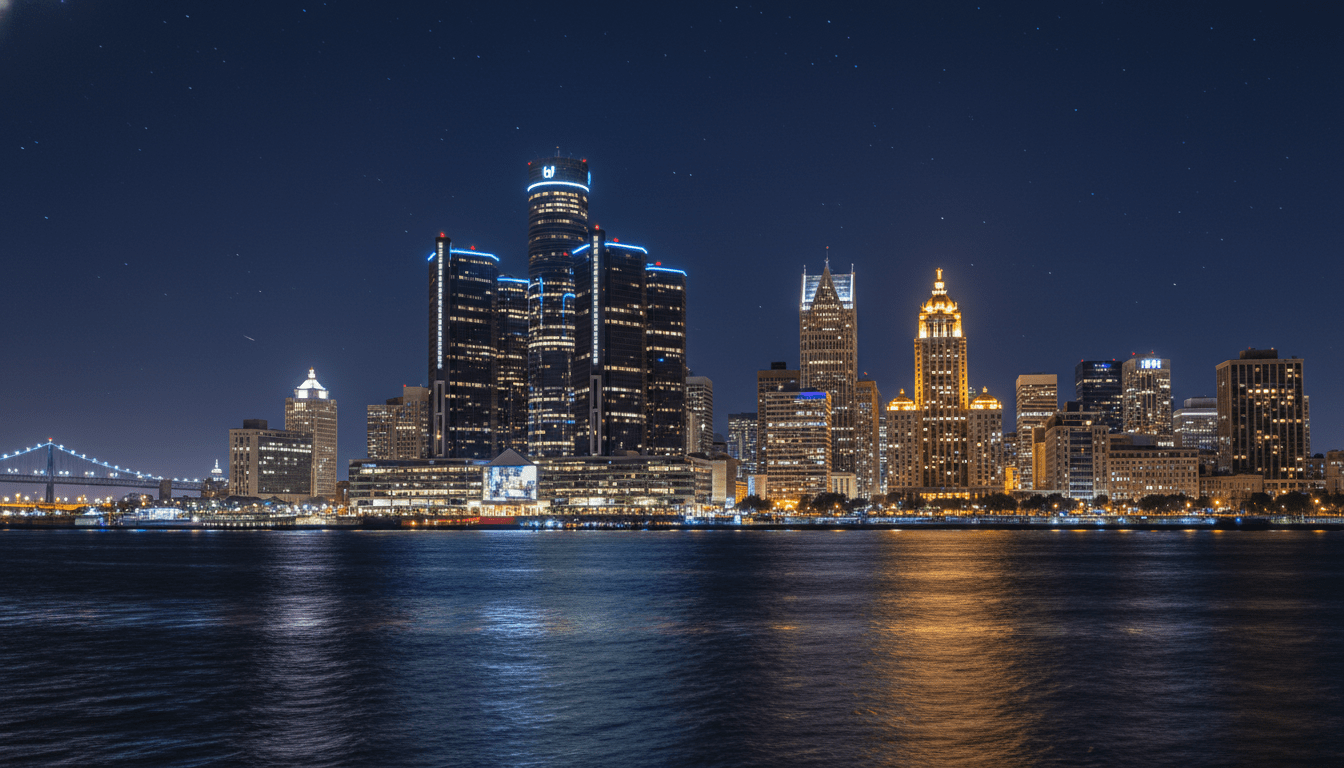
The Detroit skyline has long served as a symbol of industrial resilience and architectural innovation. In a recent comparative analysis of urban aesthetics, Michigan’s largest city has been recognized as having one of the most beautiful night views among Midwest cities. This accolade comes at a time when the city is seeing a surge in revitalization efforts, new high-rise developments, and a renewed focus on urban lighting design.
According to data and visual surveys from regional travel associations, the combination of the Detroit River’s reflective surface and the strategic illumination of historic skyscrapers has elevated the city’s profile for evening tourism. While Chicago has traditionally dominated the conversation regarding Midwestern architecture, Detroit’s unique mix of Art Deco classics and modern glass towers provides a distinct silhouette that is increasingly drawing photographers and travelers alike.
A Luminous Transformation of the Detroit Riverfront
The aesthetic appeal of the Detroit skyline at night is largely anchored by the GM Renaissance Center, whose cylindrical towers dominate the horizon. However, the recent addition of LED lighting arrays on older structures and the ongoing construction of the Hudson’s Site tower—which will eventually stand as the city’s second-tallest building—are reshaping the nocturnal landscape. According to the City of Detroit’s Department of Planning and Development, urban design guidelines have increasingly prioritized nighttime visibility as a way to enhance public safety and encourage foot traffic in the downtown core.
Local urban planners note that the city’s lighting is not merely about brightness but about highlighting architectural heritage. The Penobscot Building and the Guardian Building, both masterpieces of the early 20th century, utilize floodlighting that emphasizes their intricate masonry and setbacks. This historical continuity, paired with the modern glow of the Huntington Place and the Little Caesars Arena district, creates a multi-layered visual experience that distinguishes Detroit from newer, more uniform Midwest cities.
Impact on Michigan Travel and Local Tourism
The recognition of Detroit’s night view has tangible benefits for the regional economy. As Michigan travel trends shift toward “urban-cation” experiences, the visual appeal of the city serves as a primary marketing tool for Visit Detroit and the Michigan Economic Development Corporation (MEDC). Data from hotel occupancy reports indicates a steady increase in weekend stays by residents from neighboring states like Ohio and Illinois, many of whom cite the riverfront experience as a key draw.
For more information on the city’s growing hospitality sector, readers can explore our recent report on Detroit’s hotel boom and its impact on the local economy. This growth is directly linked to how the city presents itself after sunset. The Detroit Riverwalk, which has been voted the best riverwalk in the country for three consecutive years by USA Today, plays a crucial role in providing the vantage points necessary to appreciate the city lights.
Economic and Resident Impact
How does a beautiful night view affect the average Detroiter? Beyond aesthetic pride, the illumination of the city is a sign of economic health. A well-lit skyline typically correlates with high occupancy rates in commercial office spaces and a vibrant residential population. As more people move into converted lofts and new apartments in the downtown and Midtown areas, the demand for better street-level lighting and architectural displays has grown.
“When people see the city lights from the Windsor side or from the high-rises in the District Detroit, it changes the narrative of the city,” said a representative from the Downtown Detroit Partnership (DDP). “It signals that the city is open, active, and safe. It creates an environment where people want to live and work.” This sentiment is reflected in the rising property values within view of the riverfront, as “skyline views” become a premium selling point for real estate developers. You can read more about upcoming real estate projects in Detroit to see how the landscape is continuing to change.
The Role of Infrastructure and Sustainable Lighting
While the visual impact is significant, the City of Detroit has also been focused on the infrastructure behind the glow. The Public Lighting Authority (PLA) of Detroit has overseen one of the most comprehensive LED streetlights overhauls in the country. By transitioning to LED technology, the city has not only improved visibility but also reduced its carbon footprint and energy costs. These modern lights provide a crisper, whiter light compared to the orange hue of old high-pressure sodium lamps, contributing to the “modern” feel of the Detroit skyline at night.
Furthermore, major corporations headquartered in the city have joined the “Lights Out” initiative during bird migration seasons, balancing the desire for a beautiful skyline with environmental responsibility. This collaborative effort between the city, environmental groups, and building owners demonstrates a sophisticated approach to urban lighting that goes beyond simple decoration.
Future Outlook: A Changing Horizon
The Detroit skyline is currently in a state of rapid transition. With the Gordie Howe International Bridge nearing completion—which will feature its own distinctive lighting system across the river—and the expansion of the University of Michigan’s Center for Innovation, the night view is expected to become even more complex and beautiful in the coming years. Unlike some other Midwest cities that have seen a stagnation in their downtown construction, Detroit’s crane-filled horizon suggests that the ranking of its night view will only continue to rise.
As the city continues to host national events, such as the recent NFL Draft, the global audience is seeing a version of Detroit that is vibrant and illuminated. This exposure is critical for long-term investment and the continued growth of Michigan travel. The Detroit skyline remains more than just a collection of buildings; it is a beacon of the city’s ongoing transformation and a testament to its enduring status as a crown jewel of the American heartland.