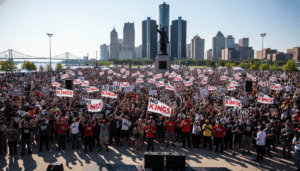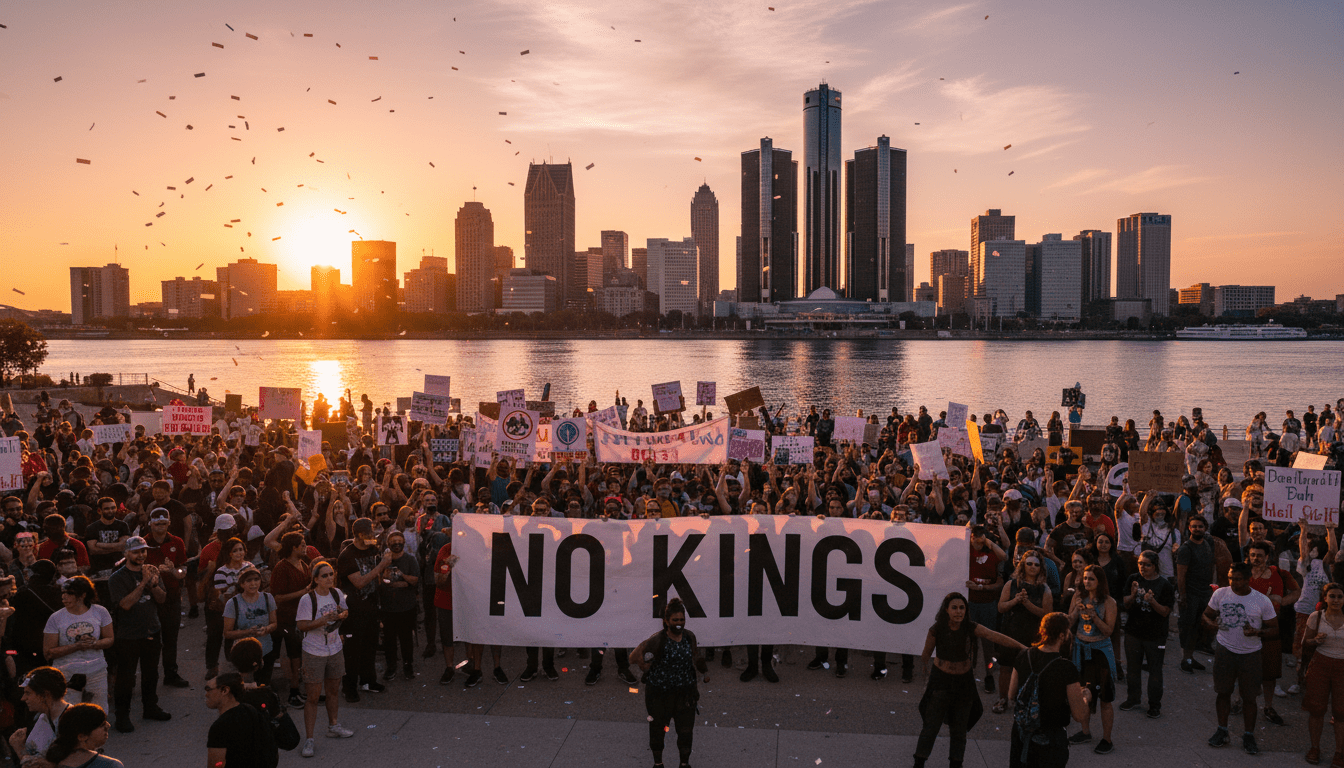
In the spring of 2026, the streets of Detroit have become the backdrop for a burgeoning social movement that is capturing national attention. Under the banner of "No Kings," a diverse coalition of activists, long-time residents, and students has begun organizing frequent demonstrations at Hart Plaza and outside the Coleman A. Young Municipal Center. These rallies, while peaceful, represent a significant shift in the city’s political temperature, focusing on perceived inequities in Detroit’s rapid downtown redevelopment.
The Emergence of the No Kings Movement
The movement’s name, "No Kings," is a direct reference to the concentrated influence of major developers and political figures in the city’s decision-making processes. According to the Detroit People’s Platform, a long-standing community advocacy group, the rallies are a response to a series of large-scale tax abatements granted to high-end real estate projects while neighborhood infrastructure remains underfunded. The sentiment among organizers is that the "Renaissance City" must ensure that its growth is felt equally across all zip codes, not just within the 7.2 square miles of the greater downtown area.
The movement gained momentum following a series of contentious Detroit City Council sessions regarding the allocation of community benefit agreements. Activists argue that current policies lack the teeth necessary to hold developers accountable for local hiring and affordable housing commitments. By mobilizing through digital platforms and grassroots neighborhood meetings, the No Kings rallies have successfully pressured local officials to reconsider the transparency of public-private partnerships.
Impact on Detroit Residents
For the average Detroiter, these protest movements are about more than just political slogans; they are about the cost of living and the accessibility of their own city. In neighborhoods like North End and Jefferson-Chalmers, residents have expressed concerns that the focus on luxury development is driving up property taxes and displacing legacy residents. The No Kings rallies have provided a megaphone for these concerns, bridging the gap between neighborhood-level anxieties and city-wide policy debates.
Local business owners in the Livernois Avenue of Fashion have expressed a mix of solidarity and caution. While many agree with the movement’s call for more equitable investment, there is a collective hope that the protests remain peaceful to avoid disrupting the hard-earned economic stability of local commercial corridors. The movement has also spurred a new wave of civic engagement, with Detroit City Clerk records showing a notable uptick in voter registration among residents aged 18 to 30 in the months following the initial rallies.
Background and Data: The Economic Divide
To understand the roots of the No Kings rallies Detroit is experiencing, one must look at the data surrounding the city’s recovery. According to the University of Michigan Detroit Metro Area Communities Study (DMACS), while the city’s overall unemployment rate has reached historic lows, the disparity in household income between the downtown core and outlying neighborhoods remains stark. The report indicates that nearly 35% of Detroit residents still live below the poverty line, even as billion-dollar investments reshape the skyline.
Furthermore, data from the U.S. Census Bureau shows that housing costs in Detroit have risen by an average of 12% annually over the last three years, far outpacing wage growth for many service-sector workers. This economic tension is the primary fuel for the 2026 protest landscape. Residents frequently cite the contrast between shiny new skyscrapers and the remaining 30,000 blighted structures as evidence of a "two-tier" recovery. These statistics are frequently cited by organizers during rallies to emphasize that their demands for equity are based on measurable outcomes rather than mere rhetoric.
The City’s Response and Future Outlook
In response to the growing pressure, the Mayor’s Office has defended the current development strategy, noting that tax abatements are a necessary tool to attract outside capital to a city that was in bankruptcy just over a decade ago. However, acknowledging the shift in public opinion, the administration recently announced a new Neighborhood Equity Fund, which aims to divert a percentage of downtown development fees directly into neighborhood-specific projects like park renovations and small business grants.
Political analysts suggest that the No Kings rallies will likely influence the upcoming 2026 local elections. Candidates for City Council are already being asked to take definitive stances on "inclusive growth" and to detail their plans for expanding the Detroit housing market to include more deeply affordable units. The movement has effectively shifted the narrative from "how do we get investment?" to "how do we make investment work for everyone?"
As Detroit continues its transformation, the No Kings movement serves as a reminder of the city’s long history of labor and civil rights activism. Whether these rallies lead to systemic legislative changes or remain a localized phenomenon will depend on the movement’s ability to maintain its broad-based coalition. For now, the sights and sounds of the rallies are a staple of the 2026 Detroit experience, signaling a city that is not only growing but actively debating the terms of its future. For more updates on local developments, stay tuned to our coverage of Detroit development projects and their impact on the community.