As Detroit moves through 2026, the city’s economic narrative is increasingly defined by a complex balance between urban revitalization and the preservation of affordability. For decades, the Motor City was synonymous with low-cost entry into the housing market, but a sustained influx of investment and a shifting demographic landscape have altered that trajectory. Today, residents and prospective newcomers are navigating a landscape where the cost of living Detroit 2026 reflects a more mature, though increasingly expensive, metropolitan economy.
The Housing Market: Rent and Mortgages in 2026
Housing remains the most significant factor in the overall expenses Detroit residents face. According to recent data from the Southeast Michigan Council of Governments (SEMCOG), residential property values in core neighborhoods like Midtown, Corktown, and the North End have seen a steady annual appreciation of approximately 4.5% over the last three years. While this growth signals a robust recovery, it has placed new pressure on the rental market.
As of early 2026, the average monthly rent for a one-bedroom apartment in the downtown area has stabilized near $1,850, a stark contrast to the prices seen a decade ago. However, the City of Detroit has implemented several affordable housing initiatives aimed at ensuring that long-term residents are not displaced by rising living costs Detroit. The Detroit Housing Services Office reports that over 2,000 units of regulated affordable housing have been preserved or newly constructed in the past 24 months, providing a vital buffer for low-to-moderate-income families.
Grocery and Daily Expense Fluctuations
Beyond the cost of shelter, daily expenses Detroit households encounter have been influenced by broader national inflation trends, though local factors play a significant role. Food costs in the city remain slightly above the national average in some categories due to the ongoing challenge of ‘food deserts’ in outlying neighborhoods, despite the expansion of grocers like Meijer and various independent local markets.
Data from the U.S. Bureau of Labor Statistics indicates that the cost of food-at-home in the Detroit-Warren-Dearborn area has tracked closely with the Consumer Price Index (CPI), showing a 3.2% increase year-over-year. For a family of four, monthly grocery expenditures are now estimated to range between $950 and $1,200, depending on shopping habits and proximity to competitive retail outlets. For more updates on local commerce, readers can check our recent coverage on Detroit small business trends.
Transportation and the Detroit Insurance Factor
One of the most unique aspects of the Detroit affordability equation is transportation. While the expansion of the QLine and improvements to the Detroit Department of Transportation (DDOT) bus routes have provided more reliable public transit options, Detroit remains a car-centric city. For those who drive, the primary financial hurdle remains auto insurance.
Historically, Detroiters have paid some of the highest insurance premiums in the United States. While state-level reforms in previous years provided some relief, the current expenses Detroit drivers face still include premiums that are roughly 60% higher than the Michigan state average. According to the Michigan Department of Insurance and Financial Services, the average annual premium for a Detroit resident in 2026 hovers around $3,400. This ‘insurance tax’ continues to be a major point of discussion in local policy circles regarding the true cost of living Detroit 2026.
Impact on Detroit Residents
The shifting economic climate has created a bifurcated experience for those living in the city. For young professionals and tech workers drawn to the Michigan Central innovation district, the city remains an attractive, high-amenity alternative to coastal hubs like Chicago or New York. For these individuals, the Detroit affordability index is still favorable when compared to other major tier-one cities.
Conversely, for legacy residents in neighborhoods like Brightmoor or the East Side, the rise in property taxes and utility costs—which have seen a 5.8% increase according to DTE Energy filings—presents a growing challenge. The City’s ‘Homeowner Property Tax Assistance Program’ has seen record enrollment this year, highlighting the need for systemic support as the city’s valuation grows. You can read more about neighborhood specific impacts in our report on Detroit community development.
Background & Data
The statistical backbone of Detroit’s 2026 economy is found in the convergence of rising wages and rising costs. The U.S. Census Bureau’s latest American Community Survey (ACS) updates suggest that the median household income in Detroit has risen to approximately $42,000. While this is a significant improvement from the mid-2010s, it still trails the suburban average, creating a gap that complicates the narrative of Detroit’s resurgence.
External analysis from the Southeast Michigan Council of Governments suggests that while the cost of living Detroit 2026 is rising, the city still holds a competitive advantage in terms of ‘lifestyle-per-dollar’ spent. The concentration of sports venues, cultural institutions like the DIA, and a burgeoning culinary scene provide a value proposition that continues to drive population stabilization after decades of decline.
What Happens Next
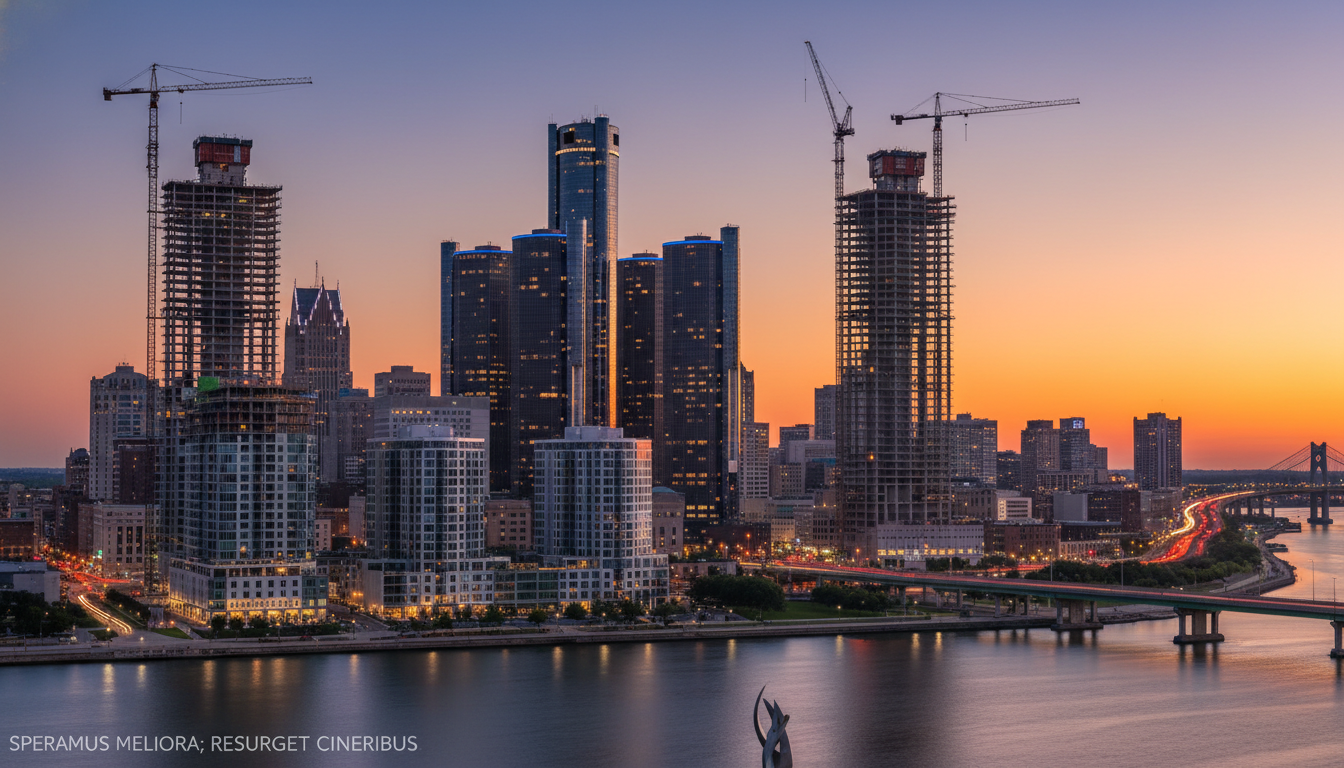
Looking toward the latter half of the decade, the primary focus for city officials will be the expansion of the middle-class tax base without eroding the affordability that defines Detroit’s character. Experts predict that as more high-density housing projects reach completion in 2027 and 2028, the rental market may see a slight correction or cooling period, which would benefit those currently feeling the squeeze of living costs Detroit.
Furthermore, the ongoing development of the Joe Louis Greenway is expected to increase property values in adjacent neighborhoods, potentially creating new pockets of high-demand real estate. The challenge for Detroit in 2026 and beyond will be ensuring that the ‘New Detroit’ remains accessible to the people who stayed when the city’s fortunes were at their lowest. As the city matures into its new economic identity, the cost of living will remain the most critical metric for measuring the success of its historic comeback.