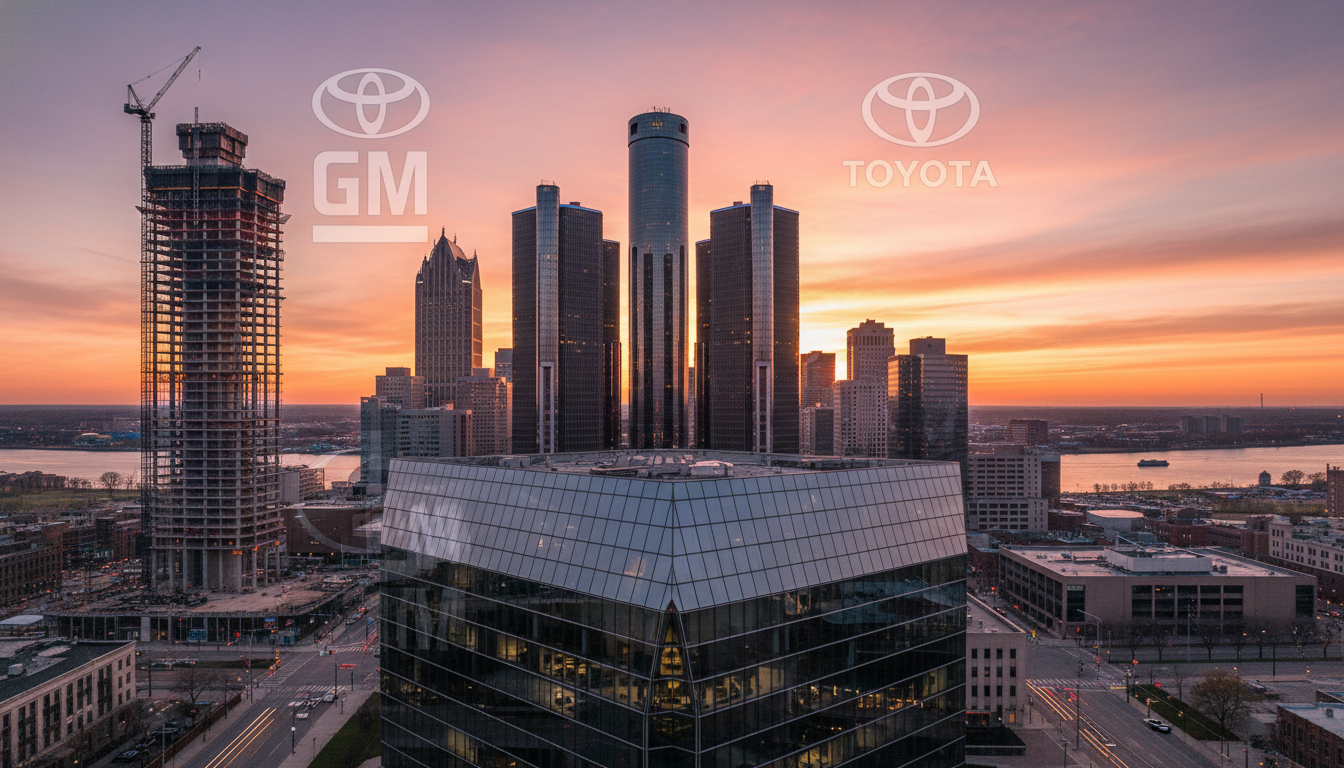
The skyline of the Motor City has long been defined by the looming towers of the Renaissance Center, a symbol of General Motors’ dominance and its role as the primary steward of the downtown core. However, as the automotive landscape shifts toward electrification and globalized supply chains, a new debate is surfacing among residents, city officials, and industry analysts regarding the community roles of traditional Detroit automakers versus international competitors like Toyota. While GM remains the city’s historical anchor, its upcoming move to the Hudson’s Detroit development has prompted questions about the future of its local PR strategy. Simultaneously, Toyota has been steadily increasing its regional footprint, sparking a conversation about what ‘civic duty’ looks like for a modern automotive company in Southeast Michigan.
The Evolving Presence of Detroit Automakers
For decades, the identity of the city was inseparable from the ‘Big Three.’ General Motors, Ford, and Stellantis (formerly Chrysler) were not just employers; they were the backbone of the region’s social and economic infrastructure. According to the Michigan Economic Development Corporation (MEDC), the automotive sector remains the state’s largest industry, but the nature of corporate involvement is changing. GM’s decision to relocate its global headquarters from the massive Renaissance Center to the more modern, streamlined Hudson’s site—a project spearheaded by Dan Gilbert’s Bedrock—is seen by many as a pivot toward a more agile, tech-focused future. This move, while signaling a commitment to downtown, also represents a physical downsizing that has some community leaders concerned about the long-term impact on the central business district’s foot traffic and secondary economic ecosystem. You can read more about local development projects and their impact on our business district in our recent coverage.
Toyota Civic Duty and Regional Expansion
While GM navigates its transition, Toyota has been quietly expanding its influence just outside the city limits. Toyota Motor North America has invested heavily in its Research and Development centers in York Township and Ann Arbor, creating a hub for engineering and safety testing that rivals many domestic facilities. This expansion has led to what industry observers call an increase in Toyota civic duty, as the company pours millions into local STEM education programs and mobility initiatives for Detroit residents. Reports from the Southeast Michigan Council of Governments (SEMCOG) indicate that Toyota’s regional employment has grown significantly, contributing to a diverse job market that is less dependent on the traditional domestic brands. The company’s focus on ‘mobility for all’ has resulted in partnerships with Detroit-based non-profits to improve transit access in underserved neighborhoods, a move that some PR experts suggest is a calculated effort to build brand loyalty in a city that has historically been loyal to Detroit automakers.
The Impact on Detroit Residents
For the average Detroiter, the corporate debate often boils down to jobs and neighborhood investment. The shift in how these companies approach community engagement has tangible effects on the ground. When Detroit automakers like GM restructure, the impact is felt in local supply chains and small businesses that rely on the presence of thousands of office workers. Conversely, the rise of international players in the regional economy offers new opportunities for high-tech employment and specialized training. Data from the U.S. Census Bureau and the Bureau of Labor Statistics shows that while manufacturing jobs have fluctuated, the demand for automotive software engineering and green energy technicians is rising. Local residents are increasingly looking for companies—regardless of their headquarters’ location—that offer stable wages, comprehensive benefits, and a visible presence in the community through school sponsorships and infrastructure improvements.
Background and Economic Data
The economic tension between domestic and international brands in Michigan is not new, but the stakes are higher than ever. In 2023, the Center for Automotive Research (CAR) highlighted that the ‘Detroit automakers’ still account for a majority of the state’s economic output, but the growth rate of international investment in Michigan is outpacing domestic growth in some sectors. GM PR teams have worked tirelessly to frame the move to the Hudson’s site as a ‘new chapter’ for the city, emphasizing that a more efficient headquarters allows for greater investment in future technologies like the Ultium battery platform. However, the optics of moving from a seven-tower complex to a smaller footprint remain a point of contention for those who view the Renaissance Center as a monument to Detroit’s industrial might. You can see our analysis of automotive sector job trends for more context on these shifts.
What Happens Next
As the debate continues, the City of Detroit is working to ensure that corporate relocations and regional expansions benefit the city’s tax base and workforce development goals. Mayor Mike Duggan’s administration has frequently emphasized that ‘Detroit is a city that builds things,’ and that includes fostering an environment where both GM and Toyota can thrive. In the coming years, we can expect to see more competition in the Detroit business news cycle regarding which company provides the most value to the community. Will GM’s concentrated downtown presence outweigh Toyota’s regional R&D investments? The answer may lie in which company can better address the city’s needs for modern transportation, sustainable jobs, and community-level investment. For further details on state-wide initiatives, visit the official Michigan Economic Development Corporation website. As the industry evolves, the definition of a ‘Detroit car company’ may become less about where the company was founded and more about where it chooses to invest its resources and its heart.