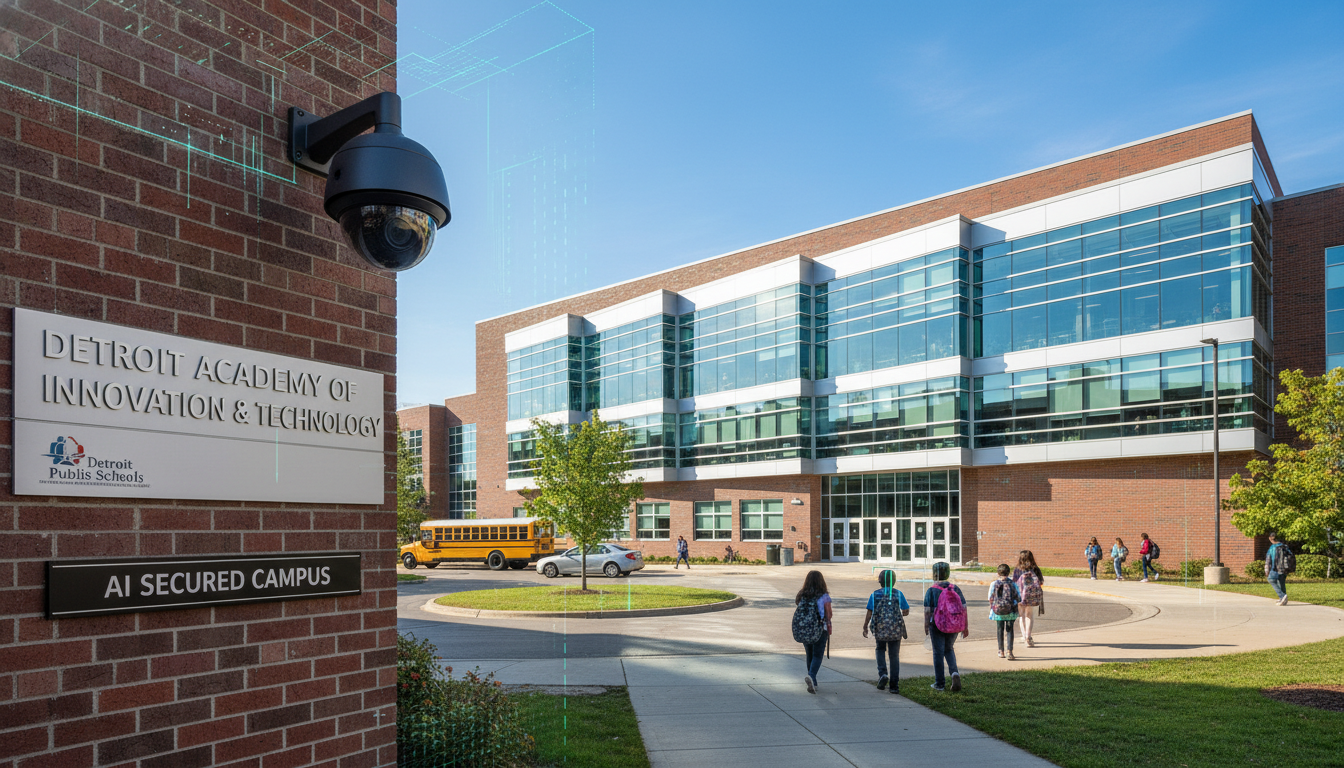
In an effort to bolster security measures and address rising concerns over campus safety, the Detroit Public Schools Community District (DPSCD) has begun the implementation of advanced AI gun detection technology. This move follows a statewide push in Michigan to provide schools with more robust tools to identify potential threats before they escalate into tragedies. The deployment of this software is part of a broader security overhaul that includes physical upgrades and increased mental health resources across the district’s various campuses.
The Implementation of AI Security in Schools
The new technology, often referred to as visual gun detection software, integrates directly with a school’s existing closed-circuit television (CCTV) cameras. Unlike traditional security measures that rely on human monitoring—which can be subject to fatigue and oversight—the AI software scans thousands of frames per second to identify the distinct shape of a firearm. According to reports from the Detroit Public Schools Community District board meetings, the district selected technology that focuses specifically on identifying exposed weapons rather than facial recognition, a distinction made to address local privacy concerns.
Once the AI identifies a weapon, an alert is instantly sent to a monitoring center, often staffed by former military or law enforcement personnel. If the threat is verified, local law enforcement and school security are notified within seconds. This rapid response capability is designed to provide critical lead time during the first moments of a potential incident. This shift toward AI security in schools represents a significant technological leap for Detroit education safety protocols.
Funding and State Support for Gun Detection Technology
The financial backing for this initiative stems largely from state-level grants. Following the tragic events at Oxford High School in 2021 and Michigan State University in 2023, the Michigan Legislature prioritized school safety funding. According to the Michigan Department of Education, millions of dollars were allocated under Section 97 of the State School Aid Act, specifically for school safety equipment and personnel.
Detroit’s district successfully applied for a portion of these competitive grants, securing funds to cover the licensing fees and technical integration for the software. This state support has allowed the district to implement high-end gun detection technology without diverting funds from essential classroom instruction or teacher salaries. Officials from the Governor’s office have stated that providing these resources is a critical component of the state’s comprehensive plan to protect students.
Impact on Detroit Residents and Students
For the parents and guardians of Detroit students, the introduction of AI-driven security brings a mix of relief and caution. Many local families have expressed support for any measure that can prevent violence, citing the need for schools to be a sanctuary for learning. However, some community advocacy groups in Detroit have raised questions regarding the long-term implications of increased surveillance in educational environments.
To address these concerns, DPSCD has been transparent about the limitations of the software. The district has emphasized that the AI does not track student movements, record biometric data, or use predictive algorithms to profile individuals. Instead, it serves as a passive digital sentry. For Detroit residents, the impact is twofold: a heightened sense of physical security and an ongoing dialogue about the role of technology in public spaces. The goal is to create a secure environment where students feel safe without feeling like they are under constant scrutiny.
A Broader Strategy for Detroit Education Safety
While the AI software is a high-profile addition, it is only one piece of a multi-layered approach to Detroit education safety. The district has also invested in door sensors, fortified entry points, and an expansion of the district’s own police department. Furthermore, there is an increased focus on the “behavioral threat assessment” model, which aims to identify and support students who may be experiencing mental health crises before they become a danger to themselves or others.
Data from the U.S. Secret Service’s National Threat Assessment Center suggests that most school attackers exhibit concerning behaviors prior to their actions. By combining AI gun detection technology with human intervention and mental health support, Detroit schools are attempting to build a safety net that is both technological and psychological. Local educators have noted that while the AI can catch a weapon, it is the community and the counselors who catch the student in distress.
What Happens Next for Detroit Schools
As the rollout continues, the effectiveness of the system will be monitored by both the district and third-party security auditors. Other districts across Metro Detroit are watching the DPSCD implementation closely, with some already following suit. The conversation around school safety is likely to remain a top priority in the upcoming legislative sessions as lawmakers evaluate the results of the initial grant cycles.
The long-term success of AI security in schools will depend not only on the software’s ability to detect threats but also on the continued trust of the Detroit community. As technology evolves, the district remains committed to updating its protocols to ensure that Detroit’s children have the safest possible environment in which to learn and grow. Future updates on school security and district-wide safety initiatives can be expected as the 2024-2025 academic year progresses.