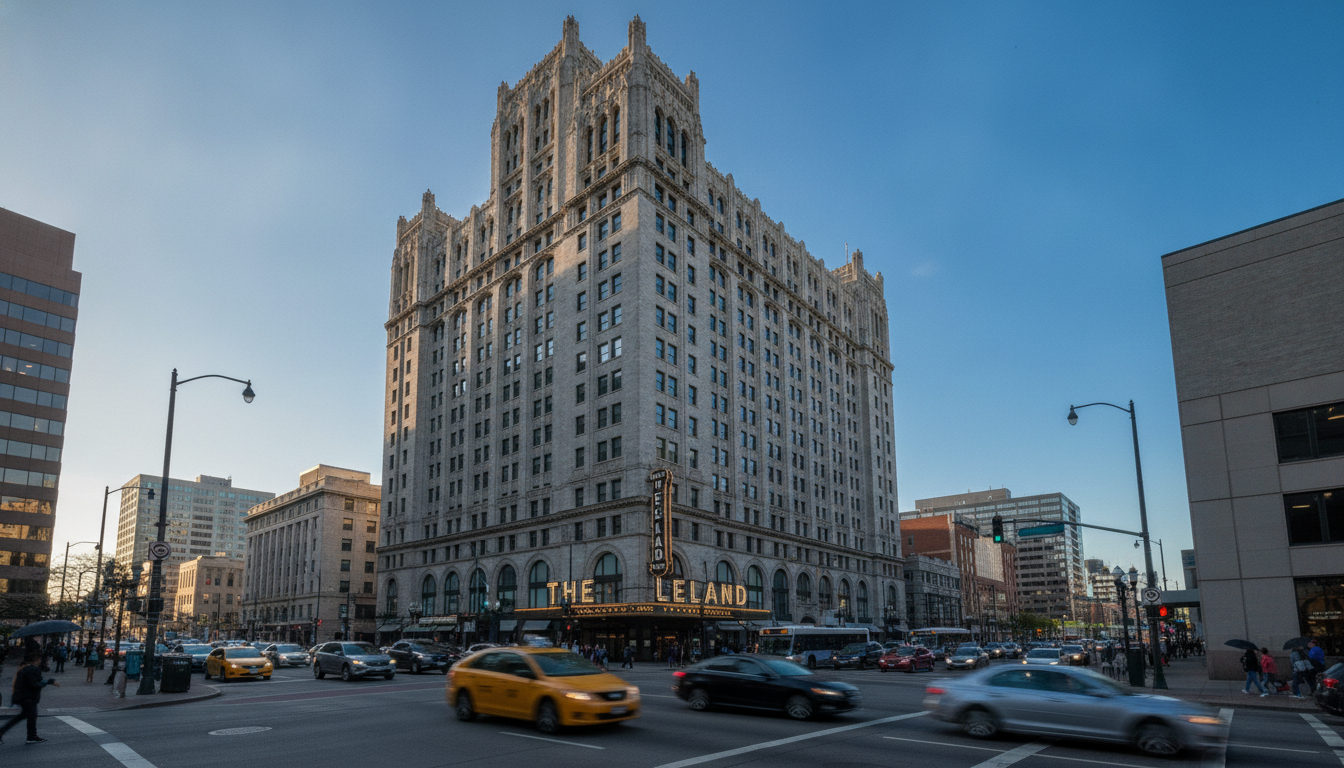
A U.S. Bankruptcy Court judge has officially cleared the way for the sale of the historic Leland House in downtown Detroit, marking a significant milestone in the preservation and redevelopment of one of the city’s most storied landmarks. The decision, handed down this week, concludes a period of financial uncertainty for the 22-story structure at 400 Bagley St., which has faced mounting legal and maintenance challenges over the last several years.
The Bankruptcy Court Ruling and Sale Details
According to filings from the U.S. Bankruptcy Court for the Eastern District of Michigan, the approval allows the current ownership entity to transfer the property to a specialized development group focused on urban revitalization. The sale is viewed as a critical step in addressing the building’s long-standing code violations and financial insolvency. Court records indicate that the transition of ownership was necessary to secure the capital required for a comprehensive renovation estimated to cost tens of millions of dollars.
Built in 1927, the Leland House—originally known as the Detroit-Leland Hotel—has long been a fixture of the downtown Detroit skyline. However, in recent years, the building’s reputation suffered due to reports of deteriorating living conditions for its residents and systemic mechanical failures. The bankruptcy proceedings were initiated as a means to restructure debt and find a capable steward for the property’s future. The City of Detroit Planning & Development Department has closely monitored the case, emphasizing the need for a developer with the proven capacity to handle historic renovations of this scale.
Impact on Downtown Detroit Residents
The redevelopment of the Leland House is expected to have a profound impact on local residents and the surrounding neighborhood. For the current tenants, many of whom have lived through periods of inconsistent heating and elevator service, the sale represents a promise of modernized living conditions. The proposed redevelopment plan includes a complete overhaul of the building’s infrastructure, including new HVAC systems, modernized elevators, and renovated residential units.
Beyond the immediate building, the project is a major win for the Bagley Street corridor. As downtown Detroit continues its residential boom, the rehabilitation of 400 Bagley St. fills a critical gap between the revitalized Michigan Central district and the central business district. Urban planners note that preserving historic density is essential for maintaining the walkable, vibrant character of the city core.
Background and Real Estate Trends
The sale of the Leland House comes at a time when the Detroit real estate market is seeing a shift toward high-density residential conversions. Data from the Detroit Economic Growth Corporation (DEGC) suggests that demand for downtown housing remains resilient, despite national economic headwinds. The Leland House, with its nearly 400 units, represents a significant portion of the available housing stock in the immediate area.
Historically, the Leland House has transitioned from a luxury hotel to a mix of market-rate and affordable apartments. Industry experts suggest that the new ownership will likely pursue a mixed-income model, utilizing historic tax credits to offset the high costs of renovation. This approach aligns with recent Detroit real estate trends where developers balance luxury amenities with workforce housing requirements set by the city.
Preserving Detroit’s Architectural Heritage
Preservationists have championed the sale, fearing that continued neglect could have led to a “demolition by neglect” scenario. The building’s Italian Renaissance style, designed by the renowned architectural firm Rapp & Rapp, features intricate terracotta work and a grand lobby that remains largely intact. The approved sale agreement includes stipulations that the historic facade and key interior elements must be preserved in accordance with federal standards for historic rehabilitation.
What Happens Next for the Leland House
With the bankruptcy court’s approval, the closing of the sale is expected to occur within the next 60 days. Following the transfer of title, the development team is slated to begin a multi-phase construction process. The first phase will likely focus on life-safety upgrades and the stabilization of the building’s exterior. Residents can expect a tiered renovation schedule, designed to minimize displacement while units are upgraded to modern standards.
The successful sale of the Leland House is being hailed by city officials as a testament to the strength of the downtown Detroit market. While the bankruptcy process was arduous, the result ensures that a piece of Detroit’s history will not only remain standing but will serve as a cornerstone for the next generation of urban dwellers. As the scaffolding eventually rises around 400 Bagley, it will serve as a visible sign of the ongoing investment pouring into the heart of the city.