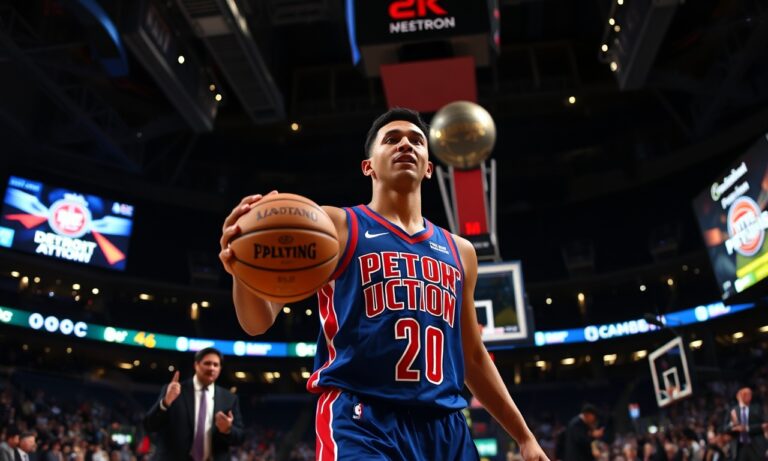
Former NBA center DeMarcus Cousins is pushing for a splash move, urging the Detroit Pistons to pursue a marquee target from Charlotte — described in the latest chatter as the Hornets’ $75 million star — as the league’s summer roster-building heads toward key deadlines. The comments, amplified across NBA media circles, have immediately fed into ongoing Detroit Pistons news and the broader conversation around who Detroit should add during NBA free agency targets and the early stages of the Pistons offseason rumors cycle.
While Cousins’ call is best read as a recommendation rather than a report of a signed offer, it arrives at a pivotal moment for the Pistons’ front office planning. Detroit continues to balance long-term development goals with the need for immediate upgrades at premium positions — and the thought of landing a high-cost, high-usage talent has captured the attention of fans watching this offseason closely.
Main Section: Cousins’ message and why it matters for Detroit
In public remarks circulated by NBA coverage outlets, Cousins argued that Detroit should “go after” the kind of player who can change the ceiling of a team quickly. The target referenced in the conversation is framed as a Hornets $75 million star, suggesting a player who commands meaningful financial commitment and can anchor offense for seasons.
Detroit’s interest in players who can serve as centerpiece scorers and defenders has been a recurring theme in Detroit basketball headlines over the past year. According to the NBA’s collective bargaining agreement, player salary constraints and contract structures shape what teams can do in free agency, including the difference between using cap space versus taking on salaries through trades. That framework matters here because even if Detroit wanted to chase a high-dollar star, any move would need to align with roster rules, contract timing, and whether the Pistons have the flexibility to make the finances work.
From a basketball perspective, Cousins’ appeal fits Detroit’s current need to accelerate its competitive timeline. The Pistons have leaned heavily on building through player development and younger cores, but the league is unforgiving for teams that lack reliable shot creation. A player described as a $75 million-level talent — whether through scoring volume, gravity, or two-way value — is the type of addition that could reduce the number of “learning” reps required from younger teammates.
At the same time, Detroit fans have seen in recent seasons how difficult it is to convert regular-season improvement into playoff-level performance. That’s why roster-building advice from former players resonates: Cousins is not pitching a specific trade package or contract, but he is reinforcing a principle — that Detroit should aim for players who can deliver immediate impact.
Impact on Detroit Residents: what fans should watch for
For Detroit residents, the NBA’s offseason drama may feel distant, but it’s tightly connected to local identity and community engagement. The Pistons’ roster shapes ticket demand, game-day expectations, and the momentum that influences how the franchise supports youth programs and local initiatives. A major signing or trade can also affect how sponsors and partners evaluate their presence with the team.
Several Detroit area developments underscore why this matters beyond the court. The Detroit Pistons operate as part of a broader downtown entertainment ecosystem centered around sports and events. When the team’s product improves, local venues typically see stronger foot traffic, while offseason headlines can boost engagement leading into training camp and the regular season.
Also, the modern sports economy is increasingly tied to media attention. Data from the U.S. Bureau of Labor Statistics (BLS) shows that employment related to “arts, entertainment, and recreation” is sensitive to demand shifts from consumer spending. In practical terms, if the Pistons’ offseason strengthens expectations, more fans may spend on tickets, parking, and nearby hospitality once games tip off.
That said, residents should be cautious about equating commentary with certainty. Until Detroit’s front office makes concrete roster moves — and until any transaction clears league processes — the Cousins suggestion remains a signal about the type of player the Pistons could pursue, not a guarantee that a deal is imminent.
Background & Data: How NBA free agency targets become real moves
To translate NBA free agency targets into actual roster changes, teams must navigate several layers: salary cap positioning, contract guarantees, roster spots, and whether a player is actually available under current team control. The Pistons’ offseason planning is expected to reflect those constraints.
According to reporting and league-wide transaction history, the highest-cost players are usually acquired through specific pathways:
- Cap-space signings when a team has room to absorb full salaries.
- Trades that bring in stars while balancing outgoing money.
- Re-signings when a current team chooses to keep a player rather than move them.
Detroit’s challenge is that pursuing a “$75 million” caliber player implies either significant financial flexibility or a complex trade scenario. Detroit’s ability to do that depends on its existing roster commitments, whether it can create or shift cap room, and what counterpart teams require in return.
There’s also an on-court fit to consider. Even when a team has the budget, it still needs to ensure a new star improves spacing, ball movement, and defensive alignment. Detroit’s coaching staff typically evaluates whether an addition complements the roles of current starters and young players — not just whether the newcomer has star power.
Finally, the rumor cycle itself is part of modern NBA planning. Pistons offseason rumors often begin with informal signals: a former player’s take, an analyst’s speculation, or a widely shared report about a player’s interest in particular markets. Those early signals can influence attention, which in turn can affect negotiation leverage, media coverage, and how quickly teams clarify their intentions.
What Happens Next: steps Detroit could take and signs to monitor
If Detroit is seriously evaluating the type of high-cost star Cousins referenced, fans should watch for a few concrete indicators in the coming weeks:
- Front office activity: increased trade discussions, cap-clearing moves, or workout rumors involving players linked to the same positional needs.
- Salary-cap clarity: team statements and reputable NBA cap reporting that outline whether Detroit has flexibility for a major free agent or whether a trade is more likely.
- Roster role alignment: comments from coaching staff or beat reporters about offensive scheme priorities and how a potential addition would fit alongside Detroit’s current core.
- Hornets-side signals: any indication that Charlotte is open to moving high-cost contracts, which would be necessary before “go after” talk becomes actionable.
For now, the most immediate impact is narrative momentum. Cousins’ urging — packaged in the language of a Hornets $75 million star target — keeps Detroit’s offseason on the radar and reinforces the idea that the Pistons should think bigger than incremental upgrades.
As the Pistons move toward their next roster decision points, Detroit residents will likely see a mix of confirmed moves and speculation. The best way to separate signal from noise is to track reported transactions, credible cap reporting, and direct confirmation from established NBA sources, rather than relying on early offseason rhetoric alone.
Related Detroit context: sports expectations in a changing city
Detroit has spent years rebuilding its public-facing identity across sports and entertainment. When marquee teams get better, the city’s energy often rises with them — from media coverage to local turnout. That broader context is why Detroit basketball headlines travel beyond basketball fans, drawing attention from residents who follow the city’s larger cultural arc.
Whether the Pistons can pursue a player at the level implied by Cousins’ suggestion remains uncertain. But the discussion itself — about ambition, financial capacity, and fit — is exactly what should shape Detroit’s offseason strategy. If Detroit decides to chase a true cornerstone, it will likely require the kind of coordinated planning that turns rumors into reality.
For now, Detroit’s next chapter won’t be defined by commentary alone. It will be defined by what the Pistons actually do when the market opens and opportunities become concrete.