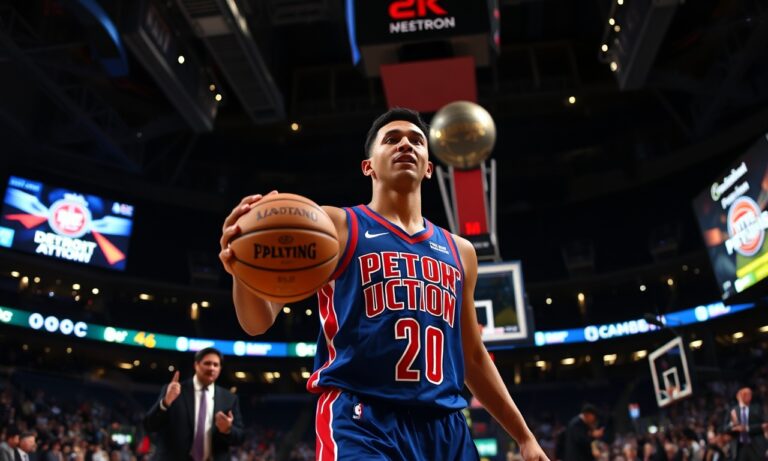
Detroit Pistons fans are watching the NBA rumor mill closely after fresh reports tied to potential roster moves involving Miami Heat guard Tyler Herro and Portland Trail Blazers wing Norman Powell. While neither deal is confirmed, the speculation has quickly become a Detroit conversation—less about the players’ talent and more about what their arrival would signal for the Pistons’ direction, development plan, and salary flexibility.
Across social media and local sports talk, supporters are weighing a familiar question: do trade rumors for established scorers accelerate the rebuild—or risk crowding playing time and resources that could otherwise go to Detroit’s younger core? For now, the Pistons are still in an offseason window where every update can reshape expectations.
Detroit Pistons rumors put focus on Herro and Powell
The latest speculation centers on the possibility of Detroit using trade assets to target a high-usage perimeter scorer. Tyler Herro to Pistons is one of the names that has drawn attention, with fans discussing how a player who has served as a primary offensive option for the Heat could fit alongside Detroit’s developing backcourt and wing rotation. Separately, chatter about Norman Powell Pistons has also circulated, emphasizing Powell’s scoring versatility and his track record as a capable secondary creator.
For Detroit’s fan base, the concern tends to follow the same pattern: when teams are in the middle of building, any move that appears to “buy” short-term offense can be interpreted as a shift away from long-term development. Even if the underlying goal is competitiveness, the timing matters, especially for organizations that have publicly emphasized development and roster-building.
Impact on Detroit residents: what NBA trade rumors mean locally
Detroit residents don’t just follow games for entertainment; they increasingly track sports moves as signals of broader momentum in the city’s major-league ecosystem. The Pistons’ competitiveness can influence ticket demand, local business activity on game nights, and even the tone of civic pride around the city’s teams.
While NBA personnel decisions won’t directly change city budgets, they can affect consumer behavior. According to the U.S. Bureau of Labor Statistics, consumer spending can shift with major local events, and participation in entertainment activities tends to move with demand and pricing. In practical terms, if rumors drive expectations of a “more win-now” roster, the Pistons could see changes in attendance patterns—especially among casual fans who respond to offseason headlines.
Meanwhile, the Pistons’ approach also matters to Detroit-area youth basketball players and community programs that rely on NBA visibility. The NBA and its partners maintain extensive youth programming through local organizations, and when teams highlight certain player profiles—such as scorers who run offense—coaches and program leaders often incorporate those styles into instruction. That doesn’t mean Detroit would ignore fundamentals if Herro or Powell were added, but it can shape how fans and youth stakeholders think about the team’s identity.
From a community standpoint, the bigger question behind these rumors is what Detroit will prioritize: a lineup built to develop chemistry and roles over multiple seasons, or a roster designed to maximize win probability immediately—even if that requires greater positional certainty for the current young talent.
Background: how offseason trade speculation affects rebuild timelines
Trade rumors are common in the NBA offseason, but Detroit’s situation makes the speculation louder. As the Pistons continue working through roster construction, every “what if” can feel consequential—particularly when Detroit has seen its draft and development cycles move at a different pace than fans sometimes expect.
At the core is playing time. When a team brings in an established scorer, the team typically reallocates usage and touches. That can be beneficial if the newcomer creates spacing and pressure that unlocks others. But it can also delay progression if younger players are forced into reduced offensive roles or narrower responsibilities.
Another layer is salary structure. Detroit’s front office decisions often have to balance talent with financial flexibility. According to the Detroit Pistons media and team resources, NBA roster moves are constrained by league rules and team budgets, which means every acquisition can ripple into future trade options, contract negotiations, and the ability to respond to injuries.
For fans, this is where NBA trade rumors Detroit often becomes personal. The debate is rarely about whether a player like Herro or Powell is good. It’s about whether adding them would align with Detroit’s development curve and cap strategy for the next few seasons.
Tyler Herro: fit question extends beyond talent
Herro’s name appears in discussions about the Pistons because he brings a perimeter scoring package and experience as a reliable offensive piece under playoff pressure. For Detroit, the fit would likely depend on how the team’s offensive system distributes responsibilities—who handles initiation, how shots are created, and which players become the primary creators.
Fans worrying about an “offense-first” shift also point to the learning curve that young teams face: building timing on cuts, defensive communication, and consistent shot selection as a unit. If Detroit adds a player already accustomed to a high-volume role, the Pistons would need to determine how to preserve development for younger scorers and maintain a stable defensive identity.
Local observers frequently note that Detroit’s best long-term path includes creating an environment where emerging players can expand their skill sets. Herro could theoretically provide that environment by drawing defensive attention, but the Pistons would still have to protect playing time for players who need reps.
Norman Powell: scoring burst, role clarity concerns
Powell’s profile has drawn similar attention because he is known for scoring versatility and the ability to convert in multiple settings. In a Detroit context, fans discussing Trail Blazers wing Norman Powell rumor often focus on role clarity—whether Powell would be expected to start immediately, operate as a bench scoring engine, or function in a hybrid system.
The Pistons have to consider how Powell’s minutes would intersect with their current rotation. If the team already has plans for young wings or guards, adding Powell could either accelerate wins while young players learn alongside a steady offensive presence—or it could further compress minutes for players whose development requires consistent opportunities.
Powell also represents a different trade-market category than a younger cornerstone prospect. That doesn’t mean the move would be wrong, but it does influence what fans believe Detroit’s timeline should be.
Background & data: why fans watch the money and the minutes
Even without a finalized trade framework, Detroit residents are increasingly aware of two offseason levers: minutes allocation and roster construction. Those levers connect directly to the human side of sports—how often players get chances to learn in real games, not just practice.
From a broader economic lens, the NBA is a business with dynamic demand. Data from the U.S. Census Bureau shows that Americans participate in entertainment spending in ways that are sensitive to economic conditions and major events. In practical terms, fan engagement and spending can rise when the team’s roster outlook changes.
That’s why Detroit Pistons offseason rumors carry weight beyond the standings. They shape perceptions of the team’s commitment, competitiveness, and willingness to take calculated risks.
What happens next: Detroit’s rumored targets meet the reality check
As the offseason progresses, the key developments will likely include more formal reports, confirmation of interest from multiple teams, and—if talks move forward—any communication about the Pistons’ willingness to part with specific rotation pieces or draft assets.
For fans trying to gauge credibility, the most reliable signals tend to come after teams clarify salary needs, confirm how many roster spots are available, and outline the general priorities of their offseason work. In most cases, trade rumors become more meaningful once the market sharpens and contenders reveal what they’re willing to give up.
In the meantime, Pistons supporters can prepare for two parallel outcomes: one where these players are never seriously pursued, and another where Detroit makes a trade designed to improve immediately. Either way, the local impact will be felt at the arena, in fan conversations, and in the confidence residents bring to the team’s next stage.
If there is one common thread across the Heat guard Tyler Herro rumor and the Norman Powell Pistons chatter, it’s that the Pistons’ offseason choices will be judged not only by star power, but by how well Detroit’s younger talent can grow around it.
Bottom line for Detroit fans
Until there’s an official agreement, the Detroit Pistons rumors involving Tyler Herro and Norman Powell should be treated as speculation—important to monitor, but not a certainty. Still, the fact that both names have surfaced reflects a broader question Detroit residents are asking right now: is the Pistons’ rebuild entering a more competitive phase, or will the franchise protect development-first decisions?
For the city, the answer will show up not just in standings, but in how the Pistons choose to build their identity—one offseason at a time.