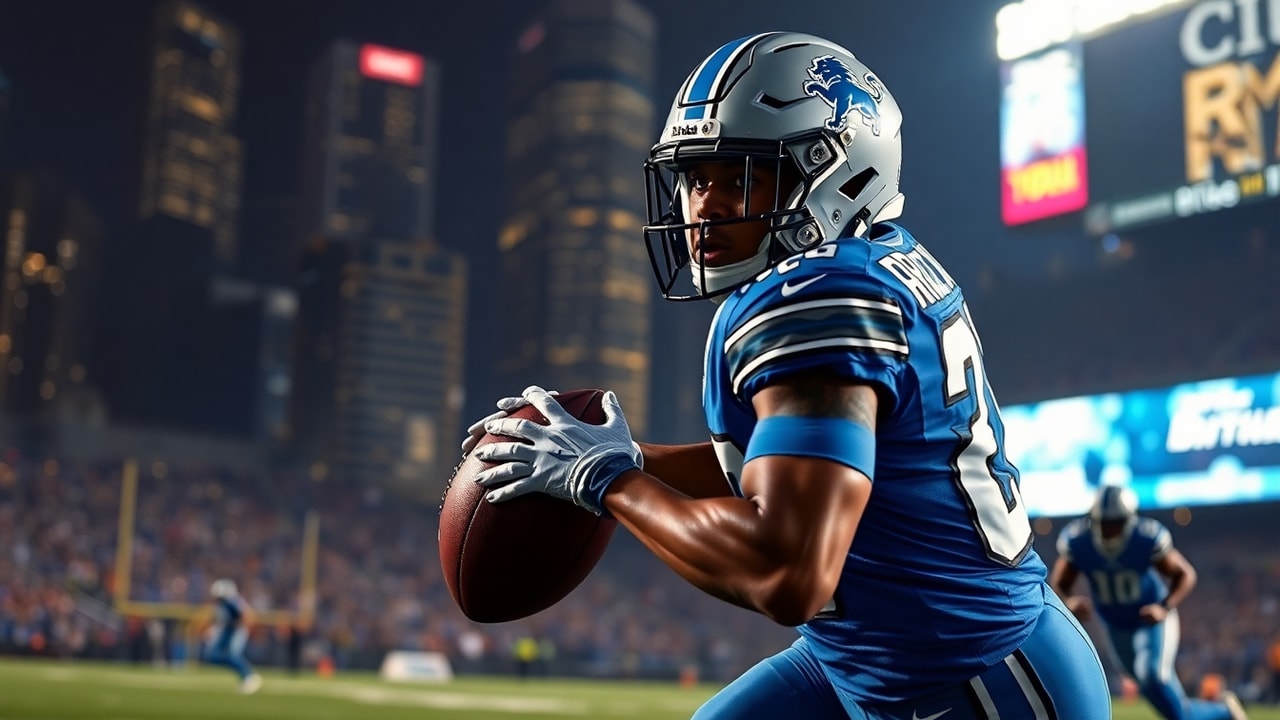
The Detroit Lions’ weekly preparation is showing up on the roster sheet. Ahead of the next stretch of games, coaching decisions around Terrion Arnold are leading to Detroit Lions depth chart changes, with Arnold’s assignments in the secondary and coverage packages adjusting as the team seeks matchup-specific answers.
While the Lions have long emphasized a flexible defensive structure, recent practice look-ins and game-week planning have pointed to a clearer division of responsibilities for the young defensive back. The result: a moving chessboard inside the secondary and coverage roles, where Arnold’s deployment can shift between larger coverage snaps, situational alignments, and responsibilities that change how Detroit handles routes across the field.
How Terrion Arnold’s role is changing on the depth chart
Arnold’s place on the depth chart has not been framed as a demotion; instead, the Lions are tailoring his responsibilities. According to Detroit Lions roster update information shared through team practice reporting and beat coverage, Arnold’s usage is being calibrated to maximize his impact against certain passing concepts—particularly those that demand quick transitions and disciplined positioning from the boundary and inside leverage areas.
In practical terms, these depth chart changes can influence who carries the primary coverage against slot routes, how the Lions prioritize underneath zones, and whether Detroit leans more heavily into man-oriented looks or layered zone patterns in each package. Arnold’s evolving deployment affects the entire defensive rhythm, since coverage calls often flow from a single player’s alignment and responsibilities.
“Teams don’t change roles without a reason—coverage assignments are interconnected,” one defensive analyst with a history of film-based reporting noted in published commentary. For Detroit, Arnold’s shifting assignments appear designed to help the Lions optimize matchups and manage risk when offenses move through tempo variations.
Secondary and coverage: what Detroit is likely trying to solve
The Lions’ defensive approach typically revolves around forcing quarterbacks into uncomfortable reads while keeping the front clean enough to apply pressure. When the secondary’s roles shift, it usually signals a targeted adjustment to common offensive strategies—such as stretching the field with intermediate routes, attacking soft spots in zone coverage, or exploiting receiver release patterns.
According to a 2024 evaluation framework published by Pro Football Focus, teams increasingly rely on player- and scheme-level matchups—meaning a defensive back’s “role” is often less about raw snap counts and more about where and how they’re used within a package. That aligns with what Lions fans are seeing: Arnold’s role is moving in ways that suggest Detroit is attempting to gain consistency in coverage without sacrificing athleticism.
When Arnold shifts, the Lions may also be altering who plays over the top, who is responsible for route confrontation at the break point, and how the defense handles crossing routes that can stress zone spacing. Even small changes in secondary and coverage can show up in the film as improved leverage—closer alignment to the receiver’s release window, quicker eyes on the quarterback, and fewer delayed reactions.
What this means for Detroit’s game-day planning
From a football operations standpoint, depth chart changes create ripple effects for starters and rotational players. If Arnold is taking on slightly different coverage responsibilities, the safeties’ positioning can change—especially on third downs, late-game situations, and red-zone downs where offenses condense route trees.
For Lions fans, the key takeaway is that these adjustments are likely scenario-based rather than purely positional. A player’s depth chart spot can move while the coaching staff remains committed to the same overall philosophy: protect key zones, contest intermediate targets, and keep offensive coordinators from dictating the tempo of the passing game.
The same kind of “micro-optimization” that NFL teams use parallels how other Detroit-area organizations approach performance and planning. For example, researchers at the University of Michigan have studied how structured decision-making and feedback loops improve performance in complex systems. While that research isn’t about football directly, it helps explain why teams treat each week like a systems problem: tweak inputs, measure outcomes, and adjust quickly when the data points show a path forward.
Impact on Detroit residents
Even for people who never leave the city limits, Sunday football is woven into Detroit’s weekly rhythm—across local bars, community events, and weekend travel patterns. Depth chart changes don’t just affect what happens on the field; they also shape how residents experience game day and how local businesses prepare for it.
When Detroit’s secondary is described as more matchup-specific, bars and sports venues typically see a shift in the focus of conversation—fans discuss which opponents the Lions are most prepared to defend and how a role change might prevent certain big plays. That affects ticket-holder energy, watch-party planning, and even staffing decisions for restaurants and bars that rely on consistent crowds during prime-time and weekend matchups.
There’s also an indirect local effect: the Lions’ defensive identity can influence Detroit’s broader sports economy. According to the U.S. Bureau of Labor Statistics, employment supported by consumer spending—especially in leisure and hospitality—can fluctuate with demand. When the home team looks strategically prepared, it can help sustain that demand around the stadium district and beyond.
For residents in neighborhoods across Metro Detroit, the message is simple: when depth chart changes are focused and coaching adjustments are clear, fans often remain more engaged—bringing the same community attention that powers local traditions around the Lions.
Background & data behind roster-level adjustments
Depth chart changes in the NFL are rarely random. In addition to injuries and player availability, coaching staff decisions typically reflect (1) how an opponent runs routes, (2) how the pass rush matches up with protection schemes, and (3) how coverage concepts fit a player’s strengths.
To interpret what the Lions are doing, fans can look for coverage “tells” in game film and practice reports: whether Detroit is rolling coverage to certain side tendencies, changing leverage at the snap, and rotating defenders to avoid mismatches. In general, analysts rely on detailed grading metrics from established services to compare coverage performance by concept and situation. That’s why published observations about Arnold’s role carry weight: they usually correspond with measurable coverage responsibilities.
Published team and league communications also show that NFL defenses are increasingly layered. Coverage is no longer one-size-fits-all; it’s built from combinations—man/zone hybrids, pattern-match approaches, and disguise elements. When Arnold’s assignment changes, it can reflect Detroit’s effort to keep quarterbacks reading longer and reduce quick-hit completions.
What happens next for the Lions
The next week of Lions preparation will likely clarify how the secondary and coverage plans are being finalized. Fans should expect role descriptions to tighten as practice moves closer to game day—especially regarding who plays the primary match versus the slot and how Detroit handles motion and late shifts from opposing offenses.
As the season progresses, the depth chart changes around Terrion Arnold may also become a barometer for how Detroit plans to address different quarterback styles. If an opponent throws more intermediate route volume, Arnold’s role could emphasize underneath coverage and quick trigger reads. If the opponent leans on vertical concepts, the coaching staff could adjust who carries deeper responsibilities and how safeties support the back end.
For Lions supporters in Detroit, the most important point is that roster movement signals planning, not panic. The Lions are making deliberate choices that aim to improve coverage structure week to week—keeping the defense adaptable while maintaining a consistent identity.