In Detroit’s garages and back lots, a familiar kind of automotive mystery keeps resurfacing: the factory-financed, test-driven “sleeper” coupe that looks almost stock—until the hood comes up. Across the city, owners and restorers say they’re increasingly finding V8 engines with NASCAR-derived hardware or tuning packages that weren’t advertised when the cars were built or purchased, turning everyday coupes into street-ready performers.
One detail keeps appearing in local conversations: the combination of period-correct bodywork with components tied to racing culture—cams, intakes, exhaust systems, and calibrations that echo what teams used to chase lap times. Collectors call them Detroit sleeper coupes. Owners call them “factory-hidden” power. Restorers describe the work as a growing niche within muscle car restorations, where originality and performance are pursued at the same time.
From plain coupe to sleeper: how the V8 story unfolds
Detroit-area builders say sleeper projects typically start with a car that already has credible credentials—an older coupe that may have been ordered with certain options, then maintained through decades. From there, many say they follow clues: stamped numbers on engine parts, casting marks on brackets, and configuration patterns that suggest the car’s powertrain received more attention than its exterior ever hinted.
According to the National Highway Traffic Safety Administration (NHTSA), vehicle identification numbers (VINs) can be used to research manufacturing information and equipment built into a specific vehicle. In practice, restorers combine VIN-level history with mechanical inspection and parts forensics to narrow down what was originally present and what later arrived.
“You don’t have to guess forever,” an automotive historian involved with local preservation education told this publication. “Once you start cross-checking the stamped components and the build information, the story becomes less rumor and more documented mechanical history.”
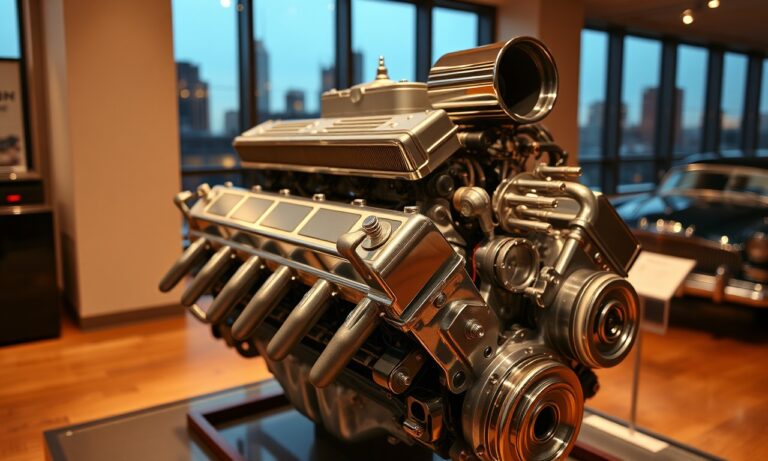
While not every project involves racing technology, the phrase NASCAR-bred V8 has become shorthand in Detroit garages for an engine configuration that draws from the same engineering priorities used in stock-car competition: durability under sustained load, throttle response tuned for track conditions, and airflow management designed for high-volume power. That might include performance cam profiles, intake manifolds optimized for breathing, and exhaust setups designed for both torque and sound.
In several local shops, workers said the most convincing sleeper builds are the ones that respect the car’s original appearance. That means wiring and brackets are made to look period-correct, even when the internals are upgraded. The end result is a classic coupe that can idle like it’s stock, but accelerates with a different character once the driver commits.
Impact on Detroit Residents: jobs, skills, and neighborhood cruising
Detroit has long had a tradition of trades tied to car culture—from bodywork to machining to restoration fabrication. In recent years, local restoration businesses say sleeper projects have supported both direct work (engine assembly, fabrication, calibration) and indirect demand (tire and brake supply, upholstery, paint correction, detailing).
According to data from the U.S. Bureau of Labor Statistics (BLS), employment in related installation, maintenance, and repair occupations remains an important part of the broader skilled-trades economy. For Detroit residents trying to build careers without leaving the city, shops that specialize in V8 engine swaps and classic coupe upgrades can provide steady work where specialized skills are required.
Local impact also shows up socially. Owners describe driving the finished car through neighborhoods where the presence of a classic coupe can turn errands into conversations. Residents interviewed near major Detroit corridors said they’ve noticed a greater number of older coupes showing up at community events, car meets, and local photography sessions—especially when the cars look intentionally understated, like factory-hidden V8s waiting to be discovered.
Community safety concerns remain part of the discussion, however. Police and local organizers have repeatedly emphasized responsible driving and respect for neighborhoods during car meetups. In other words, the craft is celebrated, but speed, noise, and unsafe behavior are not.
Background & data: why the “hidden” story resonates
The idea that Detroit built cars meant to be more than they appeared isn’t new. What’s changed is the depth of today’s documentation and the accessibility of technical information. Restorers can now cross-reference older parts with manufacturer records, dealer bulletins, and community-compiled databases used by enthusiasts nationwide.
According to the U.S. Census Bureau, vehicle ownership and household transportation patterns vary widely by city and region. For Detroit residents, older coupes and trucks can also play a role in preserving mechanical skills and supporting a secondary economy around parts, machine shop services, and restoration materials.
Meanwhile, the specific appeal of a NASCAR-bred V8 reflects a broader cultural connection Detroit has with racing and performance engineering. Detroit remains a hub where industrial heritage and racing-era innovation intersect. Engine builders say they don’t treat the racing influence as a gimmick; they treat it as a design lineage focused on real-world durability and repeatable performance.
Restorers also caution that the most convincing “sleeper” outcomes come from integrated work rather than single-part upgrades. A mild-looking exterior may house a different camshaft strategy, higher-flow heads, or a tuned fuel-and-ignition setup, but those changes must be matched to drivetrain strength and cooling capacity. Builders say that’s where many projects succeed—or fail.
How “factory-hidden V8s” are verified in real builds
Because the phrase factory-hidden V8s can sound like legend, Detroit shops increasingly stress verification. The common approach starts with VIN and build research, followed by a physical inspection of components and supporting documentation.
According to NHTSA guidance on vehicle identification, VIN-based research can help determine production details and equipment categories associated with a specific vehicle. That information, while not always definitive about later modifications, establishes a baseline that can be compared against what’s actually installed.
In the Detroit restoration community, engine verification often includes:
- Matching casting numbers and component stamps to known production ranges.
- Inspecting drivetrain wear patterns to see whether parts suggest track-like use or long-term street service.
- Reviewing maintenance records when available, including prior dyno sheets or tune documentation.
- Coordinating compression, leak-down, and cooling checks to confirm health before any performance calibration.
Specialists say the goal is not to inflate claims, but to understand what the car really carries and whether the upgrades were done in a way that’s safe, reliable, and compatible with the rest of the chassis.
What happens next for sleeper coupes across Detroit
Enthusiasts say more sleepers will keep surfacing as aging cars change hands and as owners pursue restoration work for both performance and preservation. At the same time, Detroit’s broader automotive economy—parts supply, machine shop capacity, and local detailing services—could see increased demand for workers trained in modern calibration and diagnostics, even when the car itself is decades old.
Local groups say they’ll likely continue hosting educational events where restorers share best practices for responsible modifications, parts sourcing, and verification techniques. And as more muscle car restorations take place in the open—through community shows, meetups, and public photo shoots—Detroit’s story shifts from private garage knowledge to shared technical culture.
For residents watching classic coupes roll by their streets, the sleeper phenomenon offers a recognizable form of local identity: quiet exteriors, deep mechanical craft, and a performance legacy that still lives in Detroit.
Local guidance: keep it safe, keep it documented
Whether you own a classic coupe or you’re considering a project, Detroit-area restorers urge two priorities: keep the car street-safe and keep documentation. Verified parts information and responsible tuning matter for reliability, emissions compliance where required, and neighborhood trust during community driving events.
As more Detroit sleeper coupes reveal their NASCAR-bred V8 heritage, the real story may be less about hidden power—and more about the people and skills building Detroit’s next chapter in automotive preservation and performance.