The Detroit Lions’ offseason moves didn’t always come with the loudest headlines, but one underrated free agent signing has a clearer argument for why it matters: it strengthens the depth and flexibility of the group tasked with protecting the quarterback and setting the tone up front.
While Detroit NFL news over the past few months has understandably focused on the franchise’s most prominent additions, the Detroit Lions also addressed a less flashy need by bringing in veteran experience on the interior of the offensive line—an approach that often pays dividends during a long season when injuries, matchups, and late-game situations expose thin margins.
Lions offseason decision: why this signing flew under the radar
Detroit’s free agent signing target for this cycle appears to have been less about headline star power and more about functional reliability. That kind of transaction can be difficult for fans to evaluate at first because offensive line impact is rarely as visible as a touchdown highlight. But NFL teams emphasize it heavily because line stability influences passing protection, run fits, and how often an offense can stay on schedule.
In practice, the Lions offseason roster strategy aligns with what teams across the league have found: the offensive line is an ecosystem. Even when a starter performs well, injuries or performance drops elsewhere can cascade into missed assignments, sacks, and stalled drives. A veteran interior piece—especially one who can absorb multiple techniques—can lower the risk of those cascades.
According to a regular season analysis published by Pro Football Focus, teams tend to benefit when the offensive line can maintain continuity and recover quickly from player absences. The broader takeaway from their reporting is that depth isn’t just “extra bodies”; it’s a competitive advantage because protection and communication have to be synchronized even when rotations happen.
That helps explain why this underrated free agent signing resonated with football operations more than with casual observers. Lions staff could see what they needed on tape and in practice: a player who can reliably execute assignments and adjust to line calls, rather than someone whose value is primarily theoretical.
Impact on Detroit residents: why line play matters beyond the field
For Detroit fans, the Lions aren’t only a Sunday storyline; they’re part of the city’s identity and a recurring economic driver. Home game days influence local spending at restaurants, bars, and small businesses in and around downtown and the broader metro area.
The U.S. Census Bureau’s Business Dynamics Statistics and related Census reporting underscore how local service industries—particularly those tied to foot traffic—can be sensitive to seasonal demand shifts. While national team performance can’t be reduced to one factor, better on-field outcomes tend to correlate with stronger engagement, more repeat attendance, and increased demand for game-week services.
In other words, when a team improves its offensive line stability, it often improves its offensive consistency. That, in turn, can extend the kinds of game scripts that keep fans engaged late into games—an effect that’s felt in the city’s commercial corridors and event-driven neighborhoods.
For Detroit residents who follow the team closely, this signing also reflects a bigger shift in how the franchise is building: blending proven fundamentals with targeted help. That approach can resonate locally because it mirrors the city’s broader cultural preference for effort, accountability, and steady improvement.
What makes this move “underrated”
There are two reasons the Detroit Lions transaction didn’t dominate the national conversation at the time. First, interior offensive line signings often happen with less marketing than positions that are already easier for fans to measure—like wide receiver or edge rusher. Second, the impact of line play can look subtle until you zoom out to results.
When offensive protection holds up, Detroit can afford to call more diverse run and pass concepts. When runs are disciplined, it forces defenses to respect the run game and reduces pressure on the quarterback. When the line communicates well, it also limits negative plays that swing momentum quickly.
Local football coverage has repeatedly emphasized that the most effective “depth” moves are those that translate to better in-game decision-making. If the Lions offseason signing allows Detroit to preserve starters’ effectiveness by handling rotations more smoothly, that’s the type of value that shows up in third downs, red-zone efficiency, and late fourth-quarter execution.
One Detroit-area perspective comes from Detroit Sports Media reporters who cover the Lions daily; their recurring emphasis has been that the team’s ceiling is tied to how well it protects the passer and sustains drives. While the exact breakdown of the signing’s performance will be settled on the field, that theme has been consistent across local coverage.
Background & data: how offensive line depth affects the season
Offensive line depth matters because the season creates pressure through injuries and matchup-specific adjustments. The NFL’s weekly cadence requires players to absorb new look protections and defensive disguises. If a team has to replace multiple line components with limited experience together, protection can break down quickly.
Data-driven football analysis outlets have long tied offensive line performance to quarterback efficiency. According to research and reporting that has appeared in widely cited football analytics discussions, pressure rate and time-to-throw are among the most direct predictors of passing success. Even without reducing the entire offense to one unit, the line’s job is foundational: it buys time, controls the run game’s leverage, and helps the coordinator execute the playbook.
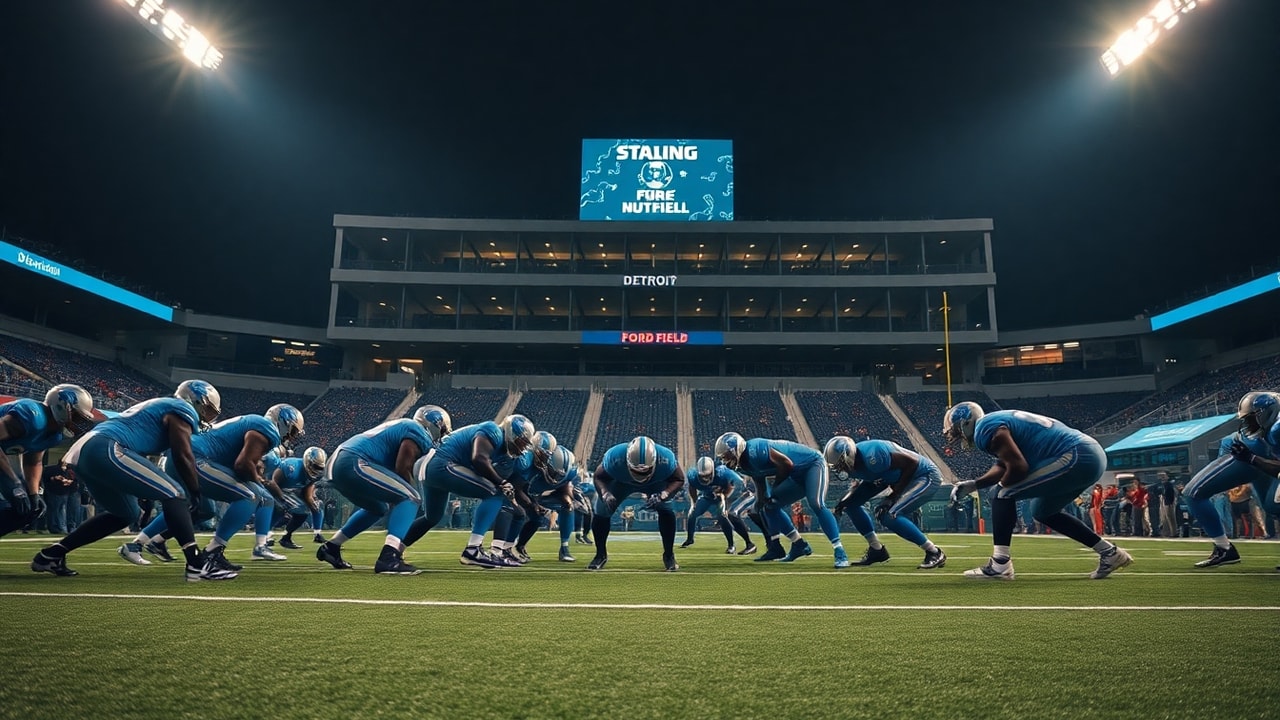
For the Lions, the free agent signing fits a familiar pattern: build an interior that can handle chaos. That includes being prepared for stunts, blitz pickup responsibilities, and changing leverage based on down and distance.
What happens next for the Lions and their offseason signings
The next step is simple but demanding: proving it in practice reps and then in live game snaps. Offensive linemen build chemistry through repetition, and that often accelerates once the regular season begins because the stakes rise and defensive looks become sharper.
If the signing performs as the Lions brass expects, it could manifest in several ways: fewer “surprise” sacks, steadier run lanes when the defense crowds the box, and a smoother transition when injuries occur later in the season.
Detroit NFL news will continue to track the most visible storylines—injuries, draft-day results, and any splash trades—but this particular underrated free agent signing is the kind that can quietly influence the team’s trajectory. In the NFL, quiet improvements are often the difference between a season that looks exciting in highlights and one that holds up under pressure.
For Lions fans in Detroit and across the metro area, that makes the storyline worth watching now: not because the signing is flashy, but because the position’s job is to keep everything else running—play after play, drive after drive.