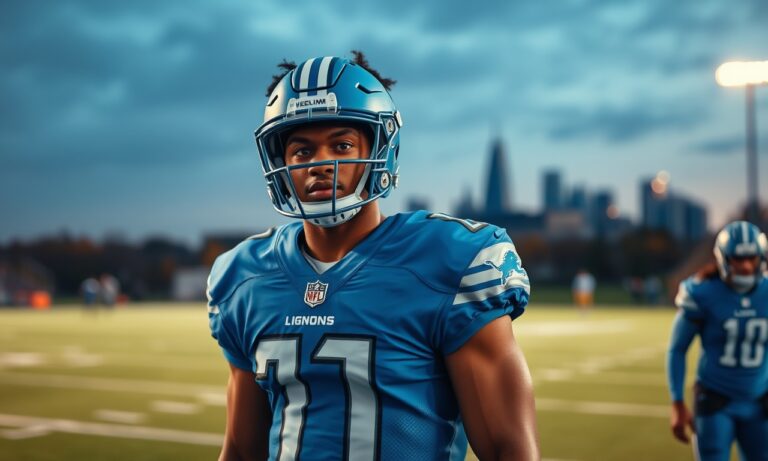
The Detroit Lions are drawing early attention for the 2026 NFL draft after a rookie class that included a draft history maker turned into the kind of on-field story Detroit fans noticed immediately. While the league’s offseason is still months away, Detroit sports chatter has quickly shifted from “who impressed” to “who could change the board next,” with evaluators pointing to how the Lions’ roster-building trajectory could shape their draft strategy for the 2026 season.
In Detroit circles, the buzz is less about hype and more about the organization’s ability to identify and develop talent at premium positions—an approach that can create compounding returns heading into the next draft. According to Pro Football Focus, player performance trends often correlate with how quickly teams use rookies in defined roles, and Detroit has leaned into that operational discipline in recent seasons. Separately, the NFL’s official offseason communications emphasize that competitive roster building begins long before the first pick is made, through scouting, player development, and cap planning.
What’s emerging now is a “Dark Horse candidate” narrative: not that Detroit has guaranteed a specific outcome in the 2026 NFL draft, but that the Lions could enter the 2026 season prospects conversation as a team capable of swinging for impact—depending on how their current roster and injury timeline evolve.
Why the Lions’ “draft history maker” is changing expectations
Detroit’s most recent rookie storyline has become a reference point for how the Lions approach the draft. A “draft history maker” is the kind of player whose early usage suggests the front office isn’t just filling a roster spot—it’s shaping a long-term plan. That matters because Detroit’s roster decisions have ripple effects: once a team identifies a cornerstone, it can alter how aggressively it targets immediate needs in subsequent drafts.
In the Lions’ case, that can influence everything from draft capital to position priorities. If a player drafted recently gives the coaching staff confidence in a key group—whether that’s pass protection, route running, run defense, or special teams—Detroit can afford to wait on a perfect match in future years rather than reaching. That is where the “Dark Horse candidate” buzz for the 2026 NFL draft starts to take form: the Lions could be positioned to pounce when the right prospect falls.
Detroit sports news: the next draft starts with roster timing
Detroit sports news coverage in recent weeks has focused on growth areas that extend beyond the box score. Local reporters and analysts have noted that teams are increasingly built around versatility—lineups that can adjust on the fly, and prospects who can handle multiple responsibilities in modern schemes.
That is consistent with how the National Football League frames roster construction across the league: teams are evaluated not just on talent, but on adaptability. When a team’s player development accelerates—especially with a high-impact rookie—the organization can treat the next draft as refinement instead of crisis mode.
Impact on Detroit Residents: jobs, watch culture, and local spending
Even when draft talk feels like pure sports speculation, it has real Detroit spillover effects. A competitive Lions team draws steady attention to the city’s game-day economy—bars, restaurants, rideshare demand, and merchandise sales—particularly around high-profile home dates. That connection is part of why Detroit residents tend to follow the draft and offseason so closely: the team is not just entertainment, it’s a predictable driver of local activity.
For communities across the metro area, the strongest impact tends to show up during the season, but draft positioning can influence what fans expect later. If Detroit’s 2026 season prospects look sharper because the roster is being engineered with purpose, local businesses often experience higher demand for watch parties and pre-game gatherings.
There is also a longer-term layer. Stadium-adjacent spending and youth football programs can benefit indirectly from a team’s ability to keep fans engaged. According to the U.S. Census Bureau, metropolitan areas with large sports followings and recurring civic events typically see measurable effects on local service industries through shifts in visitation and consumer spending patterns. While census data is not drafted specifically for NFL teams, it supports the broader relationship between major sports engagement and demand for local services.
Background & Data: how teams turn draft decisions into momentum
The Lions’ current optimism about the next 2026 NFL draft conversation is grounded in a simple football reality: development cycles. NFL teams rarely get value from prospects immediately and then stop. They keep refining depth charts, building competitive pressure in practice, and using coaching systems to maximize each player’s strengths.
Several trends shape how a team like Detroit can become a “Dark Horse candidate” in draft discussions:
- Role clarity for rookies: When a coaching staff uses a rookie effectively, it reduces uncertainty for future roster planning. That can lead to fewer “must-fix-now” needs.
- Scheme fit: Prospects who match the Lions’ style can accelerate improvements across multiple positions, which tends to affect how aggressively Detroit selects in later rounds.
- Injury and contract timing: Teams plan around likely future gaps. The earlier a team identifies stable starters, the more flexibility it has when the 2026 draft board forms.
- Cap and draft capital strategy: Even without referencing specific internal numbers, league-wide reporting consistently shows that cap constraints and trade options shape how teams approach future drafts.
At the league level, Pro Football Focus and other performance analytics outlets have also emphasized that teams with strong early-career production frequently sustain competitive momentum longer than those that rely on one-time roster overhauls. In Detroit, the “draft history maker” narrative fits that general pattern: a player who stands out early changes what the franchise can prioritize later.
What happens next: tracking the Lions’ 2026 season prospects
The immediate months won’t produce a second draft announcement, but the signals are already visible. Fans should watch four areas that will ultimately determine whether Detroit’s “Dark Horse candidate” buzz becomes reality in the 2026 NFL draft:
- On-field development: Whether the Lions’ newest contributors keep taking steps—especially in high-leverage situations—will affect roster needs.
- Health and availability: Injury patterns can force teams to address positions sooner than planned.
- Playoff calendar and draft positioning: Detroit’s final record in future seasons determines draft slot opportunities, and that’s a major factor in what prospects become accessible.
- Front-office emphasis: Scouting and coaching decisions during the season can hint at which positions the team will target when the 2026 draft arrives.
In the meantime, Detroit residents can treat the current wave of hype as something more grounded: a sign that the Lions’ player development has created optimism for what comes next. If the organization continues building with the same intent that produced a “draft history maker,” Detroit could reasonably enter the 2026 NFL draft conversation as a team with options—and the ability to turn draft value into immediate on-field clarity.