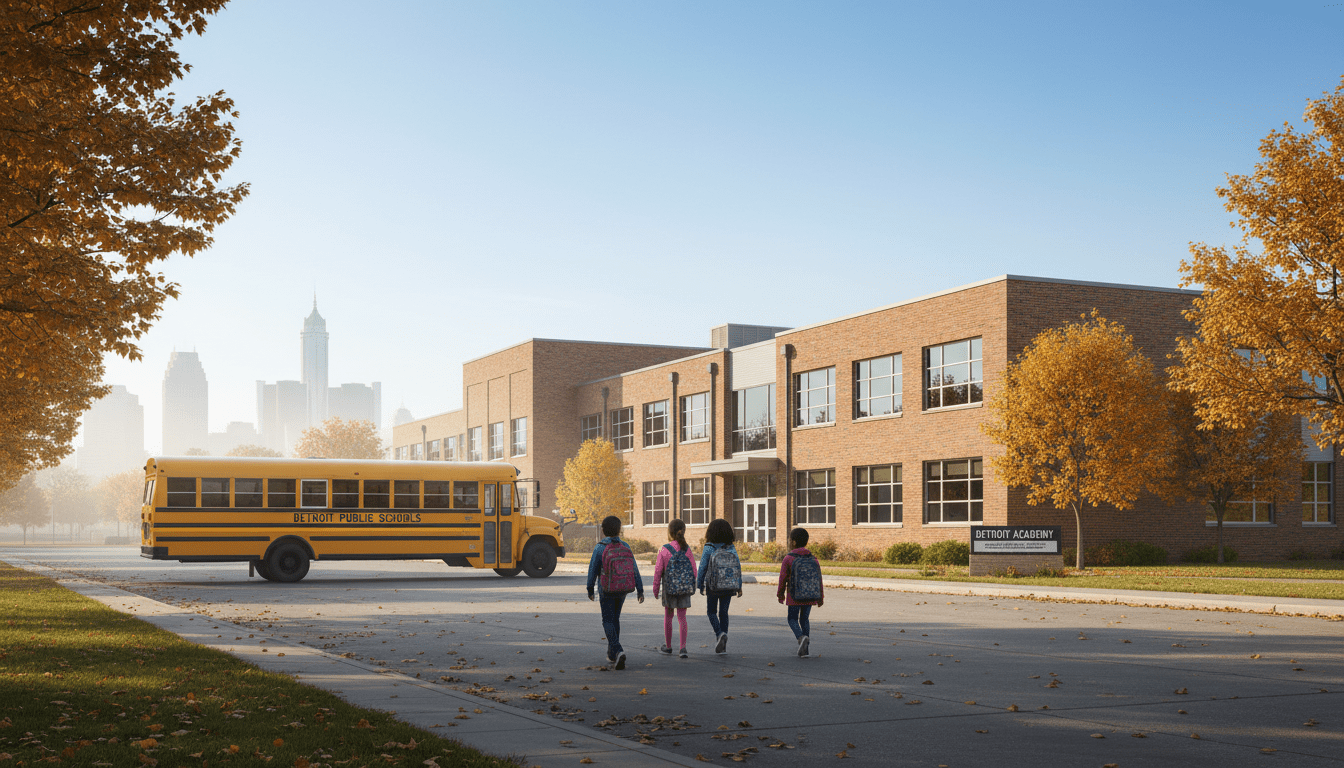
For thousands of families across the city, the search for quality education remains one of the most critical annual tasks. As enrollment windows open for the upcoming academic year, parents are navigating a complex ecosystem of Detroit school options that includes a stabilizing public district, a robust charter sector, and a network of private institutions.
The education landscape in Detroit has shifted significantly over the last decade. While the historic tension between traditional public schools and charter academies defines much of the narrative, recent data suggests a more nuanced reality where facility improvements, specialized curriculums, and transportation logistics play equal roles in decision-making.
According to data from the Michigan Department of Education, enrollment patterns have begun to shift as the Detroit Public Schools Community District (DPSCD) invests heavily in infrastructure, yet charter schools continue to serve nearly half of the city’s student population. This fragmentation offers families distinct choices but requires significant research to navigate effectively.
The DPSCD Resurgence and Facility Investment
The Detroit Public Schools Community District, the largest provider of education in the city, has been aggressive in its efforts to retain and attract students. Following years of financial oversight, the district has pivoted toward facility modernization and curriculum standardization.
Officials from the DPSCD have highlighted the implementation of a $700 million facility master plan aimed at renovating aging buildings and constructing new ones. This physical revitalization is a key component of their strategy to compete with newer charter facilities.
“The focus has moved beyond just keeping doors open to actually competing on program quality,” noted an education policy researcher from the University of Michigan during a recent forum on urban education. “Parents are seeing new career and technical education hubs and arts programs that were previously unavailable due to budget cuts.”
For families residing in revitalization zones, the link between school quality and property value is becoming increasingly apparent. As reported in our latest analysis of the Detroit housing market, neighborhoods with schools receiving infrastructure upgrades are seeing a correlative stabilization in home prices.
The Charter School Sector: Specialization and Variance
Detroit has one of the highest concentrations of charter schools in the United States. These publicly funded, independently operated schools offer alternatives to the traditional district, often focusing on specific themes such as STEM, liberal arts, or strict college-prep environments.
However, the performance within this sector varies. While some charter networks in the city boast high graduation rates and college acceptance numbers, others struggle with the same teacher retention issues facing the public district. The lack of a centralized bus system for charters also means that transportation remains a significant hurdle for many families.
Local advocacy groups emphasize that parents must look beyond marketing materials. “We encourage families to look at the teacher turnover rates and the long-term stability of the charter authorizer,” stated a representative from a Detroit-based parent advocacy coalition. “Choice is only powerful when it is informed choice.”
Private and Parochial Institutions
While public and charter schools dominate the conversation, private and parochial schools continue to serve a specific segment of the population. Historically, Catholic education played a massive role in Detroit, though the number of operating schools has declined over the last thirty years.
Today, the remaining private Detroit school options often require tuition, though many offer financial aid or participate in scholarship programs designed to bridge the gap for lower-income residents. These institutions often appeal to parents seeking smaller class sizes or specific religious instruction that public entities cannot provide.
Impact on Detroit Residents
The fractured nature of Detroit’s education system has profound daily impacts on residents. Unlike suburban districts where a home address dictates a specific school with busing provided, Detroit parents often engage in what researchers call “school commuting.”
It is not uncommon for a family living on the East Side to drive a child to a charter school in Southwest Detroit or for a high school student to take multiple city buses to a magnet school in Midtown. This dynamic complicates the city’s transportation infrastructure and affects workforce participation for parents.
Furthermore, the competition for students affects community cohesion. When children on the same block attend five different schools, the traditional neighborhood fabric centered around a local school building can weaken. However, proponents of the current system argue that this mobility allows students to escape underperforming institutions that might be geographically closest to them.
Discussions regarding Detroit transportation infrastructure frequently cite the need for better connectivity between residential hubs and educational centers to alleviate the burden on parents.
Navigating the Application Process
For parents, the logistics of applying can be daunting. There is no single “common app” for all Detroit schools. DPSCD has its own enrollment timeline, while various charter authorizers operate on independent schedules. Many competitive examination high schools have strict deadlines in the late fall for the following year.
Resources like the Detroit Schools Guide have emerged to help centralize this information, providing a searchable database of schools based on location, grade level, and program offerings. Education experts recommend that parents begin the process at least six months prior to the start of the school year.
Future Outlook for Education in Detroit
Looking ahead, the demographic shifts in Detroit will dictate the future of school locations. As population density increases in the greater downtown and riverfront areas, pressure mounts for new educational capacity in those zones. Conversely, neighborhoods with declining populations may see further consolidations of both district and charter schools.
Legislative discussions in Lansing regarding equitable funding formulas and special education reimbursements will also play a pivotal role. For now, Detroit families must continue to be proactive consumers of education, weighing the trade-offs of commute times, curriculum focus, and institutional stability.