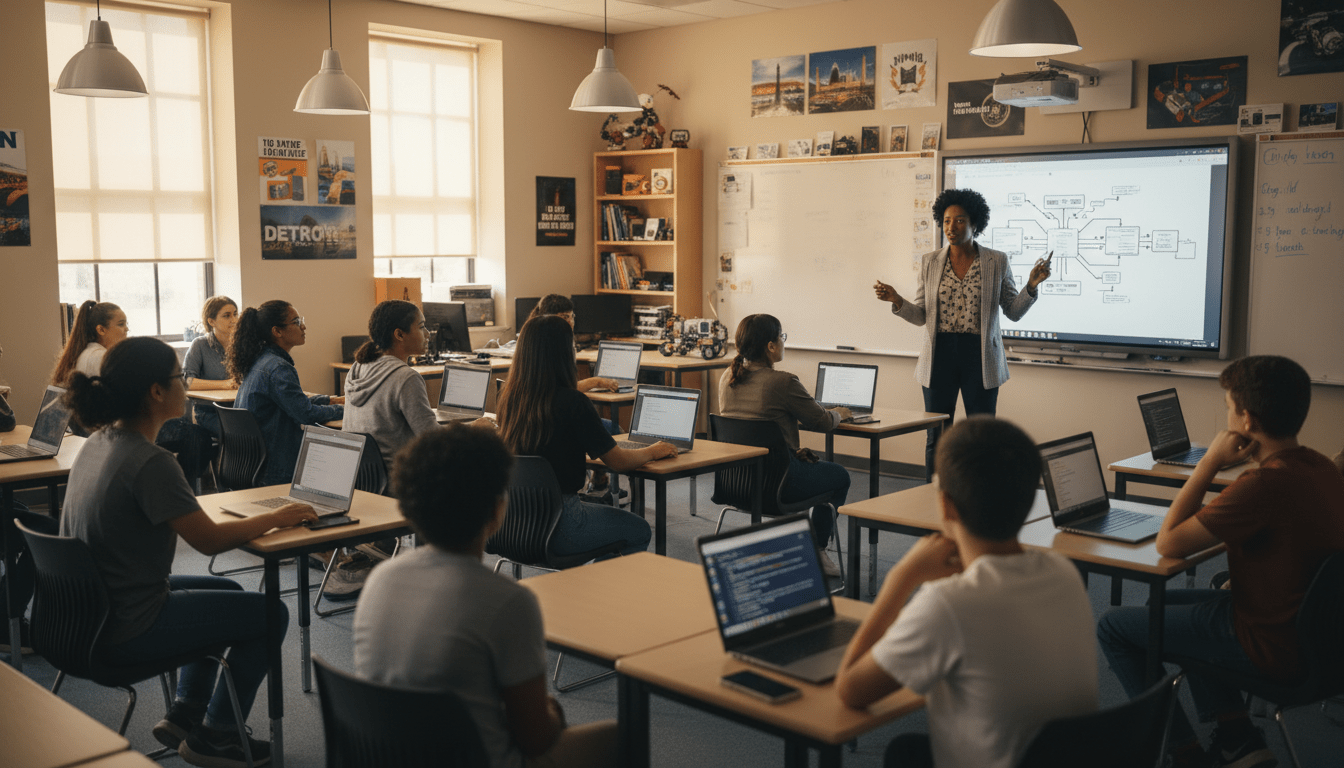
In the wake of a massive digital overhaul within the Detroit Public Schools Community District (DPSCD), educators and policymakers are facing a new, nuanced challenge: navigating the intersection of technology-enhanced learning and the critical need for face-to-face mentorship.
Three years after the launch of the historic "Connected Futures" initiative, which distributed approximately 50,000 tablets and laptops to Detroit students to bridge the digital divide, the focus has shifted. No longer is the primary struggle merely about access to hardware; rather, the conversation has evolved into how to effectively integrate these tools without eroding the human relationships that form the backbone of successful education.
According to recent reports from the district, the saturation of devices in classrooms has opened doors to personalized learning platforms and digital literacy. However, teachers and local education advocates emphasize that technology must remain a supplement to, not a substitute for, the teacher-student bond.
The Shift from Access to Integration
The urgency of the COVID-19 pandemic forced Detroit schools into a rapid technological adoption phase. The Connected Futures program, a $23 million investment supported by partners including the DTE Energy Foundation, the contentment of the Skillman Foundation, and the City of Detroit, was hailed as a necessary equalizer for the city’s students. Prior to this, estimates suggested that roughly 40% of Detroit households lacked reliable internet access or devices.
Now, as classrooms operate fully in-person, the district is refining its approach to technology-enhanced learning. The goal is to utilize software for data-driven instruction—allowing teachers to track reading levels and math proficiency in real-time—while ensuring students do not spend their entire day staring at screens.
“The device is a tool, much like a textbook or a pencil was in previous decades,” said a representative from a local educational nonprofit working within the district. “The danger lies in passive consumption. We are seeing a push for active creation and collaboration, where the technology facilitates a project, but the students are still looking at each other and their teacher.”
Impact on Detroit Residents and Families
For Detroit parents, the integration of technology in schools brings mixed emotions. Many appreciate that their children are gaining digital skills required for the modern workforce, yet there is growing concern regarding screen fatigue and social development.
Local parent groups have expressed that while they value the district-provided laptops, they prioritize their children receiving direct feedback and encouragement from human educators. The consensus among families is that while an app can teach a math concept, it cannot provide the emotional support or mentorship that a teacher offers—a factor particularly crucial for students in under-resourced neighborhoods who may rely on schools for stability.
Furthermore, the shift impacts the household economy. With homework assignments increasingly digital, the reliance on consistent home internet access remains a pressure point. Initiatives like Connect 313 continue to work toward universal digital inclusion, ensuring that the technology-enhanced learning model does not inadvertently leave families behind due to connectivity costs.
Balancing Efficiency with Empathy
Educators in Detroit are currently tasked with a delicate balancing act. Learning Management Systems (LMS) such as Schoology or Canvas allow for efficient grading and resource distribution, streamlining administrative tasks. This efficiency, in theory, should free up more time for teachers to engage in direct instruction and mentorship.
However, implementation varies. Some educators report that the pressure to utilize data-gathering software can sometimes encroach on instructional time. The Detroit Federation of Teachers has historically advocated for resources that support whole-child education, including mental health support and smaller class sizes, reinforcing the idea that technology cannot solve structural issues alone.
Data from the latest attendance and engagement reports suggests that student engagement correlates strongly with positive teacher relationships. Where students feel seen and heard by an adult, academic outcomes improve, regardless of the sophistication of the digital tools present.
The Role of AI and Future Technologies
Looking ahead, Detroit schools are beginning to grapple with the entry of Artificial Intelligence (AI) into the educational sphere. While still in the early stages of policy formulation, district officials are aware that AI tools could further personalize technology-enhanced learning.
Experts warn that as AI tools become more prevalent for tutoring and writing assistance, the definition of academic integrity and the role of the teacher will need to be redefined. The focus is expected to move toward critical thinking and media literacy—teaching Detroit students how to interrogate and control technology rather than be passive users of it.
What Happens Next
The City of Detroit and DPSCD continue to monitor the efficacy of their digital investments. The strategic plan for the coming years involves professional development focused on “blended learning”—a pedagogical approach that combines online educational materials and opportunities for interaction online with traditional place-based classroom methods.
For the community, the success of this transition will be measured not by the number of logins or software licenses, but by the holistic success of the students. As the district moves forward, the mantra appears to be clear: Technology is the vehicle, but human connection remains the driver.