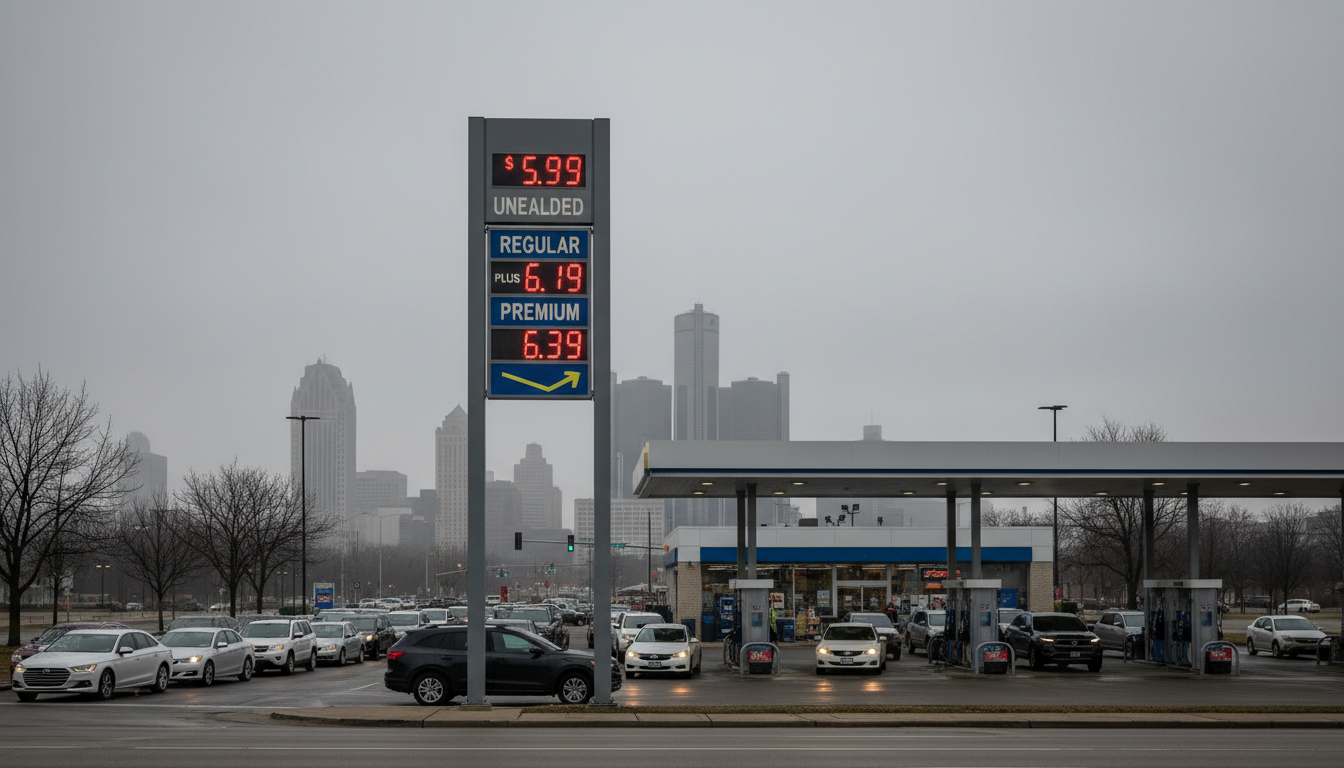
Motorists across Metro Detroit and the wider Michigan region encountered a jarring start to their morning commutes this week as retail gasoline prices underwent a significant overnight surge. Drivers reported seeing price boards jump by as much as 20 to 30 cents per gallon at several stations along major corridors such as Woodward Avenue and I-75. This sudden uptick in Michigan gas prices comes at a time when residents are already grappling with broader inflationary pressures, marking a challenging start to the spring driving season.
Analyzing the Surge: Why Michigan Gas Prices Are Climbing
According to the latest data from AAA Michigan, the statewide average for a gallon of regular unleaded gasoline has seen a sharp incline, outpacing the national average increase over the same period. Financial analysts point to a combination of regional supply constraints and the annual transition to the more expensive summer-blend gasoline as primary catalysts for the spike. In Detroit specifically, the volatility of the Great Lakes market often leads to more dramatic price swings compared to coastal regions.
Reports from GasBuddy, a fuel-tracking service, indicate that several refineries in the Midwest have entered their scheduled maintenance period. When production slows during these maintenance windows, local inventories tighten, leading to immediate increases at the pump. Furthermore, fluctuations in global crude oil prices, influenced by geopolitical tensions and OPEC+ production cuts, continue to provide a high floor for domestic fuel costs. For Detroit residents, this translates to a direct hit on the household budget that many did not see coming so early in the month.
Impact on Detroit Residents and Local Businesses
The fuel increase Detroit is experiencing has ripple effects far beyond the individual commuter. For a city that relies heavily on personal vehicles and a growing logistics sector, the rising cost of gasoline functions as an unofficial tax on daily life. “When we see a 30-cent jump overnight, it changes the math for our delivery drivers immediately,” said Marcus Thorne, a logistics coordinator for a local courier service operating out of Corktown. “We are seeing more businesses consider surcharges just to maintain their current routes.”
Lower-income households are particularly vulnerable to these spikes. Unlike more walkable urban centers, many Detroit neighborhoods require significant drive times for work, groceries, and medical appointments. A higher cost of fuel often means less discretionary spending for other essential services within the Detroit local economy. This economic pressure is a recurring theme in city council discussions regarding the need for more robust transportation infrastructure and expanded public transit options to insulate residents from the volatile energy market.
Regional Supply Dynamics and the National Trend
While the gas price surge USA-wide is a point of national conversation, the Midwest often faces unique challenges. Data from the U.S. Energy Information Administration (EIA) shows that the PADD 2 region, which encompasses Michigan, frequently experiences higher volatility due to its reliance on a specific network of pipelines and refineries. If even one major facility, such as the BP refinery in Whiting, Indiana, undergoes unplanned repairs, the impact is felt almost instantly at gas stations in Detroit and Grand Rapids.
Historical trends suggest that Michigan often leads the nation in price increases during the transition from winter to summer fuel blends. The summer-blend fuel, required by federal law to reduce smog during the hotter months, is more costly to produce and has a different vapor pressure. The process of purging the winter supply and replacing it with the summer grade usually concludes by early June, but the pricing impact often begins as early as late March or April. This seasonal shift, combined with the current transportation infrastructure demands in the city, creates a perfect storm for the current price environment.
What Happens Next: The Road to Summer
Looking ahead, energy experts remain cautious about predicting a quick return to lower prices. With the Memorial Day holiday on the horizon—a period traditionally marked by the highest fuel demand of the year—there is little evidence to suggest that Michigan gas prices will retreat significantly in the coming weeks. Many analysts expect prices to hover in the current range, with the potential for further increases if hurricane season or further geopolitical instability affects global oil supplies.
For now, Detroit drivers are encouraged to use fuel-tracking apps and warehouse club memberships to find the most competitive rates. Local authorities also suggest that motorists ensure their vehicles are properly maintained, as properly inflated tires and clean air filters can slightly improve fuel efficiency, offering a small measure of relief against the rising tide of economy news regarding energy costs. As the city continues to navigate these fluctuations, the focus remains on how long the regional supply chain can sustain current demand without further price hikes.