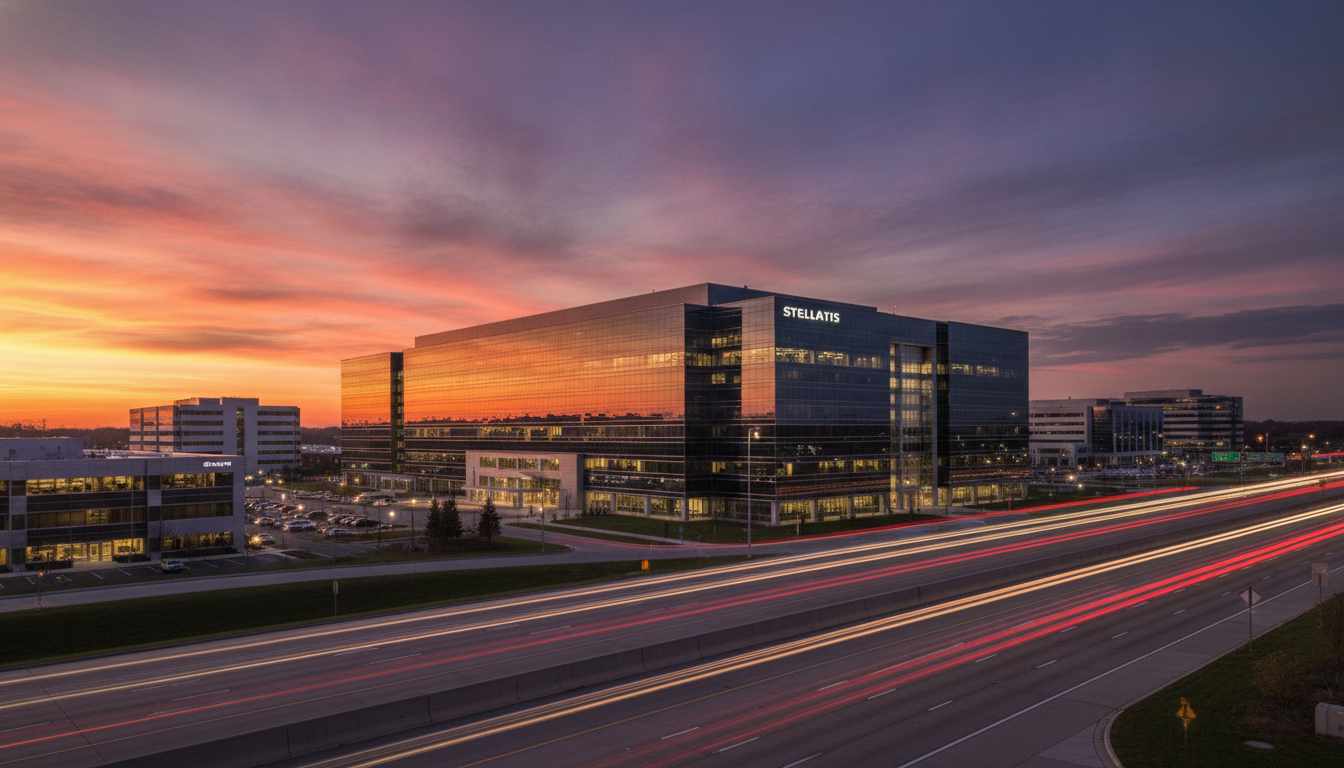
Standing as a massive concrete and glass landmark along I-75 in Auburn Hills, the former Chrysler Technology Center (CTC) remains one of the most significant pillars of the Detroit automotive landscape. While the corporate name on the masthead has shifted from Chrysler to FCA and now to the global powerhouse Stellantis, the facility’s role as a primary engine for the region’s economy and technological future has never been more critical. As the industry pivots toward electrification, this 5.4 million-square-foot complex is proving that Detroit’s engineering legacy is not just about the past, but about the next generation of global mobility.
A Nerve Center for the Modern Auto Industry
Since its completion in the early 1990s, the Chrysler Technology Center has been more than just an office building; it is a fully integrated city of innovation. According to Stellantis corporate records, the facility remains the only automotive headquarters in North America that houses a design studio, engineering labs, a dedicated wind tunnel, and a manufacturing pilot plant all under one roof. This proximity allows for what engineers call “simultaneous engineering,” a process that significantly reduces the time it takes to move a vehicle from a clay model to a production-ready machine.
While the “Chrysler” brand is now one of 14 under the Stellantis umbrella, the Detroit-based engineering teams at the CTC are leading the charge for some of the group’s most profitable segments, including Jeep and Ram. In a recent economic briefing, the Michigan Economic Development Corporation (MEDC) highlighted that the Detroit automotive engineering center cluster remains the densest concentration of mechanical and electrical engineering talent in the United States, with the Auburn Hills facility serving as a primary anchor.
Impact on Detroit Residents and the Regional Economy
For the thousands of residents across Metro Detroit who commute to the facility, the continued investment in the tech center provides a sense of stability in a volatile market. The economic footprint of the site extends far beyond its gates. Local businesses in Auburn Hills, Rochester Hills, and even downtown Detroit benefit from the high-earning workforce that sustains the regional service economy.
Data from the U.S. Census Bureau suggests that manufacturing and professional technical services remain the backbone of the Detroit-Warren-Dearborn Metropolitan Statistical Area. The tech center employs approximately 10,000 people, ranging from software developers to traditional powertrain engineers. “The presence of a major R&D hub acts as a magnet for Tier 1 suppliers,” noted a report from a local regional development group. This synergy ensures that small-to-mid-sized tool-and-die shops across the city continue to receive contracts for prototype parts and testing equipment.
Local residents also see the impact in property values and municipal tax bases. The facility is a major taxpayer for Oakland County, supporting infrastructure projects that benefit the wider Detroit infrastructure. You can read more about current trends in the Detroit economy and how corporate investments are shaping neighborhood development.
Leading the Transition to Electrification
The most significant shift currently occurring within the walls of the Tech Center is the transition to the STLA (pronounced “Stella”) platforms. As part of the Stellantis “Dare Forward 2030” strategic plan, the company is investing billions to transform its North American lineup into a fleet of electric vehicles (EVs). The engineering center is now home to a specialized battery lab where engineers test the chemistry and durability of cells that will power future electric Ram 1500 and Jeep Wagoneer models.
According to official statements from the Michigan Economic Development Corporation, these types of R&D investments are essential for Michigan to remain the “automotive capital of the world” as global competition from China and Europe intensifies. The facility’s wind tunnel, capable of generating speeds over 140 mph, is being used more than ever to optimize the aerodynamics of heavy EVs to maximize range—a critical factor for consumer adoption.
Background & Data: The Resilience of Detroit Engineering
Critics often pointed to the merger with PSA Group as a sign that Detroit-based engineering might be sidelined in favor of European design. However, the data suggests the opposite. Stellantis recently announced a $406 million investment across three Michigan facilities, with a significant portion of the coordination and testing for these projects localized at the Auburn Hills tech center. This ensures that the “Detroit-bred” DNA of brands like Dodge and Ram remains intact, even as they move away from internal combustion engines.
Furthermore, the facility acts as a training ground. Partnerships with local institutions like Wayne State University and the University of Michigan ensure a steady pipeline of talent. This educational ecosystem is a core part of the Detroit workforce development initiatives designed to keep the city at the forefront of the auto industry.
What Happens Next
Looking forward, the tech center is expected to undergo further renovations to accommodate more software-defined vehicle (SDV) testing. The focus is shifting from pure horsepower to computing power. As vehicles become “smartphones on wheels,” the Chrysler Technology Center is being outfitted with advanced data centers and cybersecurity labs.
While the corporate structure of the company may continue to evolve, the physical and intellectual presence of the engineering center in Auburn Hills remains a constant. For the Detroit automotive sector, the facility is not just a relic of the Big Three era; it is a modern laboratory where the future of transportation is being written every day. Residents can expect the site to remain a focal point of employment and innovation for decades to come, anchoring the northern edge of the Detroit tech corridor.