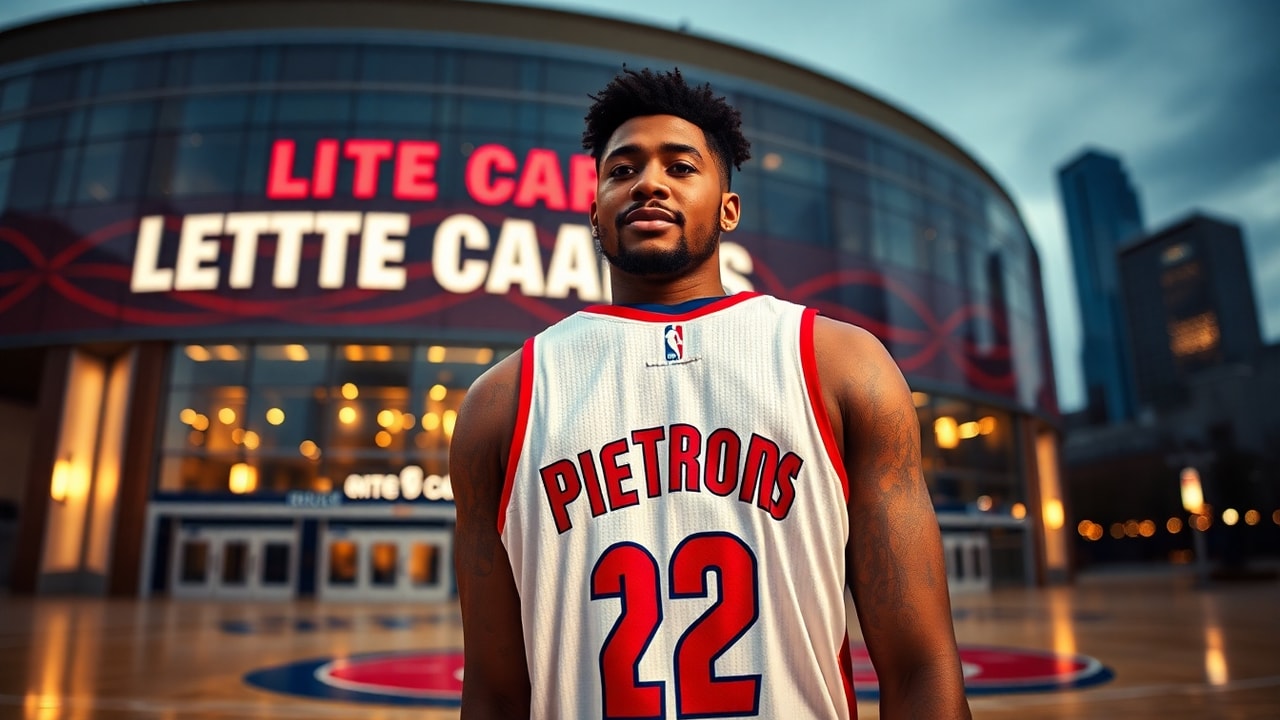
After the NBA Draft, the Detroit Pistons are turning their attention to roster fit and on-court development—adding an new playmaker option aimed at improving ball movement, decision-making, and late-game execution. The move is the latest signal of the organization’s broader attempt to build a more functional offense around younger talent as Detroit continues to recalibrate its competitive timeline.
According to team communications and league transaction reporting, the Pistons’ offseason activity has centered on strengthening the guard rotation and creating clearer pathways for passing and shot creation. While the draft is where the team sets its long-term direction, these post-draft decisions often determine how quickly a roster’s chemistry can form.
What the Pistons’ new playmaker addition means for the lineup
The Pistons’ latest roster move adds another playmaking element to Detroit basketball, with the intent of increasing pace control and improving how the offense initiates possessions. In recent seasons, Detroit has oscillated between spurts of creative scoring and long stretches where spacing and shot quality have been inconsistent. A playmaking guard who can organize the offense—particularly in half-court sets—can be an immediate stabilizer.
Coach and front office discussions around roster construction frequently emphasize “roles” as much as talent. Players who can push transitions, probe defenses, and coordinate off-ball motion help teammates reach their spots more reliably. That is especially relevant for a roster that includes players still growing into their decision-making pace and defensive reads.
In practical terms, Detroit fans can expect the Pistons to use the new playmaker in several ways: initiating possessions from the perimeter, serving as a lead passer on drives, and helping set up catch-and-shoot looks for wings and shooters. Over time, his ability to read switching defenses and find the open man could reduce reliance on isolations—the kind of possessions that can look productive in highlight moments but are harder to sustain across a full season.
Impact on Detroit Residents
For Detroit residents, the significance of a Detroit Pistons offseason moves news cycle extends beyond the scoreboard. Basketball remains part of the city’s identity, and roster changes influence how fans plan their budgets, attendance, and engagement with local businesses that benefit from game-day traffic.
Local sports spending also plays into the broader downtown economy. The Pistons’ home games draw visitors to the area, and the surrounding businesses—restaurants, parking operators, and retail—often experience measurable shifts in demand during stretches of home stands. While the team’s performance is not the only variable, NBA attendance patterns can affect how local merchants plan staffing and inventory.
City and regional economic analysts have also noted how major sports franchises support jobs and consumer spending indirectly. According to research from the U.S. Bureau of Labor Statistics (BLS), employment tied to leisure and hospitality services can be sensitive to consumer demand, including event-driven traffic. That matters in Detroit because many game-related services rely on consistent foot traffic to balance overhead costs.
On the social side, fans often view roster building as a sign of whether the city’s institutions are moving forward. A playmaking addition that supports a more organized style of play can help renew optimism for families and longtime supporters who want a team that plays with cohesion and effort from start to finish.
Background & Data: Why playmaking is a key roster need
Building a competitive roster in the modern NBA increasingly depends on shot creation and decision-making. Teams are rewarded for spacing the floor, getting quality looks off passes, and turning drives into multiple offensive reads. A “new playmaker” isn’t just a ball handler; the best ones consistently help teammates produce high-percentage offense.
Local basketball conversations in Detroit often track player development and the ability to run functional sets—especially as rosters mix drafted talent with veteran experience. The Detroit Pistons NBA roster update comes at a time when many teams evaluate whether they can translate potential into consistent on-court production.
Statistically, the NBA’s distribution of scoring opportunities increasingly comes from secondary creation—passes that force defenses to react. According to analysis published by Basketball-Reference, advanced playmaking measures and assist-related trends help show how a team’s offensive system evolves. While no single metric guarantees success, clustering offensive actions around better passes typically correlates with more efficient shot attempts over time.
For the Pistons, the roster challenge has been aligning development across positions so that spacing, timing, and shot selection stabilize. Adding a playmaker can make it easier for Detroit players to learn within a clear framework rather than improvising every possession.
How this fits into Detroit’s broader NBA rebuilding strategy
The Pistons’ approach since the draft has generally reflected a common NBA pattern: draft for foundational talent, then add complementary pieces that speed up growth and help players reach their roles sooner. That does not always show up immediately in standings, but it can be visible in game film—players moving with intention, fewer rushed actions, and more consistent offensive initiation.
Detroit’s basketball rebuild has also leaned on long-term evaluation of player fit. A playmaking addition suggests the organization is prioritizing offensive orchestration—making sure the team’s passing decisions lead to better looks and that defensive attention doesn’t overrun Detroit’s attempts to generate shots.
What happens next for the Pistons and Detroit basketball fans
After a post-draft acquisition, the next steps typically involve training camp integration, role clarity, and establishing offensive reads during preseason and early regular-season games. The Pistons’ coaching staff will likely use early reps to define when the new playmaker is the primary initiator versus when he acts as a secondary organizer. Defensive assignments and transition responsibilities will also determine how quickly the addition becomes a reliable part of game plans.
Detroit fans can look for a few immediate indicators: improved ball movement on half-court possessions, more consistent entry passes into the paint or to wing catch points, and a reduction in late-shot-clock desperation. Over the longer term, the true test will be whether teammates sustain better shooting and whether the Pistons’ offensive pace becomes predictable enough to grow confidence.
As this Pistons offseason moves forward, additional roster tweaks—such as depth signings, reserve playmaking, or lineup experimentation—could follow depending on injury status and camp evaluations. For now, the headline is clear: the team has moved to upgrade its backcourt organization, a move designed to help Detroit compete more effectively while building toward future consistency.
Note: Specific transaction details and official roster status may vary as offseason contracts and roster moves are finalized.