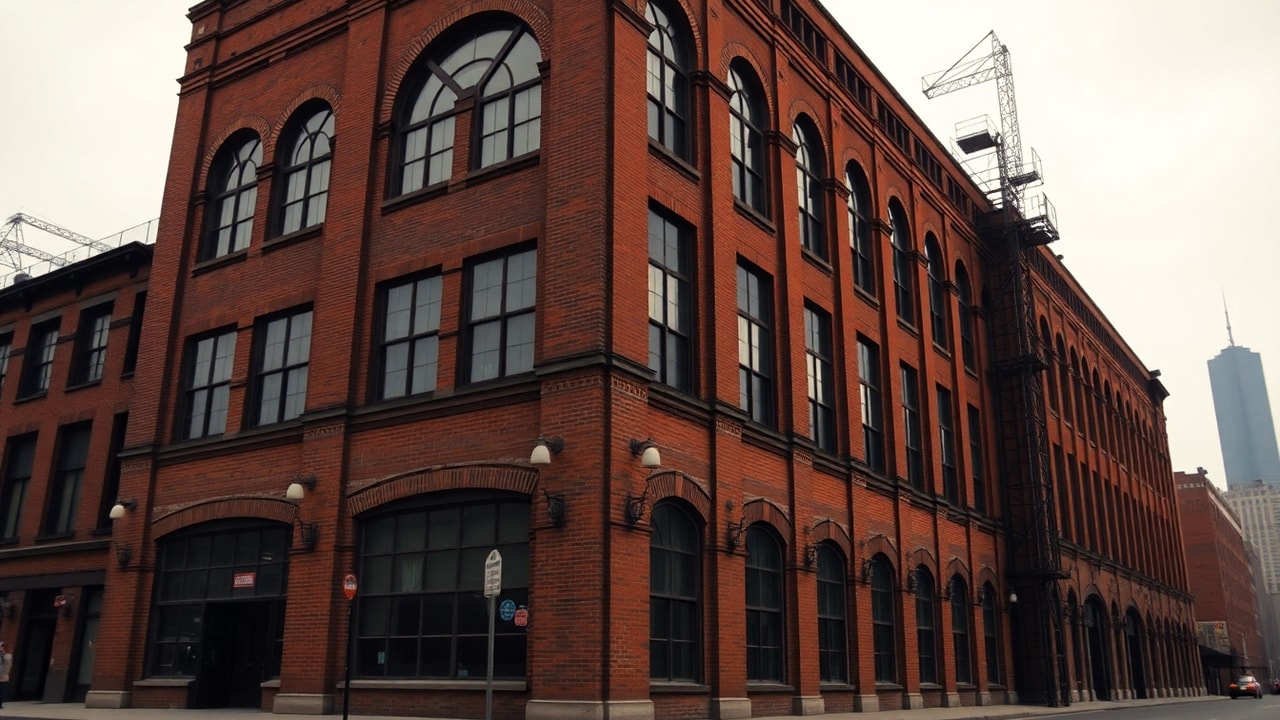
A prominent historic Ford-era building in Detroit has been sold for $5.05 million at auction, according to auction records, underscoring the continuing reshaping of the city’s industrial real estate market as owners seek new uses for legacy properties.
The sale brings a notable jump from the property’s earlier listing expectations and highlights how Detroit investors and developers are weighing redevelopment costs against potential returns. Bids ultimately reflected broad interest in the site, where the winning buyers committed to total consideration of $16.35 million, the difference largely tied to announced settlement terms and associated charges listed with the transaction.
Detroit Ford building auction ends with $5.05 million sale
In the latest Detroit Ford building auction outcome, the winning bid secured the building for $5.05 million sale, according to documented auction results. Auction platforms and transaction notices typically require bidders to follow strict deadlines for deposits and proof of funds, with closing scheduled after the final approval steps are completed.
While figures can vary depending on how total consideration is presented—such as whether costs are listed separately—this transaction drew attention because the reported aggregate buyers’ commitment reached $16.35 million, a figure that appears in the deal summary for the acquisition.
For Detroit, the sale signals that even properties tied to the automaker’s physical legacy remain in play for redevelopment—though the path to reuse can be complex, involving building condition, environmental reviews, zoning questions, and financing.
What’s driving interest in Ford-era properties
Detroit’s historic industrial stock is distinctive: sprawling structures, extensive floor areas, and heavy-duty construction that can be adapted for advanced manufacturing, warehousing, education uses, or mixed commercial development. At the same time, many legacy buildings require significant capital work to modernize systems, improve accessibility, and meet current building and safety codes.
“Industrial buildings can offer unique advantages—like large contiguous spaces—but buyers still have to underwrite renovation risk,” said Daniel L. McGowan,** an urban real estate researcher who reviewed Detroit redevelopment trends in a recent regional market analysis. “Auction purchases often reflect that the seller is seeking a faster resolution than a traditional listing.”
McGowan’s broader point aligns with the pattern seen across major cities: distressed or hard-to-place properties can find new owners when the auction format compresses timelines and forces clearer price discovery.
Impact on Detroit residents
Directly, an auction sale doesn’t immediately change daily life inside neighborhoods, but it can influence momentum for future construction, demolition, job creation, and local service demand. The potential impact depends on what the buyers do next—whether the building is repurposed, partially restored, or repositioned into smaller leasing units.
According to U.S. Census Bureau data, Detroit’s population has continued to shift over the last decade, affecting housing and commercial demand patterns. While the sale is for an industrial property rather than housing, changes in workforce needs and business activity can influence employment access, wages, and commuting patterns for nearby residents.
Local employment effects can be meaningful if the new owner uses the building for operations that require on-site staffing. Even if plans begin with leasing or interim uses, renovation and compliance work typically create construction and trades jobs. However, residents may also face short-term disruptions—such as construction traffic—before any longer-term benefits materialize.
“For communities, the key question is not only who buys the property, but what timeline and investment plan follows,” said Marsha J. Johnson, a Detroit-area housing and community development advocate who follows redevelopment issues for neighborhood organizations. “Redevelopment can strengthen local economies, but it needs safeguards and community-informed planning.”
Background & data: Detroit real estate and historic industrial stock
Detroit’s real estate market has been shaped by a mix of public incentives, private reinvestment, and changing demand for industrial and logistics space. Researchers at the Federal Reserve Bank of St. Louis have highlighted how regional economic conditions and interest-rate environments can affect the speed and certainty of commercial deals, particularly for projects requiring new construction or large capital renovations.
That macroeconomic context matters for auction outcomes. Buyers paying attention to total costs—including acquisition price, holding costs, and required upgrades—may treat auctions as an opportunity to secure a property when traditional negotiations stall.
The fact that this transaction is tied to a historical Ford property also connects to Detroit’s identity and built heritage. Redevelopment of Ford-era facilities can preserve parts of the city’s industrial story while giving new economic function to structures that might otherwise remain vacant.
Why the reported totals matter
The headline $5.05 million sale amount is the acquisition figure associated with the winning bid. The higher reported $16.35 million figure reflects the way the transaction is summarized in publicly available deal information—often capturing additional obligations, costs, or settlement totals presented alongside the winning bid.
For prospective tenants and adjacent businesses, these numbers serve as a signal about the scale of the transaction and the likelihood of near-term follow-through. For residents, the more important takeaway is whether the buyer’s financing supports a credible renovation schedule.
What happens next
After an auction, the next steps typically include closing, inspections, title verification, and finalizing any required approvals. For historic industrial properties, this can also include environmental due diligence and plan revisions to meet updated codes.
Depending on the intended use, the buyer may need to pursue permitting and potentially seek zoning clarifications. If the property is part of a larger redevelopment plan, there could be additional community review processes, including engagement with local stakeholders and coordination with city departments.
For those watching the long arc of Detroit’s redevelopment, this sale will be a first indicator—not a final outcome. The real test will come with the announcements that follow: whether the buyers pursue adaptive reuse, negotiate anchor tenants, or stage improvements in phases.
Bottom line
The Detroit Ford building auction has produced a clear result: the historic facility sold for $5.05 million sale terms tied to a transaction that reports total buyer consideration of $16.35 million. For Detroit, the next chapter will determine whether the property becomes a source of jobs and activity—or remains another promising deal without a redevelopment timetable.