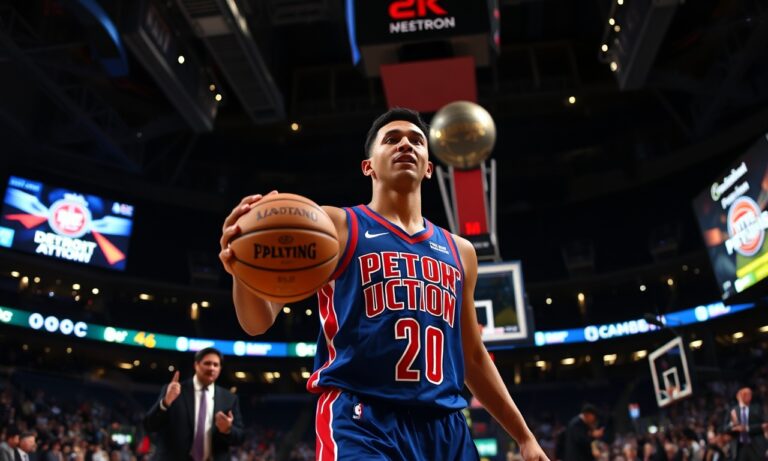
The Detroit Pistons’ latest free agent maneuver is already prompting questions about whether the team is quietly preparing for an exit involving Tobias Harris, according to NBA roster analysts and people who follow the league’s contract timelines. While the Pistons have not issued any formal statement about the forward’s immediate future, the sequence of moves in Detroit’s offseason has fueled Tobias Harris trade rumors and speculation that the roster could be reshaped well before training camp.
Detroit’s front office has several decisions to make around money, minutes distribution and roster fit. Those decisions are especially significant given the Pistons’ recent emphasis on adding flexibility—an approach that can include seeking cap space, upgrading depth, and adjusting the mix of veteran shooting and younger development.
“When a team makes roster moves in free agency that don’t clearly address the team’s existing rotation holes, it often points to another transaction coming,” said Ian Begley of SNY, who covers NBA roster developments. “That doesn’t guarantee a trade, but it aligns with the kind of planning teams do when they’re evaluating their core.”
Detroit Pistons free agent move shifts the roster conversation
In Detroit, roster changes don’t just play out on the court—they affect how quickly young players take on larger roles, how the fan base interprets the team’s direction, and how the organization balances competitiveness with long-term asset management.
League observers say the Pistons’ free agent strategy appears designed to strengthen specific lineup needs and create additional pathways for rotations. Even without a public announcement tied to Harris, the timing suggests the team may be working toward a broader reshaping of its forward group.
“Teams under pressure to improve often try to adjust multiple pieces at once—especially in the frontcourt,” said Josh Robbins of The Athletic, who covers NBA teams and roster construction. “If the Pistons are trying to open minutes for other players or move toward a different offensive profile, you can see that reflected in who they add in free agency.”
For fans tracking Detroit basketball news, the key point is that Harris remains a high-profile player due to his scoring reliability and veteran experience. But his role and salary structure can become variables the Pistons consider when evaluating alternative lineups and the cost of maintaining a particular mix.
Impact on Detroit residents: more than a lineup
At a community level, Pistons roster decisions can ripple into local economic activity that tends to cluster around home games, team-related events and nearby businesses. According to the U.S. Census Bureau, consumer spending patterns in metro areas can be influenced by major entertainment events—particularly in how residents allocate discretionary dollars during peak seasonal windows.
When teams reshape their rosters, it can influence ticket demand and the tone of the marketing cycle. The Detroit Pistons remain a major sports brand locally, and roster headlines often affect attendance enthusiasm—whether fans are looking for continuity or betting on a pivot.
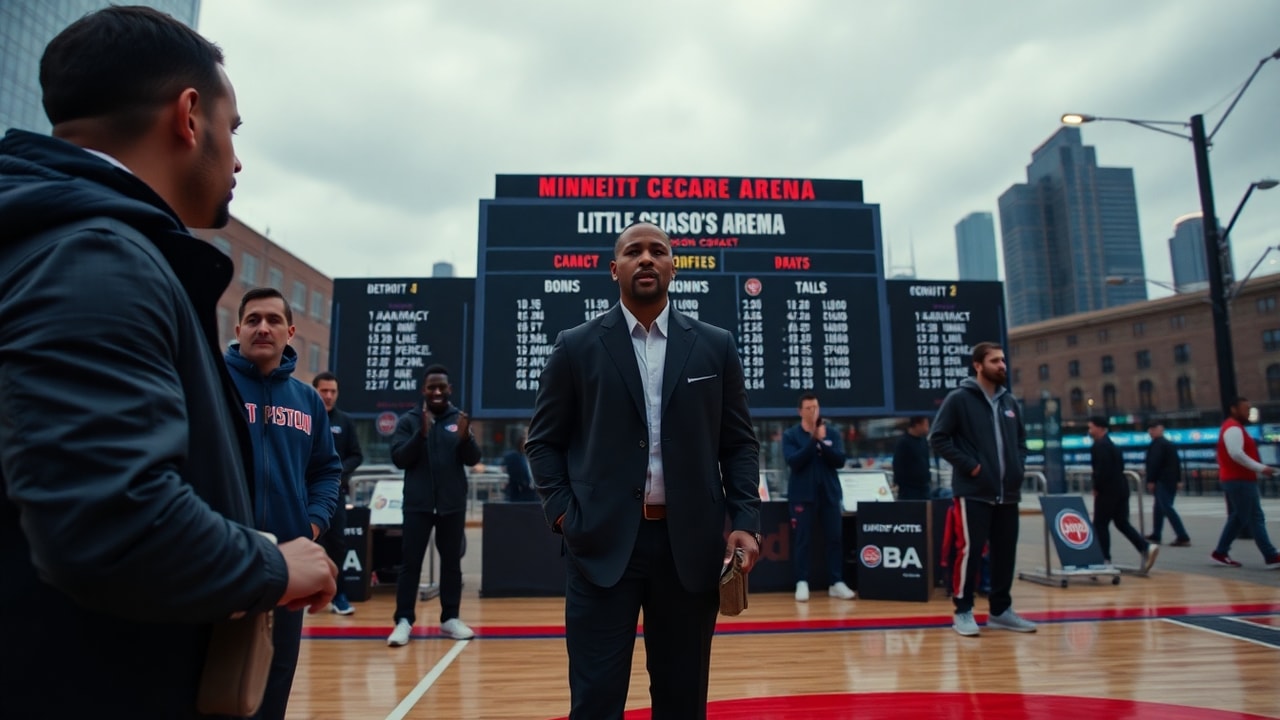
For small businesses near Little Caesars Arena, even subtle offseason shifts can matter. Restaurants and retail outlets that rely on game-night traffic typically plan staffing and inventory around expected crowd levels and event schedules. A new free agent addition can boost short-term interest, while speculation surrounding a veteran can create uncertainty—both of which can shape how some merchants prepare for the season.
Beyond spending, roster changes can also affect youth basketball ecosystems. Local gyms and training programs often see increased demand when the NBA roster features players who can serve as practical examples—whether for shooting development, ball-handling drills, or leadership on and off the court. If Detroit’s rotation changes significantly, youth coaches tend to adjust their programming accordingly, emphasizing what they believe will become the team’s on-court identity.
Background & data: why free agency can foreshadow trades
NBA roster construction is built around timing. Free agency is when teams can acquire players without giving up assets, but it can also function as a staging ground for subsequent trades. One reason: teams often use the offseason to test the market and identify the price of certain role types—shooters, defenders, playmakers, and depth at positions where they expect to be short.
The NBA’s salary-matching rules also make sequencing important. According to the NBA’s collective bargaining framework, teams must ensure trades and signings comply with cap regulations. That means a single addition can change the range of deal structures a team can later pursue, especially if the organization is trying to maintain payroll balance while preserving flexibility for multiple moves.
In Detroit, that flexibility becomes more relevant as the organization continues evaluating how to develop younger players while still fielding a credible product. Harris has been a steady offensive presence in Detroit’s recent seasons, but analysts note that teams with a long-term rebuild often look to prevent roster stagnation—either by changing the lineup around a veteran or by reallocating salary to different assets.
“Free agency can be a signal because teams don’t add pieces in a vacuum,” said Robbins. “They’re mapping minutes, shot creation, and defensive responsibilities for the group they expect to have by midseason.”
Tobias Harris trade rumors gain traction
With Harris at the center of the conversation, any Pistons free agent move that appears to alter rotation expectations can be interpreted by fans and reporters as a potential prelude to a trade. That interpretation is not about assuming a transaction is imminent; it’s about recognizing that the NBA offseason rarely includes random decisions.
Harris’s trade value, like any player’s, depends on how other teams view his fit—whether he’s a secondary creator, a spacing option, or a stabilizing presence in a contender’s lineup. If the Pistons add players whose skill sets overlap with Harris’s most likely on-court role, it can reduce his relative necessity in the rotation and make it easier for Detroit to consider a move.
At the same time, a Pistons free agent move could also simply reflect a desire to deepen the bench rather than move Harris. However, the current roster chatter suggests some in the basketball media believe Detroit may be positioning for something bigger than incremental improvements.
What happens next for the Pistons’ offseason
For Detroit fans trying to read the tea leaves in real time, the next milestones to watch are training camp assignments, preseason rotation signals and any follow-up front office activity as the league approaches key transaction windows. If the Pistons continue adding players who change lineup dynamics, the probability of more Tobias Harris trade rumors being realized only rises.
In the near term, Pistons leadership could also use public messaging and coaching comments to clarify how veterans and younger players will share the floor. Media availability often includes subtle cues about who is expected to play key minutes at the wing and in late-game scenarios.
In the meantime, Detroit offseason optimism remains tied to two realities: building a team that can develop and staying prepared for a fast-moving NBA market. For residents following Detroit offseason sports coverage, that means the Pistons’ next announcement—whether it comes as a trade, a roster adjustment, or a finalized lineup plan—will likely determine whether today’s free agent changes are simply depth moves or the first step in a wider roster reset.