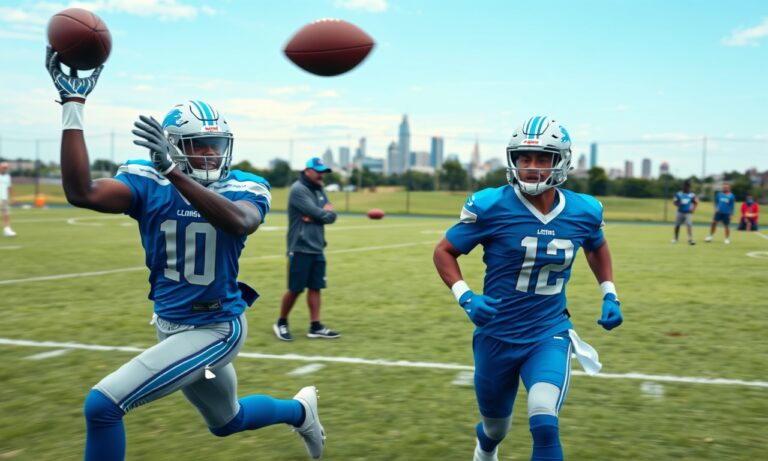
The Detroit Lions are facing fresh questions about their cornerback depth after Terrion Arnold was cut, prompting renewed Detroit Lions news chatter that the team could look outside the organization to stabilize its secondary ahead of the next NFL season.
After the move, a wave of NFL offseason rumors has circulated among analysts and fans suggesting Detroit should pursue a veteran with a track record of high-end play—specifically a 2-time Pro Bowler target being floated as a potential fit. While the Lions have not confirmed any interest in a particular player, the timing aligns with a typical league pattern: roster churn in April and May often gives way to signings once teams evaluate the remaining free-agent and trade market.
Main Section
The decision to cut Terrion Arnold is a reminder that NFL rosters are built on both performance and practicality—salary considerations, scheme fit, availability, and how quickly players adapt to coaching decisions. Even when a team likes a player’s traits, roster construction forces tough calls, especially when teams are trying to balance positions that can’t be easily patched with rookies.
In Detroit’s case, the secondary has been a focal point for both coverage discipline and pass-rush balance. When a starter or rotational defensive back exits the roster, front offices typically weigh two paths: develop from within or add an experienced piece who can reduce variability during the early weeks of the season. The renewed calls for a 2-time Pro Bowler target reflect a preference for certainty—someone who has been repeatedly recognized at the league level and has performed under intense scrutiny.
According to the NFL’s official transaction and roster reporting, teams can reshape their rosters throughout the offseason window, using free agency and contract moves to address needs as they surface. Meanwhile, Pro Bowl selection information—compiled by the league and related broadcasters—has long been used by media outlets as a proxy for sustained excellence at certain positions, which is why the “Pro Bowler” label continues to show up in offseason speculation.
Detroit-based commentary also points to a practical reality: the Lions will still have to prepare for opponents with diverse quarterback styles, from high-tempo passing attacks to teams that build game plans around movement and play-action. Veteran cornerbacks can help with the “communication overhead” that often shows up when rookies or second-year players are pressed into larger roles.
As of this writing, there is no public confirmation that Detroit has reached agreement with any specific free agent. Still, the idea of targeting a Pro Bowl free agent is consistent with how teams frequently respond when they make a notable roster decision—particularly one that affects defensive coverage.
Impact on Detroit Residents
For Detroit residents, Lions roster moves aren’t just sports talk; they can influence local business activity and community engagement. Game-day spending and offseason media cycles drive attention for bars, sports-focused restaurants, and retailers that rely on football seasons to maintain steady foot traffic.
According to research compiled by the U.S. Bureau of Labor Statistics on consumer spending patterns tied to entertainment and recreation categories, discretionary spending can shift when interest in major local sports increases. While the exact effect of one roster cut won’t be isolated in federal data, Detroit’s football economy typically responds to how teams compete—and offseason narratives often shape public expectations that spill into local watch parties and merchandise sales.
At the same time, roster changes can affect how families and community partners view the team’s stability and competitiveness. The Lions participate in local youth initiatives and community programming, and those activities often align with the broader message of rebuilding—or retooling—to remain competitive in the division.
If the Lions do pursue a 2x Pro Bowler, it could also shift the tenor of Detroit’s defensive identity from “development-first” to “win-now refinement,” at least on paper. Veterans can accelerate learning for younger players by providing a stable reference point for assignments, leverage, and recovery technique. That matters to fans who want to see improvement rather than growing pains.
Background & Data
The Lions’ offseason decisions come against the backdrop of a league-wide emphasis on roster efficiency. In the NFL, the salary-cap era means teams rarely have the luxury of carrying extra redundancy at premium positions. Cutting a player such as Arnold suggests Detroit may be adjusting its depth chart strategy or reallocating resources to other roster needs.
From a league operations standpoint, offseason roster management is guided by the NFL’s collective bargaining rules, including contract structure, waiver processes, and signing windows. According to the NFL Players Association’s public materials on offseason league operations, teams can negotiate and sign free agents after the early offseason period begins, but the process requires careful compliance with roster and contract constraints.
Beyond the procedural framework, analysts often connect “Pro Bowl” honors to player value because those selections reflect performance across an entire season. A 2-time Pro Bowler target is appealing not only for past accolades, but also because it suggests the player has previously navigated elite competition and high expectations—factors that can translate into reliability when a team needs fast impact.
Still, it’s important to separate rumors from confirmed reporting. Offseason speculation frequently includes names that may or may not match current team needs, scheme requirements, or salary expectations. In that sense, the best way to interpret the “Pro Bowler target” talk is as a signal of what Detroit supporters want to see—not as proof of what the front office has already chosen.
Why Terrion Arnold’s Cut Matters for the Secondary
When a roster spot is cleared by a notable Terrion Arnold cut, it typically reshapes the defensive back rotation. Even if the Lions plan to promote someone internally, an external addition can change practice intensity and in-season matchups. Veteran cornerbacks can also influence how coaches deploy safeties—how aggressively they play downhill or how frequently they help on routes.
That interplay is especially important in a division where opponents often emphasize vertical passing, timing routes, and after-the-catch disruption. Lions fans have watched how quickly coverage can swing in a single drive, making depth and communication central to preventing “big play” outcomes.
What Happens Next
For Detroit, the next steps will likely become clearer after several standard offseason milestones: team evaluations in organized team activities (OTAs), the start of new signing waves, and the settling of training camp rosters. If Detroit intends to pursue a Pro Bowl free agent, the team could signal intent by meeting with agents, hosting visits, or entering contract discussions as the market firms up.
In the near term, fans should also watch for how the Lions adjust their defensive reps in practice settings and whether the team’s coaching staff references coverage continuity during offseason press moments. Even without naming a target, the Lions typically telegraph their priorities through depth chart decisions, draft selections, and how they prioritize veterans’ experience versus youth development.
For now, the storyline remains one of opportunity and urgency: after Terrion Arnold was cut, Detroit has both a need to address and a chance to upgrade. Whether that results in a specific 2x Pro Bowler signing will depend on what becomes available, what fits the Lions’ scheme, and what contract terms can be reached.