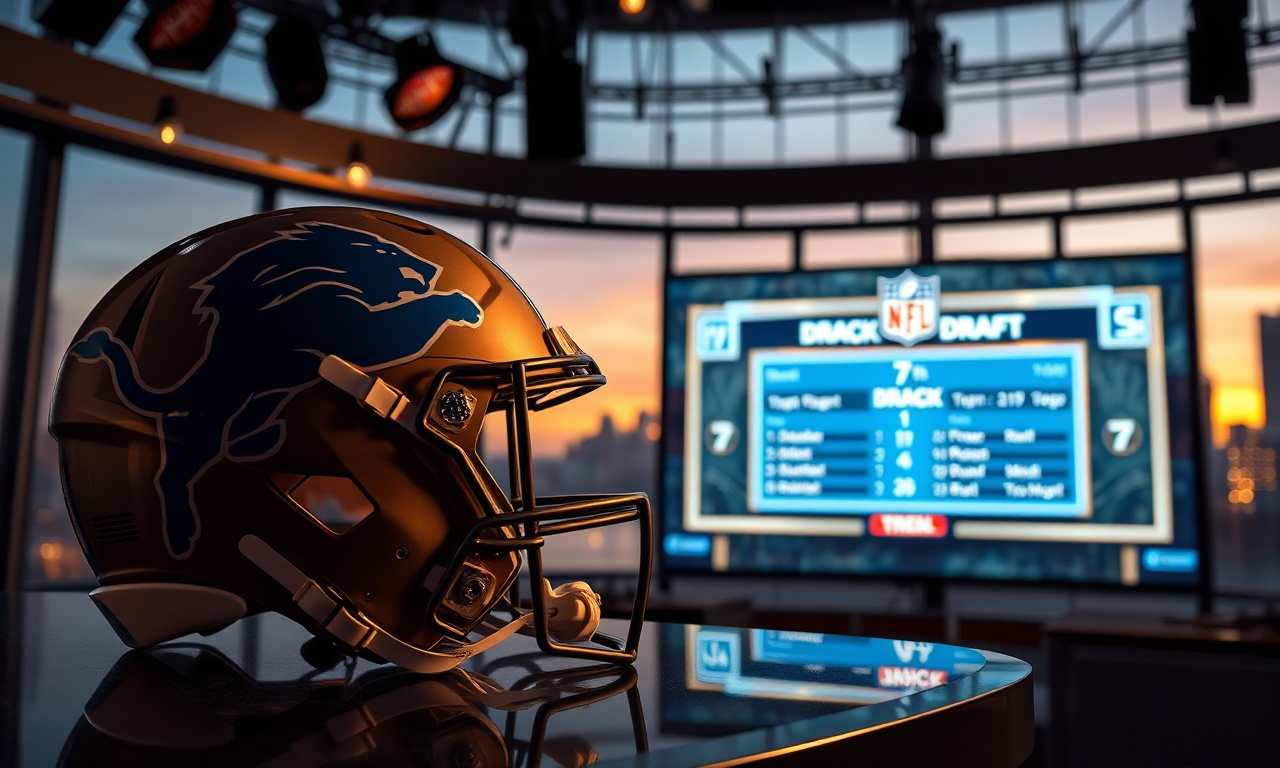
Detroit football fans are seeing fresh 7-round mock draft talk that centers on Jahmyr Gibbs’ potential return to the spotlight—and, more broadly, what the Detroit Lions could look for at running back as NFL draft 2025 approaches. While nothing about the Lions’ offseason plans is official, mock drafts are already generating conversation in the local sports media market and among season-ticket holders about how Detroit may address depth behind its offensive centerpiece.
The latest chatter reflects a familiar theme for the Lions: building an offense that can stay productive through injuries and game script swings. Gibbs’ name is showing up in updated projections not because Detroit has signaled a specific change, but because the positional fit and explosive play potential he represents remain a magnet for analysts crafting scenarios for the 2025 draft class.
Detroit Lions mock draft projects a run-focused blueprint with Gibbs at the center
In recent Detroit Lions mock draft frameworks shared by national draft analysts, the Lions’ offensive identity is often paired with a backfield strategy that can support both early-down efficiency and late-game playmaking. In those scenarios, Jahmyr Gibbs is portrayed as the type of player who can anchor a backfield even if the Lions add another rookie to create rotational freshness.
However, mock drafts are also a reminder that Detroit RB options could extend beyond the highlight reels. In the NFL, the margin between “best-case” and “real season durability” frequently comes from depth that can handle expanded workloads when starters miss time.
According to data compiled by the Centers for Disease Control and Prevention, sports injuries are a significant driver of missed participation across athletics, reinforcing why teams plan for contingencies. For NFL rosters, that general injury-risk reality often translates into draft-day priorities that go beyond talent alone—especially at positions where volume and contact are frequent.
What Detroit’s offseason rumors signal about roster construction
Detroit Lions offseason rumors often focus on what changes are most plausible when free agency calendars start to clear and roster decisions become more concrete. While fans may interpret every comment through the lens of the next draft, team building typically reflects a more measured approach: evaluate production, fit the scheme, and reduce risk.
Local context matters. Detroit sports coverage is unusually intertwined with how the city thinks about “next steps,” whether on the business side or the community side. In the NFL, that mindset surfaces as a recurring question: Will Detroit lean on internal options, target a proven veteran, or use the NFL draft 2025 to add a rookie who can contribute quickly?
Public financial and performance discussions about sports organizations also shape expectations. According to the NFL’s own reporting and league material on the business of football, competitive parity and the salary-cap landscape influence roster decisions. Even if the specifics for Detroit aren’t determined by a single article, the broader NFL economic environment helps explain why mock drafts often include players who could deliver value on contract timelines.
Impact on Detroit residents: why a backfield plan affects more than Sunday
For Detroit residents, the immediate connection is obvious: the Lions are a major civic touchstone, and their offseason direction becomes part of the city’s seasonal rhythm. But the impact runs deeper than game-day excitement.
When teams plan for the running game, it can affect ticket demand, local broadcast viewership, and the overall “football economy” that surrounds home games—sports bars, retail partnerships, and local media ecosystems. In a city where sports culture is tightly woven into entertainment options, even a modest offensive shift can translate into measurable changes in fan engagement.
Detroit-area tourism and visitor spending can also be influenced by a team’s competitive narrative, especially for regional fans making weekend trips around key matchups. Data from the U.S. Census Bureau has historically shown how population movement patterns and local spending correlate with major events, though it’s not exclusive to sports. For residents, that means the Lions’ offseason story—whether it’s “Jahmyr Gibbs returns” talk or a draft-day plan—helps shape the broader calendar of what brings people into the city.
Finally, roster decisions affect community relationships. Teams and players routinely support youth athletics and local initiatives. While a rookie’s exact community impact can’t be predicted from a mock draft alone, the type of player Detroit pursues often reflects values the organization highlights in public-facing programs.
Background & data: building depth at running back in 2025
Jahmyr Gibbs is often treated in mock drafts as both a talent profile and a tactical piece: a player who can create explosive plays while also operating as a versatile option in different offensive packages. That versatility is why he remains a frequent inclusion in Detroit Lions mock draft scenarios even when analysts don’t know what the Lions will do with personnel.
But the core debate in these 7-round mock draft projections usually isn’t whether Gibbs can be effective—it’s whether Detroit RB options beyond him can help the offense stay efficient if the workload shifts or if injuries occur. In today’s NFL, teams prioritize players who can contribute on special teams, protect the quarterback, and handle multiple rushing-and-receiving roles.
That’s where NFL draft 2025 becomes a conversation for more than just highlight highlights. The Lions’ draft decisions at running back could influence how quickly Detroit can develop a second option, how comfortable the play-calling becomes during tougher defensive matchups, and how sustainable the offensive tempo remains.
From a planning standpoint, mock drafts also reflect how many teams treat the middle of the draft as a value window for depth contributors. A running back picked in the middle rounds could be used in rotational roles early, then take on more responsibility as training camp and the regular season unfold.
Mainstream analysts vs. Detroit-specific uncertainty
It’s important to separate “mock” from “plan.” Mock drafts are projections designed for entertainment and discussion, not official scouting reports. Detroit Lions offseason rumors may point in certain directions, but until the Lions make moves—signings, re-signings, roster cuts, or draft selections—there’s no certainty that Jahmyr Gibbs will be the throughline of the 2025 strategy.
Even in scenarios where mock drafts include Gibbs and one or two additional RB prospects, those selections can change based on other team needs. Quarterback development, offensive line depth, defensive front strategy, and secondary coverage all compete for draft capital.
Local sports media in Detroit has increasingly treated draft-day coverage as part of a broader team-building narrative. That approach reflects the reality that a Lions roster is a system—where changes at one position can shift how much Detroit needs at another.
What happens next for the Lions, Gibbs conversation, and Detroit draft talk
As the NFL draft 2025 cycle progresses, the “7-round NFL mock draft” conversation will likely get updated again and again. What will matter most for Detroit fans is not whether every projection includes the same player, but how the Lions’ draft board aligns with what the team actually values.
Here are the signals to watch over the next few months:
- Practice and roster usage: Training camp and preseason reps can clarify whether Detroit views its backfield as a two-man core or a three-plus rotational group.
- Free agency and veteran meetings: If the Lions add a veteran running back, it could reduce the urgency for certain draft picks—or change the type of rookie they target.
- Injury and workload trends: Even without “official” injury news, the way Detroit manages carries and snaps is a tell for how coaches plan to sustain production.
- Detroit Lions draft positioning: The value of running back prospects can shift dramatically depending on where Detroit picks and how other teams address needs in early rounds.
For now, the Jahmyr Gibbs return talk in Detroit—amplified by updated Detroit Lions mock draft projections—serves as a preview of the questions the team will need to answer. And while mock drafts can’t guarantee outcomes, they do help residents understand what kind of offseason choices Detroit might consider as the calendar moves toward the draft.