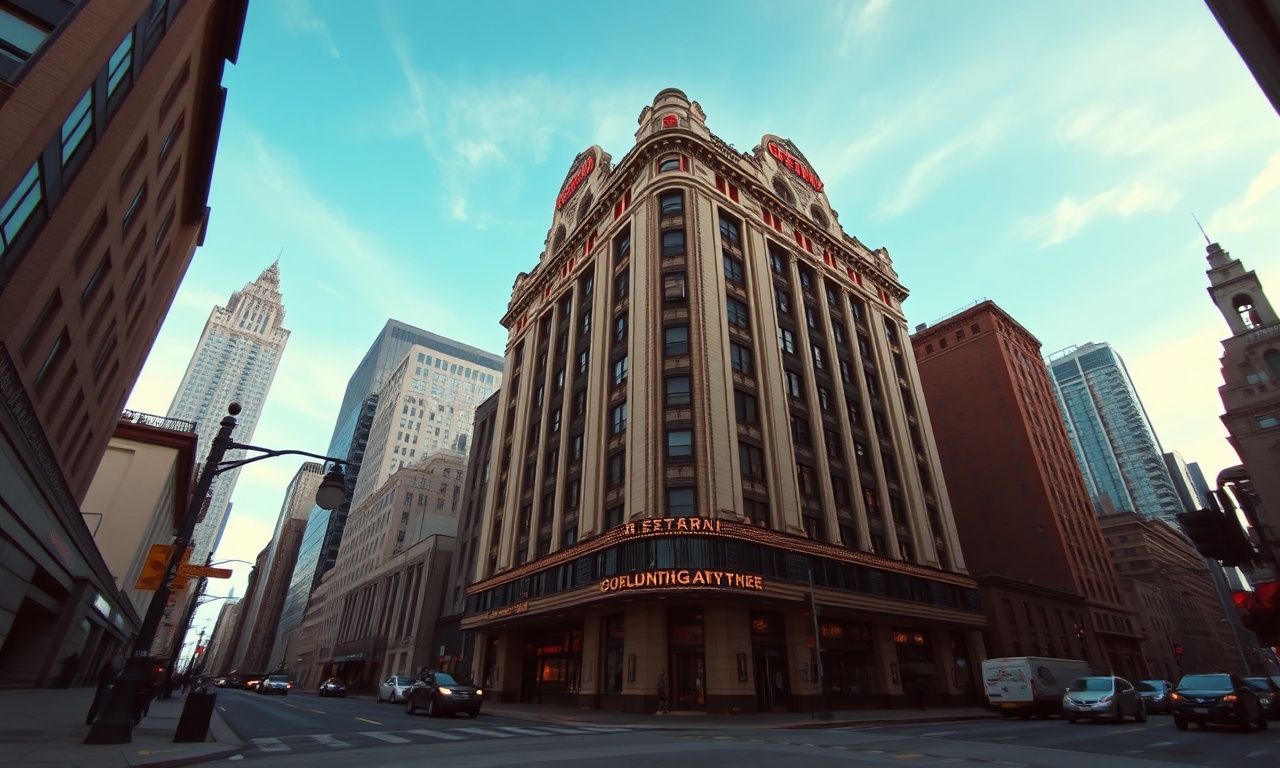
For many visitors who step into downtown Detroit’s Financial District, the first reaction isn’t just admiration—it’s disorientation, the feeling that the city skyline has momentarily paused to let a single building speak. The Guardian Building, long celebrated for its luminous interior and striking Art Deco design, continues to anchor the street-level experience around Woodward Avenue.
Local preservationists and historians say the building’s endurance is more than an architectural achievement; it’s also a reminder of Detroit’s capacity to build with ambition and craft, even during periods when the city faced severe economic and structural challenges.
Detroit architecture that reshaped the downtown skyline
Construction of the Guardian Building began in 1927 and the tower opened in 1929, according to historical documentation from the National Park Service’s resources on historic architecture and the broader cataloging of major U.S. landmarks. Designed as the headquarters of the Guardian Detroit Union Group, the building became known not only for its exterior massing but for its dramatic interior finishes—often described by observers as jewel-like.
“The Guardian Building is one of the clearest examples in Detroit architecture of how the Art Deco style translated into both civic confidence and commercial symbolism,” said Dr. Kimberly Dowdell, a Detroit-area architecture scholar who studies early 20th-century design. “It also shows how interior spaces—lobbies and public corridors—were treated as part of the city’s public image.”
The building’s geometric ornamentation and bold surfaces have made it a frequent reference point for discussions about Detroit architecture and the city’s historic skyline. While the downtown skyline has evolved with newer towers and redevelopments, the Guardian Building remains a recognizable focal point for those seeking the look and texture of Detroit’s early rise.
Why residents still see it as a landmark
For longtime residents, the Guardian Building isn’t only about design—it’s part of everyday orientation in the city. Commuters pass it, businesses operate around it, and cultural observers cite it as a visual shorthand for Detroit’s past grandeur. Even people who have never worked in the building often recognize it from photographs of the interior’s colorful, mosaic-like surfaces.
“Historic landmarks like the Guardian Building support a sense of continuity,” said Lisa Samuels, spokesperson for the Detroit Historical Society. “When people can connect a place to a story, it becomes easier to care about maintaining that place—not just for nostalgia, but for how the city tells its own history.”
That connection has tangible consequences. Downtown foot traffic, regional tourism, and the identity of neighborhood commercial corridors all depend on well-preserved, legible landmarks. In a city where redevelopment can change street plans and building use quickly, the Guardian Building has functioned as a stable reference point.
Impact on Detroit residents: more than aesthetics
Landmarks influence local economic life in ways that can be difficult to measure but remain visible. When a building draws consistent attention, it can help support the surrounding ecosystem—restaurants, retail, and professional services—by reinforcing downtown as a destination.
According to the U.S. Census Bureau, downtown and central-city economic patterns have been shaped by longer-term shifts in employment and household formation across metropolitan Detroit, with different neighborhoods experiencing uneven growth. In that context, a historic landmark that continues to draw interest can be part of how the city competes for visitors and workers.
Residents also benefit indirectly through civic culture. Historic preservation efforts often rely on volunteers, neighborhood organizations, and local institutions that educate the public. The Guardian Building’s continued prominence supports that broader ecosystem by keeping conversations about historic landmark value in the foreground.
And for younger Detroiters, the building offers a visual lesson in what the city can produce—an antidote to the idea that Detroit’s best moments are confined to textbooks.
Background & data: Art Deco, preservation, and downtown change
The Guardian Building is closely associated with the peak popularity of Art Deco in the late 1920s. Art Deco was characterized by bold geometric patterns, stylized motifs, and a fascination with modernity—an aesthetic that fit the era’s commercial ambitions. In Detroit, where industrial growth drove major building campaigns, Art Deco became a way to project durability and prestige.
Preservation in the United States has increasingly leaned on documented significance, public interest, and the legal or practical mechanisms that protect key buildings. In Detroit, landmark frameworks and heritage campaigns have been shaped by long-running discussions among local advocates, historians, and property stakeholders.
While the Guardian Building’s architectural story is already well known, its contemporary relevance is reinforced by the way it continues to appear in city media, walking routes, and educational materials that introduce Detroit’s past. That ongoing visibility matters, because preservation is sustained by public familiarity. A building that is understood is more likely to be supported.
Main lobby, lasting design: what people notice today
Even first-time visitors often remark on the interior’s intense visual impact: the layered color, the sense of depth, and the way decorative surfaces catch light. That experience is part of why the Guardian Building continues to inspire awe. Unlike some historic buildings where the exterior is the primary attraction, the Guardian Building’s interior rewards attention—inviting people to slow down and look.
For photographers, it offers contrast: the quiet lines of older streetscapes paired with a building that reads as both historic and futuristic. For architecture students and professionals, it is a reference point for how Detroit adopted national design trends while building its own identity through materials, ornamentation, and scale.
What happens next for the Guardian Building and downtown heritage
Like any historic property in a working downtown, the Guardian Building’s future depends on a mix of maintenance, adaptive management, and continued public engagement. Even when buildings remain in active commercial use, preservation requires ongoing stewardship—planning for repairs, protecting distinctive interior elements, and coordinating with building owners and city stakeholders.
Looking ahead, local tourism strategies and downtown development plans will likely continue to emphasize heritage assets. For residents, that means the question is not whether the Guardian Building will remain a symbol—it already does—but how the city will keep historic architecture accessible, legible, and connected to present-day Detroit.
In a city shaped by renewal and reinvention, the Guardian Building offers a different kind of stability: a reminder that awe doesn’t require new construction. Sometimes it comes from keeping the past visible—so the skyline can tell more than one story at a time.