The City of Detroit is entering a critical new phase in its multi-year strategy to transform vacant land and dilapidated structures into community assets. As municipal leaders navigate a post-pandemic economic landscape, the focus on Detroit neighborhood revitalization has shifted from mere demolition to a comprehensive model of stabilization and reinvestment. This evolution aims to address long-standing systemic issues while fostering sustainable growth in districts that have historically faced disinvestment.
Expanding the Strategic Neighborhood Fund
Central to the city’s current efforts is the Strategic Neighborhood Fund (SNF), a public-private partnership that has successfully leveraged hundreds of millions of dollars for local improvements. According to the City of Detroit Mayor’s Office, the fund is specifically designed to ensure that the city’s recovery reaches beyond the downtown and Midtown cores, impacting neighborhoods like Northwest Goldberg, Jefferson-Chalmers, and Southwest Detroit. The SNF focuses on four key pillars: park improvements, commercial corridor development, streetscapes, and single-family housing stabilization.
The city’s approach involves more than just physical construction; it is about creating an ecosystem where local businesses can thrive. This often includes facade grants for small business owners and the development of “20-minute neighborhoods,” where residents can access essential services within a short walk or bike ride from their homes. Recent reports from DetroitCityNews.com suggest that these local business developments are crucial for long-term economic resilience.
Impact on Detroit Residents
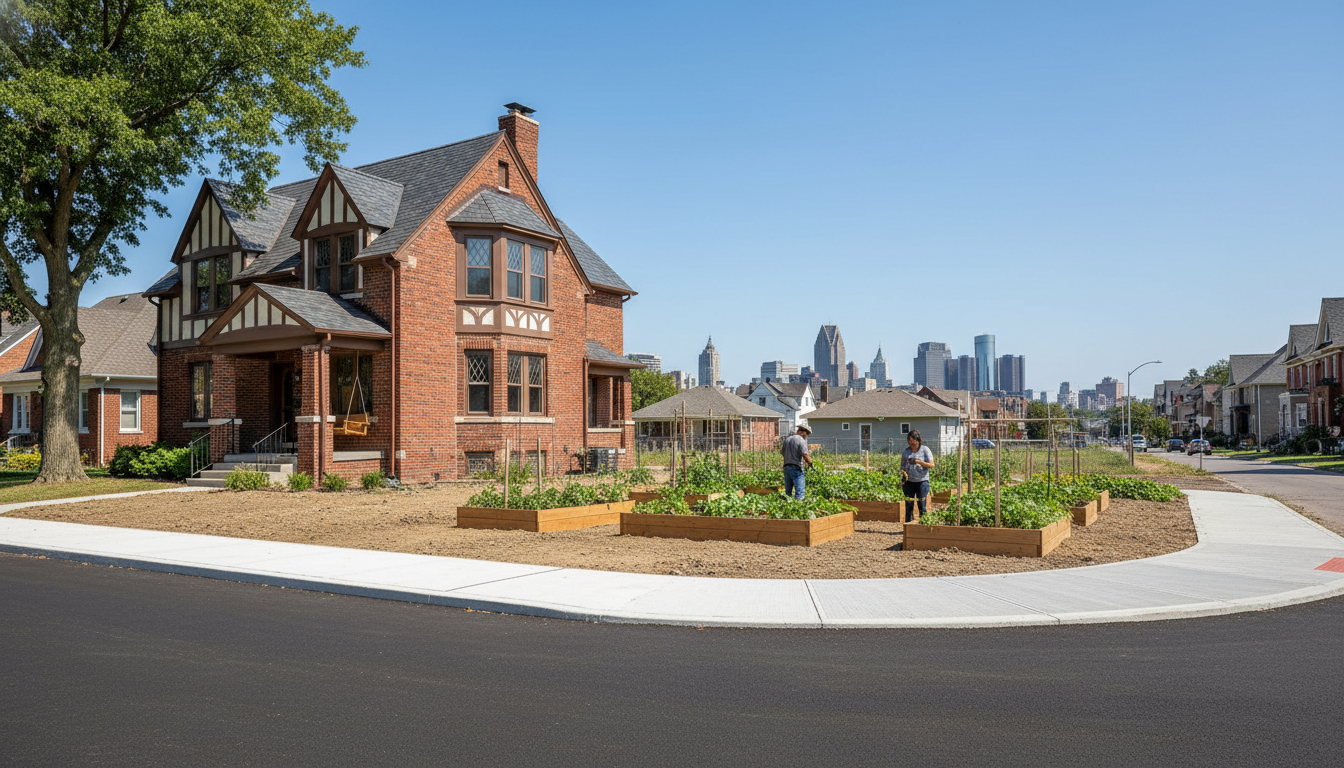
For many Detroiters, the most visible sign of Detroit neighborhood revitalization is the “Blight to Beauty” initiative. This program has transitioned from the mass demolition of the last decade to a more nuanced approach involving the salvage of historic structures and the creative reuse of vacant lots. For residents, this means a direct reduction in crime associated with abandoned properties and a measurable increase in local property values.
However, the impact is not solely aesthetic. The city has implemented the Housing Detroit-S.I.P. (Strategic Implementation Plan), which focuses on providing affordable housing options to prevent displacement as neighborhoods improve. According to data from the Detroit Housing and Revitalization Department, the city has committed to preserving or creating thousands of affordable units, ensuring that long-term residents are not priced out of the communities they helped sustain during leaner years.
Local community organizers emphasize that while the physical changes are welcome, the human element remains paramount. Neighborhood associations are increasingly being brought to the table during the planning phases of major developments, ensuring that the revitalization efforts align with the specific needs and desires of the people living there.
Background & Data on Housing Trends
The scale of the challenge is reflected in the data. Statistics from the Detroit Land Bank Authority (DLBA) indicate that the agency still manages a significant inventory of properties, though that number has decreased steadily. The DLBA’s various programs, including the “Side Lot” program and the “Own It Now” sales, have returned thousands of properties to the tax rolls and into the hands of local homeowners.
Furthermore, analysis of U.S. Census Bureau data shows a stabilization in homeownership rates in several key Detroit ZIP codes, a trend that experts attribute to the increased availability of home repair grants and mortgage assistance programs. The city’s focus on infrastructure and transportation has also played a role, as improved transit links make outlying neighborhoods more attractive to young professionals and families alike.
Despite these gains, challenges remain. High interest rates and rising construction costs have slowed the pace of some private developments. Additionally, the need for deep affordability—housing for those earning 30% to 50% of the Area Median Income (AMI)—remains a significant gap that the city and its partners are struggling to fill.
The Role of Federal Funding
Much of the recent acceleration in Detroit neighborhood revitalization can be traced back to the American Rescue Plan Act (ARPA). The City of Detroit received one of the largest per-capita allocations of federal ARPA funds in the country, a significant portion of which was earmarked for neighborhood initiatives. These funds have been used to clear massive backlogs of dangerous commercial blight and to fund the “Renew Detroit” program, which provides essential roof repairs to low-income seniors and homeowners with disabilities.
By securing the structural integrity of existing homes, the city is preventing the next generation of blight before it begins. This proactive stance is a shift from previous administrations, which often found themselves reacting to crises rather than planning for long-term stability.
What Happens Next
Looking ahead, the city plans to continue its aggressive pursuit of mixed-use developments along major transit corridors. Projects currently in the pipeline include several large-scale renovations of historic apartment buildings and the transformation of vacant school buildings into community hubs and loft spaces. These projects are expected to break ground within the next 18 to 24 months, providing a continued boost to the local construction industry.
The success of these initiatives will ultimately be measured by the city’s ability to maintain a balance between growth and equity. As the Detroit neighborhood revitalization effort continues, the focus will likely remain on ensuring that every resident, regardless of their ZIP code, has access to a safe, clean, and vibrant community. The road to total city-wide revitalization is long, but the current momentum suggests that Detroit is moving toward a more stable and prosperous future for all its neighborhoods.