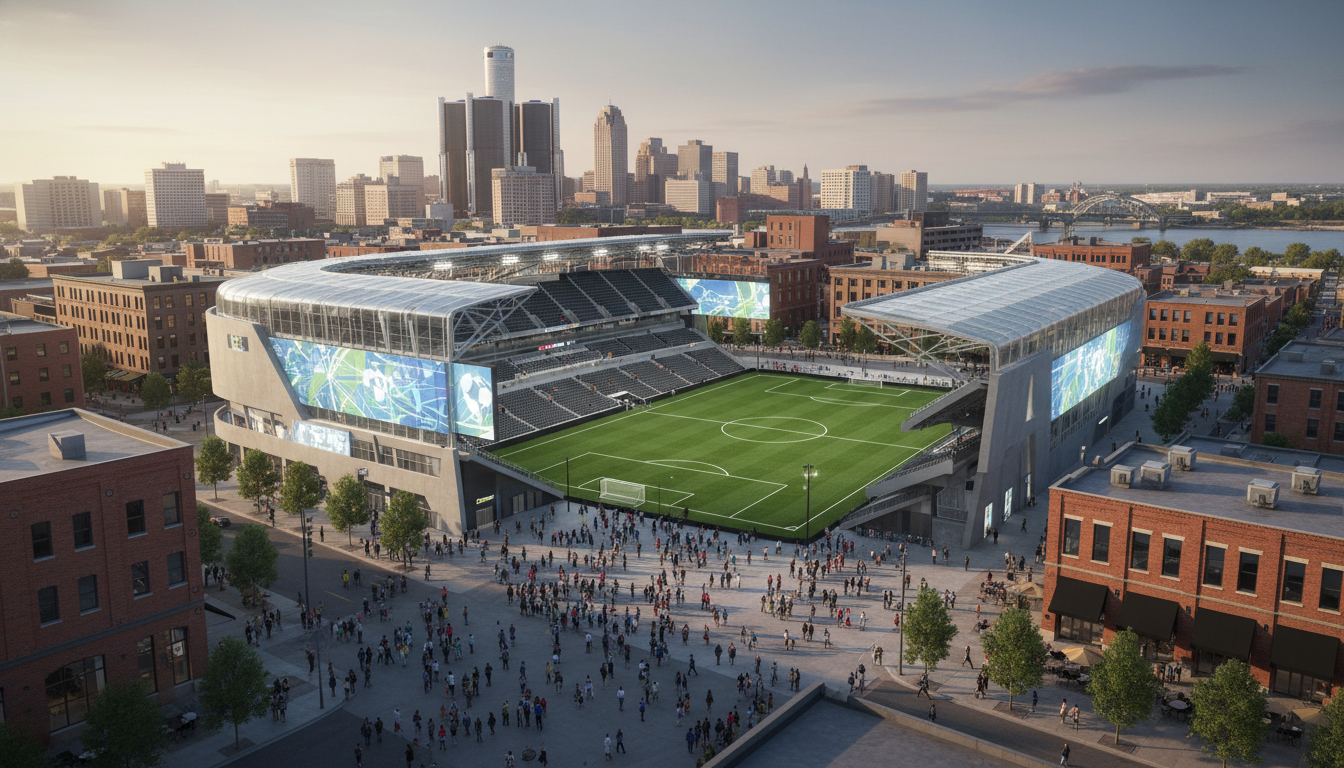
Detroit’s sports landscape is preparing for a monumental shift as the Detroit City Football Club (DCFC) moves forward with plans to construct a dedicated professional soccer stadium in the historic Corktown neighborhood. The project, which involves the transformation of the long-abandoned Southwest Detroit Hospital site, represents one of the most significant private investments in the region’s athletic infrastructure in recent years. Beyond providing a permanent home for the ‘Le Rouge,’ the development is positioned to become a year-round catalyst for concerts, community events, and economic revitalization.
The Vision for the New DCFC Stadium
According to official statements from the club, the new stadium will be located at the intersection of Michigan Avenue and 20th Street. This site has sat vacant since the hospital closed its doors in 2006, often cited by local residents as a symbol of blight in an otherwise rapidly developing corridor. The transition from the club’s current home at Keyworth Stadium in Hamtramck to this new site marks a pivotal moment in the team’s evolution from a grassroots community project to a mainstay of the USL Championship.
As reported by the Detroit Free Press, the club finalized the acquisition of the nearly 10-acre property earlier this year. While specific seating capacities are still being finalized, preliminary plans suggest a venue capable of hosting several thousand fans, with the flexibility to expand as the team continues to grow. The design is expected to maintain the urban, grit-and-grit aesthetic that has defined DCFC while introducing modern amenities for players and spectators alike.
Economic Revitalization and the Regional Boost
The economic implications of a new DCFC stadium extend far beyond the pitch. The project is expected to create hundreds of construction jobs and dozens of permanent positions within the facility’s operations. For the city, the redevelopment of the Southwest Detroit Hospital site means returning a non-productive property to the tax rolls. This development aligns with broader efforts to connect Corktown with the Michigan Central innovation hub and the West Vernor corridor.
Economic analysts suggest that the influx of fans—often numbering over 6,000 per match—will provide a substantial boost to local hospitality businesses. Restaurants, bars, and retail shops along Michigan Avenue are bracing for increased foot traffic. This follows a trend seen in other parts of the city where sports venues have acted as anchors for neighborhood development. You can read more about Corktown’s ongoing residential growth in our previous coverage of the area.
Impact on Detroit Residents
For the residents of Corktown and Southwest Detroit, the project brings both excitement and logistical questions. The City of Detroit’s Planning and Development Department has emphasized that community engagement will be a core component of the approval process. Issues such as game-day parking, noise levels during concerts, and public transit access are at the forefront of neighborhood discussions.
Local business owners have largely expressed optimism. ‘Having a consistent draw of thousands of people into this specific part of the neighborhood will change the survival math for many small businesses,’ said one local shop owner during a recent community meeting. Furthermore, the club has pledged to maintain its community-focused identity, ensuring that the stadium remains accessible for local youth sports and community gatherings during the off-season. This project joins other major development projects currently reshaping the city skyline.
Background & Data: The Growth of Soccer in Michigan
The decision to build a new stadium is supported by data showing a surge in soccer’s popularity across the Midwest. Data from the U.S. Census Bureau regarding demographic shifts in Detroit shows a growing population of young professionals and families in the urban core—a key demographic for professional soccer. Since joining the USL Championship in 2022, DCFC has consistently ranked among the league leaders in attendance, frequently selling out its current 7,933-seat venue in Hamtramck.
The club’s financial trajectory has also stabilized. Unlike many professional sports projects that rely heavily on public subsidies, DCFC leadership has indicated a commitment to a primarily privately funded model, though they may seek standard brownfield tax credits given the environmental remediation required at the hospital site. This approach has garnered praise from fiscal hawks and city officials alike, who are wary of public debt for sports infrastructure.
What Happens Next
The next phase of the project involves the demolition of the existing hospital structure, which is expected to begin later this year. Environmental assessments are currently underway to ensure the safe removal of hazardous materials common in older medical facilities. Once the site is cleared, the club will move into the formal architectural design phase, with a goal of breaking ground in 2025.
The City of Detroit is expected to hold several more public hearings as the zoning and permitting process moves forward. For fans and residents, the timeline suggests a potential opening date for the 2027 season. As the project progresses, it will serve as a litmus test for how Detroit balances the needs of professional sports franchises with the long-term interests of the neighborhoods they call home.